
What to Look for When You Suspect Your Medication Isn’t Real
You take your pills every day. You trust the bottle, the label, the pharmacy. But what if that bottle isn’t what it seems? Counterfeit medications are more common than most people realize-and they’re not just fake. They can be deadly.
In 2024, the DEA seized over 100 million counterfeit pills in the U.S. alone. Many of them looked identical to real prescriptions-but instead of oxycodone, they contained lethal doses of fentanyl. Others had no active ingredient at all. Some even contained rat poison, industrial dyes, or amphetamines. The World Health Organization estimates that half a million people die each year from fake malaria and pneumonia drugs in Sub-Saharan Africa. This isn’t a distant problem. It’s happening in your neighborhood, your online cart, your medicine cabinet.
Price Too Good to Be True? It Probably Is
If a pill costs 70% less than what you pay at your local pharmacy, run. Legitimate pharmaceutical companies don’t slash prices that hard. Even generic versions have strict manufacturing costs. According to Truemed’s 2024 analysis, real medications rarely drop more than 20% below market price. Counterfeiters? They’ll offer 50% to 80% off to lure you in.
One 2024 Consumer Reports survey found that websites offering drugs 60% below retail had an 87% counterfeit rate. Sites selling Ozempic for $99 a month? That’s not a deal-it’s a trap. The real drug costs around $969. If someone’s selling it for $99, they’re either lying or poisoning you.
Packaging That Doesn’t Feel Right
Most counterfeit drugs are caught because of their packaging. The FDA found that 78% of fake medications have visible flaws. Look closely:
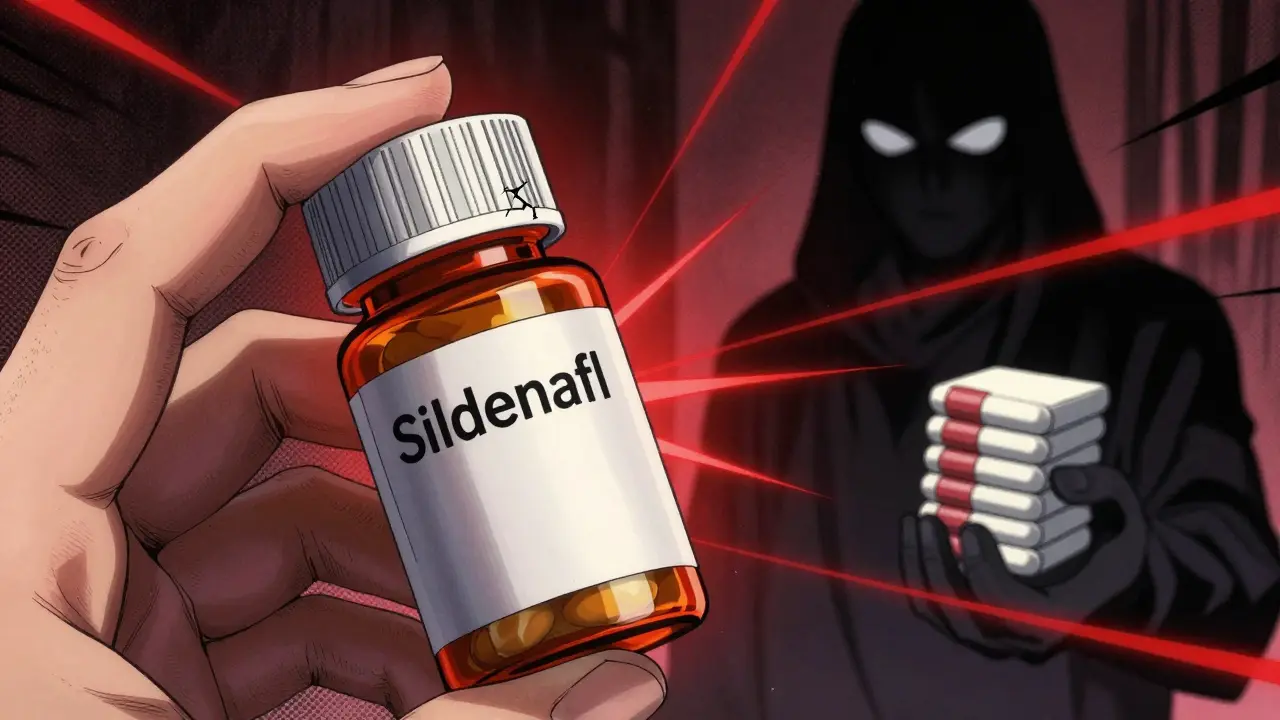
- Spelling errors on the label-like “Sildenafl” instead of “Sildenafil”
- Blurry printing, faded colors, or pixelated logos
- Missing or mismatched batch numbers or expiration dates
- A seal that looks like it was resealed with glue or tape
Even small things matter. Legitimate manufacturers use precision tooling. The embossing on a real pill has sharp, clean edges. Counterfeiters can’t replicate that. Dr. Theresa Michele from the FDA says even microscopic differences in the imprint can give it away. If you’ve taken this medication before, compare the new bottle to the old one. If anything looks off-change, font, color, texture-don’t take it.
Pill Appearance: Size, Color, Texture
Real pills are made to exact standards. They don’t vary more than 5% in weight or 2% in diameter. If your new metformin tablet is thinner, lighter, or crumbly, that’s a red flag.
Look for:
- Cracks, bubbles, or uneven coating
- Different color than your last refill-even a slight shade change
- Unusual smell-some counterfeit pills smell like plastic or chemicals
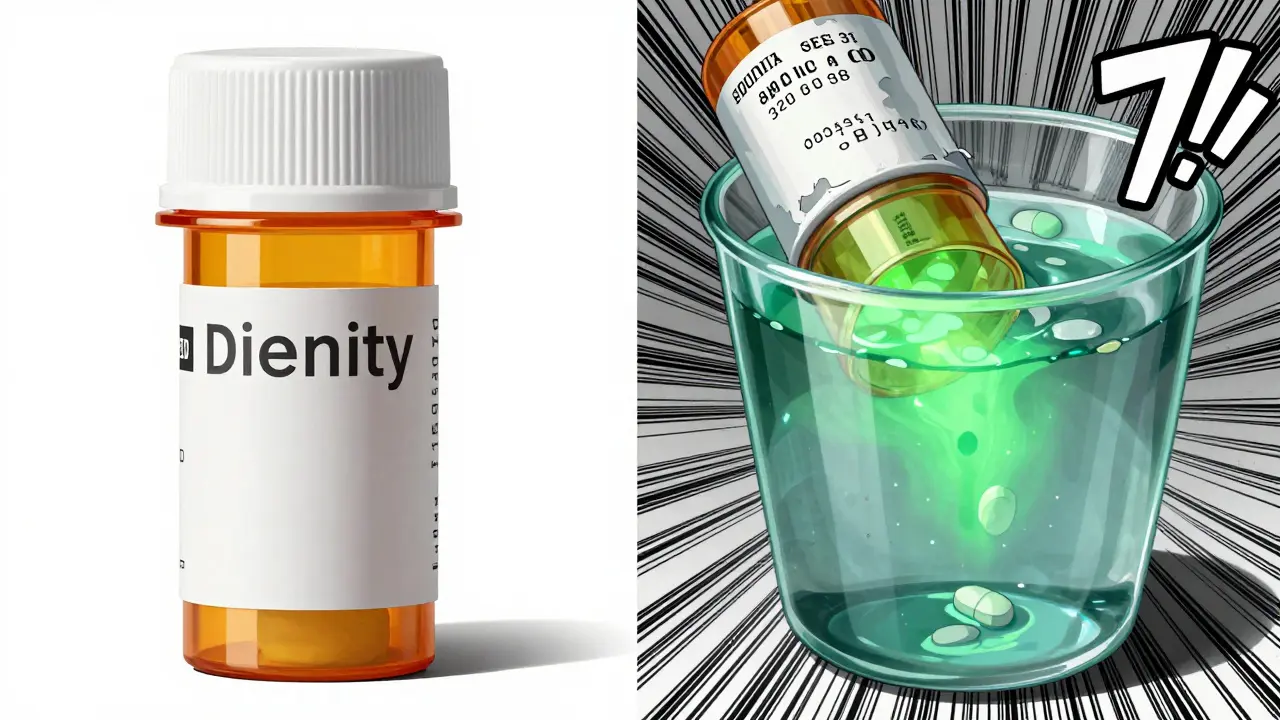
Reddit’s r/pharmacy community has over 2,000 user reports since 2023. The most common complaint? “My tablet dissolved in water within two minutes.” Legitimate pills take at least 30 minutes to break down. If yours dissolves fast, it’s likely not real.
Online Pharmacies That Don’t Ask for a Prescription
Any legitimate pharmacy in the U.S. requires a valid prescription for controlled substances. If a website sells you Adderall, Xanax, or Ozempic without asking for a prescription, it’s illegal-and almost certainly fake.
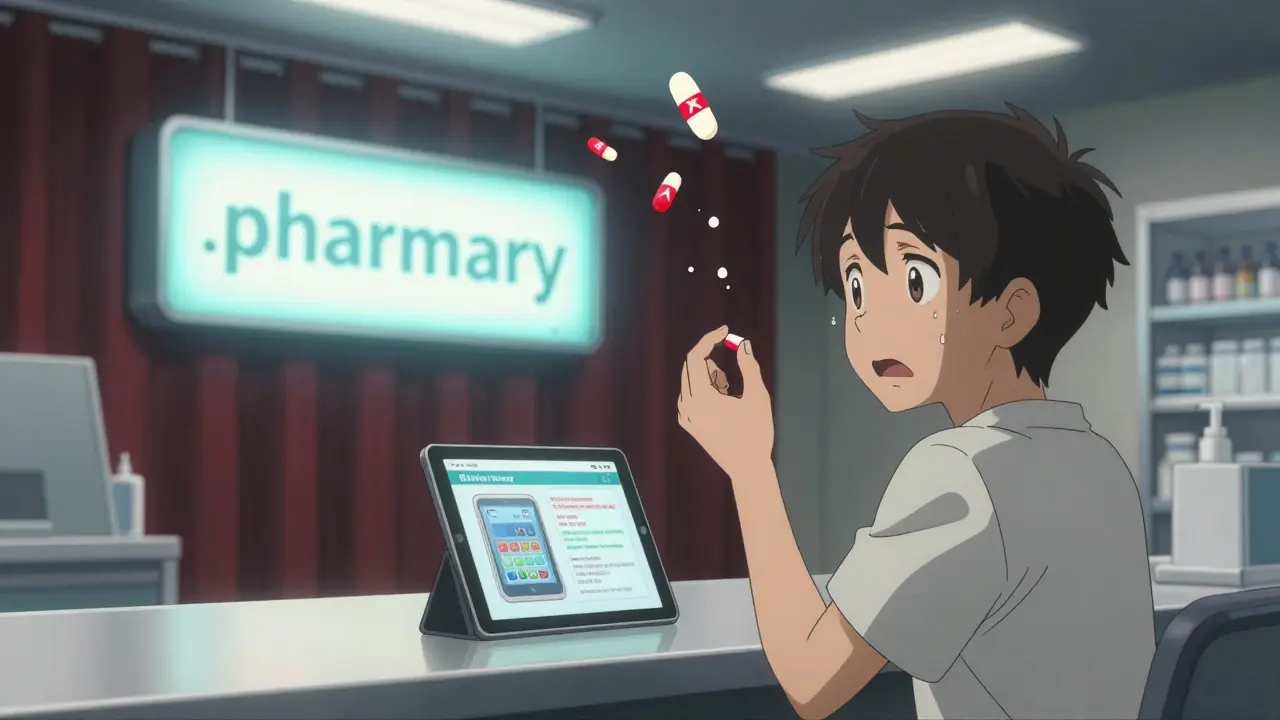
The DEA says 92% of verified counterfeit cases come from these types of sites. There are over 35,000 illegal online pharmacies operating today. Only about 6,200 are verified by the National Association of Boards of Pharmacy (NABP) with the .pharmacy domain. Always check: does the website end in .pharmacy? If not, don’t buy.
Even if the site looks professional, has fake testimonials, or uses a U.S. phone number-it’s still a scam. Counterfeiters are good at mimicry. The .pharmacy badge is your only real guarantee.
Unexpected Side Effects or No Effect at All
If your blood pressure didn’t drop after taking your new lisinopril, or your diabetes got worse after taking your “metformin,” something’s wrong.
Patients have reported severe hypoglycemia after taking counterfeit metformin that actually contained glyburide-a completely different drug. Others took “Viagra” that contained amphetamine. Some took “Ozempic” that had no active ingredient at all.
Pharmacists say 73% of counterfeit drugs are flagged because patients complain the medication “just doesn’t work.” If your condition isn’t improving-or if you’re having new, strange side effects-you need to stop taking it and get it tested.
How to Verify Your Medication
Here’s a simple six-step check you can do at home:
- Check the seal. Tamper-evident packaging should show damage if opened. A resealed cap or loose lid? Red flag.
- Verify the NDC code. Find the 10-digit National Drug Code on the bottle. Enter it into the FDA’s National Drug Code Directory. If it doesn’t show up, it’s fake.
- Call the manufacturer. Pfizer, Novo Nordisk, and other major companies have hotlines to verify lot numbers. If the lot number doesn’t exist in their system (37% of counterfeits don’t), it’s not real.
- Compare the pill. Go to the manufacturer’s website. Most top drugs have reference images of what the real pill looks like. Compare size, color, imprint, shape.
- Do a solubility test. Place the pill in a glass of water. Let it sit for 30 minutes. If it dissolves completely or breaks apart too fast, it’s not legitimate.
- Report it. If you suspect a fake, report it to FDA MedWatch within 24 hours. Your report helps protect others.
What’s Changing in the Fight Against Fake Drugs
Counterfeiters are getting smarter. AI now generates packaging that fools 68% of people at first glance. Holograms look real-but under 50x magnification, they’re missing tiny microtext only the real maker can produce.
The FDA is fighting back. By December 2026, all Schedule II-V drugs will have microscopic luminescent markings visible only under UV light. The EU already requires unique barcodes on every prescription package-and counterfeit incidents there dropped 83%.
But the biggest threat now? Biologics. Drugs like Humira, Ozempic, and insulin require cold storage. Fake versions often lack proper refrigeration documentation-and can become toxic. The Janssen counterfeit Humira case in 2024 showed fake vials shipped at room temperature, rendering the drug useless and dangerous.
Don’t Guess. Verify.
Counterfeit drugs aren’t just a global problem. They’re a personal risk. One pill can kill. One bottle can ruin your health. You don’t need to be a pharmacist to spot the signs. Look at the price. Check the packaging. Compare the pill. Verify the website. If something feels off, it probably is.
When in doubt, go to your local pharmacy. Talk to your pharmacist. They’ve been trained to spot fakes. They’ve seen the reports. They know the real ones.
Your health isn’t worth a gamble. Don’t risk it for a discount. Real medicine should never come with a hidden cost.
How can I tell if my medication is counterfeit just by looking at it?
Look for spelling errors, blurry printing, mismatched batch or expiration dates, and poor-quality packaging. Compare the pill’s size, color, and imprint to images on the manufacturer’s website. Real pills are uniform-counterfeits often vary in weight, texture, or shape. If the bottle seal looks tampered with or resealed, don’t take it.
Can I trust online pharmacies that offer huge discounts?
No. Legitimate pharmacies rarely discount medications more than 20%. Discounts of 50% to 80% are a classic sign of counterfeit drugs. Only buy from websites ending in .pharmacy, which are verified by the National Association of Boards of Pharmacy. Over 35,000 illegal online pharmacies operate today-most offering fake or dangerous products.
What should I do if I think I’ve taken a fake pill?
Stop taking the medication immediately. Contact your doctor or pharmacist. Save the bottle, packaging, and any receipts. Report it to the FDA through MedWatch within 24 hours. If you experience severe side effects like chest pain, fainting, or difficulty breathing, seek emergency medical help right away.
Are fake pills really that dangerous?
Yes. In 2024, the DEA found that 100% of counterfeit opioid pills seized contained fentanyl, often at lethal doses. Fake Viagra contained amphetamine. Counterfeit metformin contained glyburide, causing dangerous drops in blood sugar. Some had no active ingredient at all. The WHO estimates 500,000 deaths annually from fake malaria and pneumonia drugs in Africa alone.
Can I check if my medication’s lot number is real?
Yes. Find the lot number on your bottle and call the manufacturer’s customer service line. Pfizer, Novo Nordisk, and other major companies verify lot numbers for consumers. About 37% of counterfeit lot numbers don’t exist in the manufacturer’s system. If they can’t find it, the medication is fake.
Why do counterfeiters target certain drugs?
Counterfeiters target high-cost, high-demand drugs with big profit margins. In 2024, the top 100 most counterfeited drugs were all specialty medications costing over $1,000 per month-like Ozempic, Humira, and Viagra. These drugs are in high demand, and people are desperate enough to buy them online without a prescription, making them easy targets for fraud.


Author
Mike Clayton
As a pharmaceutical expert, I am passionate about researching and developing new medications to improve people's lives. With my extensive knowledge in the field, I enjoy writing articles and sharing insights on various diseases and their treatments. My goal is to educate the public on the importance of understanding the medications they take and how they can contribute to their overall well-being. I am constantly striving to stay up-to-date with the latest advancements in pharmaceuticals and share that knowledge with others. Through my writing, I hope to bridge the gap between science and the general public, making complex topics more accessible and easy to understand.