
MAOI Medication Safety Checker
Check Medication Safety
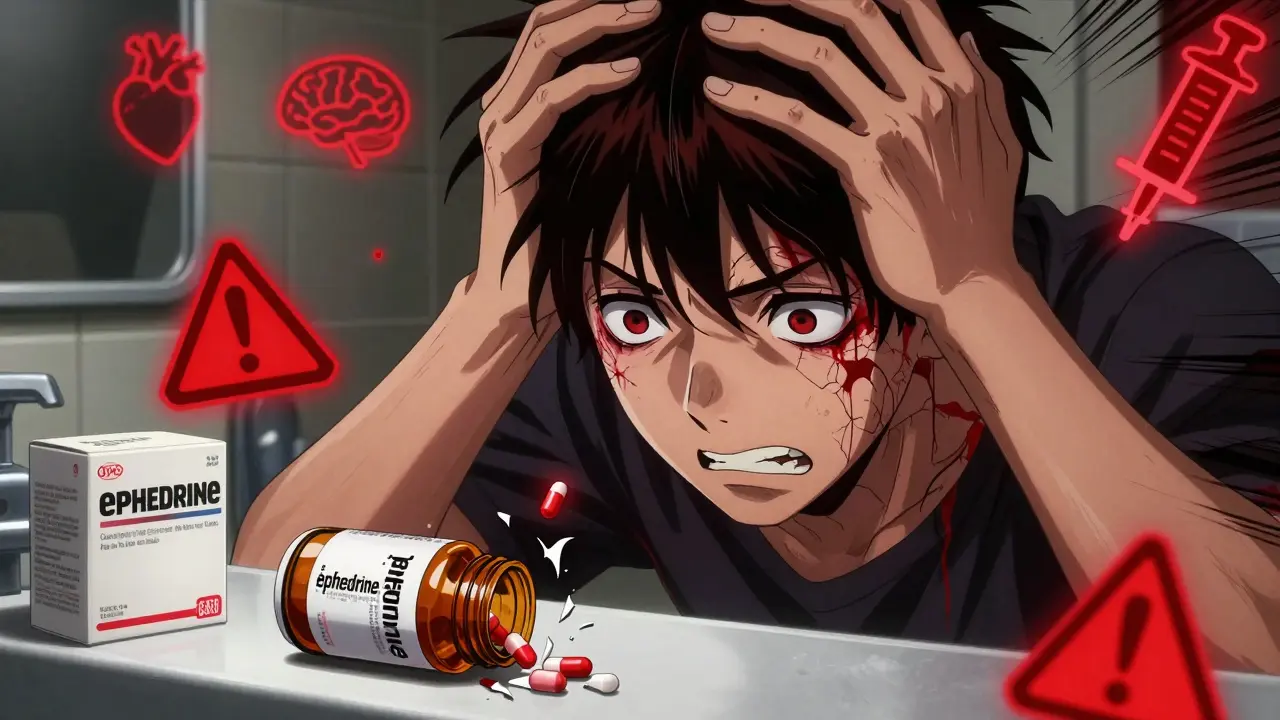
Take a single 25 mg pill of ephedrine - the kind found in old-school cold meds or weight loss supplements - while you're on an MAOI antidepressant, and your blood pressure could spike to 240 mmHg in under an hour. Your head pounds like a drum. Your vision whites out. Your chest feels like it’s being crushed. This isn’t a horror story. It’s a documented medical emergency that kills people every year.
Why This Interaction Is So Dangerous
Ephedrine is a sympathomimetic. That means it tricks your body into thinking it’s in fight-or-flight mode. It forces your nerve cells to dump norepinephrine - a powerful stimulant - into your bloodstream. Your heart races. Your blood vessels tighten. Blood pressure climbs. Now add an MAOI. These drugs - like phenelzine (Nardil), tranylcypromine (Parnate), or isocarboxazid (Marplan) - block the enzyme that normally breaks down norepinephrine, serotonin, and dopamine. The result? Your body can’t clear the extra norepinephrine. It builds up. And when ephedrine floods your system with even more, there’s no off switch. This isn’t a mild uptick in blood pressure. This is a hypertensive crisis. Systolic pressure can hit 200 mmHg or higher within minutes. That’s enough to rupture a blood vessel in your brain. A 1965 case in JAMA described a woman who suffered a subarachnoid hemorrhage after just one dose of ephedrine while on nialamide. She didn’t survive.It’s Not Just Ephedrine - It’s Everything in the Cold Aisle
Most people don’t realize ephedrine isn’t the only culprit. Pseudoephedrine, phenylephrine, and phenylpropanolamine - all common in OTC decongestants - work the same way. A single 12.5 mg dose of pseudoephedrine in a cold tablet is enough to trigger a crisis if you’re on an irreversible MAOI. That’s why people on MAOIs end up in the ER after buying “safe” cold medicine. They read “non-drowsy” and assume it’s harmless. They don’t see the fine print. They don’t know that phenylephrine, once thought to be safer, still carries the same risk. Even topical nasal sprays with oxymetazoline can be dangerous. One 2018 case report in the Journal of Clinical Psychopharmacology detailed a 32-year-old man who developed a brain hemorrhage after using a decongestant spray while on phenelzine. He didn’t even take an oral pill.How Long Does the Risk Last After Stopping an MAOI?
This is where most people get caught off guard. MAOIs don’t just disappear when you stop taking them. Irreversible inhibitors like Nardil and Parnate permanently disable the monoamine oxidase enzyme. Your body has to grow new enzymes - and that takes two to three weeks. So if you stop your MAOI on Monday and take a cold pill on Friday, you’re still in danger. A 2021 FDA safety report found 17% of hypertensive crisis cases linked to MAOIs occurred within days of discontinuing the drug. Reversible MAOIs like moclobemide are different. They only block the enzyme for 24 to 48 hours. But even then, you still need to wait. And you still need to avoid ephedrine entirely unless your doctor says otherwise.
What Happens When the Crisis Hits
Symptoms don’t creep up. They explode.- Severe headache - often described as the worst headache of your life, starting at the back of your skull and radiating forward
- Blurred vision or seeing spots
- Heart pounding so hard you feel it in your throat
- Profuse sweating, even if you’re cold
- Chest pain that feels like pressure or squeezing
- Nausea, vomiting, confusion
- Seizures or loss of consciousness
Emergency Treatment Is Not What You Think
If someone’s having this crisis, time is everything. But giving them a sublingual nifedipine - a common quick fix for high blood pressure - is a mistake. That drug can cause a sudden, dangerous drop in pressure, leading to stroke or heart attack. The only safe, proven treatment is intravenous phentolamine. It blocks the receptors that norepinephrine binds to, calming the storm. But it has to be given in a hospital. No home remedy. No over-the-counter pills. No waiting it out.Who Still Gets Prescribed MAOIs?
MAOIs make up less than 1% of antidepressant prescriptions today. That’s down from 15% in the 1980s. Why? Because SSRIs are easier. Safer. Less likely to kill you if you accidentally eat a piece of aged cheese or take a cold pill. But for some people - those with treatment-resistant depression, atypical depression with heavy fatigue and oversleeping, or who’ve tried everything else - MAOIs still work better than anything else. Around 500,000 Americans are on them right now. The FDA requires every MAOI prescription to come with a medication guide. That guide lists every drug to avoid. But studies show 22% of patients still get a contraindicated medication within 30 days of starting an MAOI - often from their primary care doctor or pharmacist who doesn’t know the risks.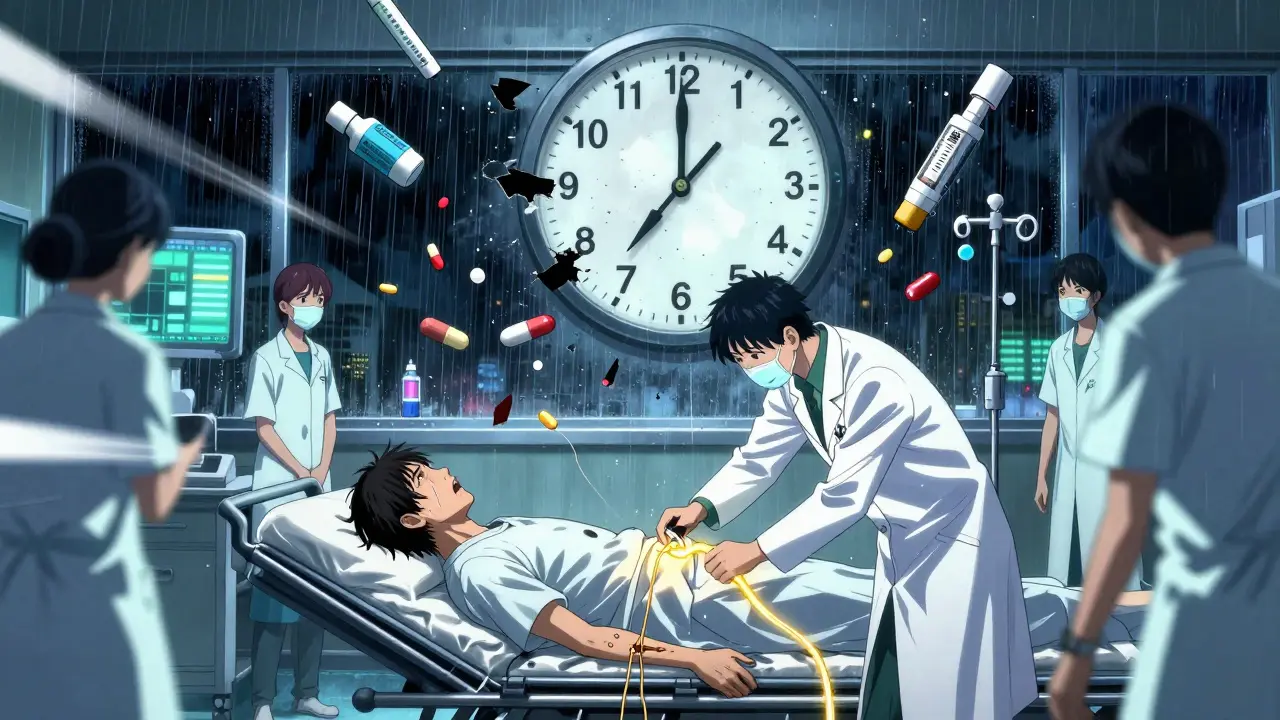
What You Need to Do Right Now
If you’re on an MAOI:- Never take any OTC cold, flu, or weight loss product without checking the active ingredients
- Keep a printed list of banned drugs in your wallet or phone - include ephedrine, pseudoephedrine, phenylephrine, phenylpropanolamine, and even some herbal supplements like bitter orange
- Carry an MAOI alert card. The Mayo Clinic found 87% of patients who did this avoided accidental exposure
- Tell every doctor, dentist, and pharmacist you see - even if they don’t ask
- Wait at least 14 days after stopping an irreversible MAOI before using any sympathomimetic
The Future: Safer Options?
There’s hope. In March 2023, the FDA approved befloxatone, a new reversible MAOI with a half-life of just six hours. Early data suggests it’s 90% less likely to cause hypertensive crisis than older versions. It’s not available yet, but it’s a sign the medical world is trying to fix this problem. Researchers are also testing wearable blood pressure patches that could alert patients to dangerous spikes before they become emergencies. But until those are widely available, the only safe rule is simple: avoid ephedrine and all related drugs completely.Real People. Real Consequences.
Reddit threads from people on MAOIs are full of horror stories. One user, u/MAOIsurvivor, wrote in March 2022: “I took a cold tablet thinking it was safe. My head felt like it was going to explode. I couldn’t see. My chest locked up. I called 911. They said I was 10 minutes from a stroke.” That’s not an exaggeration. That’s a real person who survived because they got help fast. Don’t be the next one. Don’t assume it won’t happen to you. Don’t rely on “I’ve taken this before.” MAOIs change how your body reacts. One time is enough to kill you.Can I take pseudoephedrine if I’m on an MAOI?
No. Pseudoephedrine acts the same way as ephedrine - it forces norepinephrine release. Even a single 30 mg dose can trigger a hypertensive crisis in someone on an irreversible MAOI. This combination is strictly contraindicated. Avoid all decongestants unless your psychiatrist confirms it’s safe - which is extremely rare.
How long after stopping an MAOI is it safe to take ephedrine?
For irreversible MAOIs like Nardil or Parnate, wait at least 14 days - but 21 days is safer. Monoamine oxidase enzymes take up to three weeks to regenerate. For reversible MAOIs like moclobemide, 48 hours is usually enough. But never assume. Always check with your prescribing doctor before restarting any stimulant or decongestant.
Are there any MAOIs that are safe with ephedrine?
No. No MAOI is safe with ephedrine. Even the newer transdermal selegiline (Emsam) carries risk at higher doses (above 6 mg/24hr). The FDA’s black box warning applies to all MAOIs. There are no exceptions. The only exception is befloxatone, which is not yet available and was designed to avoid this interaction - but it’s not approved for general use yet.
What should I do if I accidentally took ephedrine while on an MAOI?
Call 911 or go to the nearest emergency room immediately. Do not wait for symptoms. Hypertensive crisis can develop within 30 minutes. Do not take any blood pressure medication on your own - especially nifedipine. Emergency teams need to give you phentolamine intravenously. Delaying treatment increases the risk of stroke, heart attack, or death.
Can I use herbal supplements like bitter orange or synephrine if I’m on an MAOI?
No. Bitter orange contains synephrine, which is chemically similar to ephedrine and acts as a sympathomimetic. Multiple case reports link it to hypertensive crises in MAOI users. There is no safe dose. Avoid all herbal stimulants - including yohimbine, guarana, and ephedra - while on an MAOI.


Author
Mike Clayton
As a pharmaceutical expert, I am passionate about researching and developing new medications to improve people's lives. With my extensive knowledge in the field, I enjoy writing articles and sharing insights on various diseases and their treatments. My goal is to educate the public on the importance of understanding the medications they take and how they can contribute to their overall well-being. I am constantly striving to stay up-to-date with the latest advancements in pharmaceuticals and share that knowledge with others. Through my writing, I hope to bridge the gap between science and the general public, making complex topics more accessible and easy to understand.