

It’s easy to overlook a bottle of cough syrup sitting on your bathroom shelf. It’s not a pill, not a prescription, and it’s sold right next to the toothpaste. But when taken in large doses, the active ingredient in many of these syrups - dextromethorphan (DXM) - can turn a simple cold remedy into a dangerous hallucinogen. This isn’t a myth. It’s happening in bedrooms, school bathrooms, and basements across the country. And it’s not just teens. Adults are using it too, drawn in by its low cost and easy access.
What Is Dextromethorphan, Really?
Dextromethorphan is a synthetic drug designed to calm coughs. It works by targeting the brain’s cough center, not by numbing your throat or clearing mucus. When taken as directed - usually 15 to 30 mg every 4 to 8 hours - it’s safe and effective. You won’t feel high. You won’t feel anything unusual, really. Just a quieter cough.
But here’s the problem: DXM’s effects change dramatically when you take more than the label says. At doses between 100 and 200 mg, users start to feel dizzy, lightheaded, or detached from reality. At 300 mg and up, things get intense. People report seeing colors shift, hearing sounds stretch out, or feeling like they’re floating outside their body. At 500 mg or more, the effects can mimic those of PCP or ketamine - confusion, hallucinations, loss of motor control, and sometimes violent behavior.
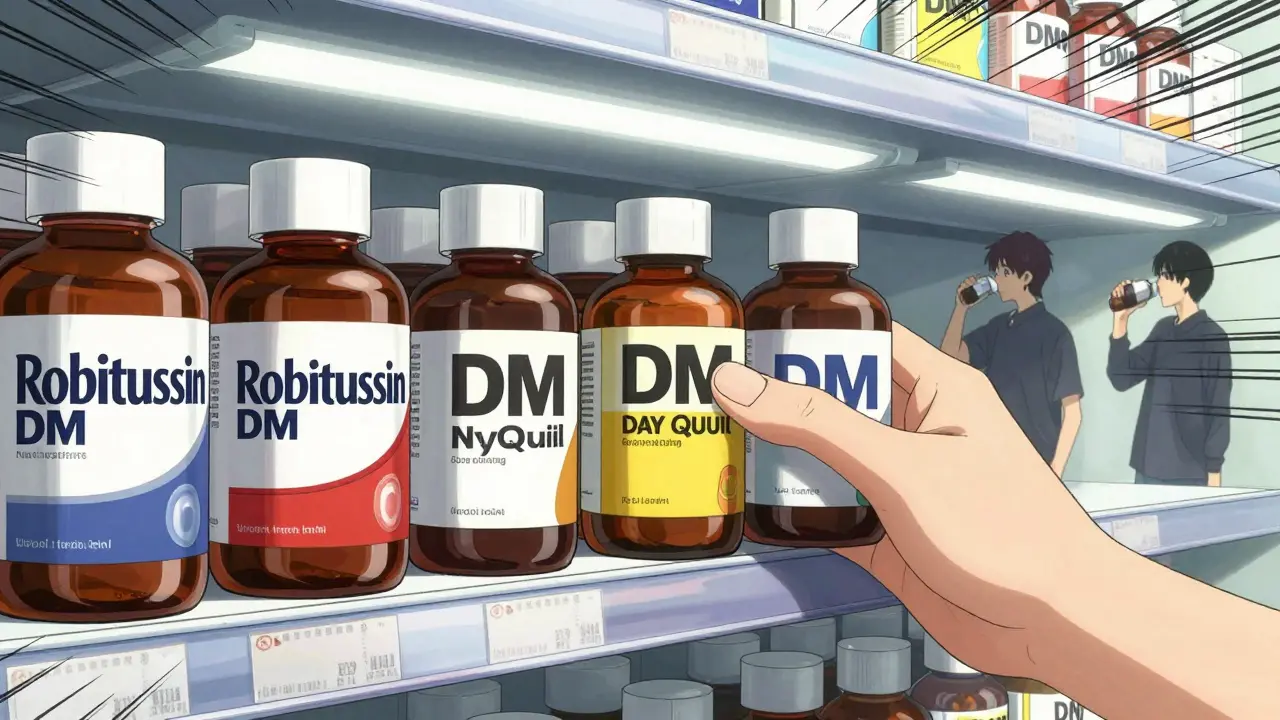
That’s why abusers call it “robo tripping” or “dexing.” The name comes from Robitussin DM and other DM-labeled syrups - the kind with “DM” right on the bottle. That’s the clue: if it says “DM,” it contains DXM. So do Triaminic DM, Benylin DM, NyQuil, DayQuil, and dozens of others. You don’t need to search online or visit a shady dealer. Just walk into any pharmacy and grab a bottle.
How People Abuse It
Most abusers don’t take one sip. They take a whole bottle. Or two. Or three. Some drink it straight. Others mix it with soda to mask the bitter taste. The most common method is simple: chug until you feel the buzz. But some have gotten more creative.
One dangerous trick is called the “robo shake.” Users drink a large amount of cough syrup, then force themselves to throw up. Why? To get rid of the other ingredients - like acetaminophen or antihistamines - that cause nausea, liver damage, or drowsiness. The goal is to keep only the DXM. But vomiting doesn’t remove all the toxins. Liver damage from acetaminophen overdose is one of the most common reasons people end up in the ER after DXM abuse.
Then there’s extraction. Some users follow online guides to chemically pull pure DXM powder out of syrup. They use vinegar, water, and filters. The result? A white powder that can be swallowed, snorted, or even injected. This is where things get deadly. Pure DXM has no safety buffer. One wrong measurement - a few extra milligrams - can cause seizures, coma, or death. And unlike syrup, powder doesn’t come with dosage warnings.
And it’s not just syrups anymore. DXM is now sold as capsules, pills, and loose powder online. Sites that sell “research chemicals” or “dietary supplements” often list it as “DXM HBr” or “cough suppressant powder.” No prescription needed. No ID check. Just a credit card and a shipping address.
Why Teens Are the Main Target
According to the National Institute on Drug Abuse, about 3% of teens admit to abusing OTC cough medicines to get high. That’s 1 in 30. In 2015, nearly 5% of high school seniors reported using DXM in the past year. Why? Because it’s cheap. A bottle of Robitussin costs less than $10. A gram of cocaine? Hundreds. A pill of MDMA? Even more.
It’s also legal. And easy to hide. No needles. No smell. No weird paraphernalia. Parents don’t think to check the medicine cabinet. Schools don’t test for it. And because it’s sold on shelves, teens assume it’s harmless.
But it’s not. The effects aren’t fun. They’re scary. People report feeling trapped in their own heads. Some can’t move for hours. Others have panic attacks so severe they call 911. And if they mix DXM with alcohol, antidepressants, or stimulants like MDMA, the risk of death jumps dramatically. Hyperthermia - your body overheating - is a real threat. So are seizures, heart attacks, and respiratory failure.
The Hidden Dangers
Most people think DXM abuse is just a phase. That you “get it out of your system” and move on. But that’s not always true. The Greenhouse Treatment Center reports increasing cases of long-term dependence. Users say they need higher doses just to feel normal. They feel anxious without it. They lie to friends and family to keep using.
And the physical damage adds up. Repeated use can cause memory loss, difficulty concentrating, and chronic nausea. Some users develop a condition called “serotonin syndrome” - a dangerous spike in brain chemicals that can cause fever, muscle spasms, and confusion. In extreme cases, it leads to organ failure.
Then there’s the acetaminophen factor. Many DXM syrups also contain acetaminophen (Tylenol). Taking too much of this combo can destroy your liver. One study found that over half of DXM overdose cases involved acetaminophen poisoning. And because people don’t realize they’re taking two drugs at once, they keep drinking - until it’s too late.
What Happens When You Overdose?
An overdose doesn’t always mean passing out. Sometimes it means staring at the wall for hours, unable to speak. Other times, it’s violent shaking, vomiting blood, or a heart rate that spikes to 180 beats per minute.
If someone overdoses, they need help - fast. Hospitals treat DXM overdoses with activated charcoal, IV fluids, and sometimes benzodiazepines to control seizures. But survival depends on timing. The longer you wait, the higher the risk of brain damage or death.
And here’s the cruel twist: many people who overdose don’t even realize they’re in danger. They think they’re just “feeling weird.” They don’t call for help until it’s too late.

How to Spot Abuse
Signs aren’t always obvious. But look for:
- Empty cough syrup bottles hidden in rooms or backpacks
- Unexplained drowsiness, confusion, or slurred speech
- Changes in school performance or social behavior
- Stains on clothing from syrup spills
- Searching online for terms like “how to get high on cough syrup” or “DXM dosage chart”
- Buying multiple bottles at once, especially at different pharmacies
Parents and teachers should check medicine cabinets. Not to punish, but to protect. Keep bottles locked. Track usage. Ask questions - calmly, without judgment.
It’s Not Just a Teen Problem
Yes, teens are the most visible group. But adults are using DXM too. Some use it to cope with anxiety or depression. Others use it recreationally at parties. One man in his 30s told a treatment center he’d been taking DXM for six months - up to 1,200 mg a night - to “escape reality.” He lost his job. His marriage fell apart. He didn’t think it was addiction. He thought he was just “taking something to relax.”
The truth? DXM isn’t harmless. It’s a powerful drug. And like any powerful drug, it can break people.
What Can Be Done?
Some states have started restricting sales. In New Mexico, you must show ID to buy cough syrup with DXM. Other states limit how many bottles you can buy in a day. But these rules aren’t nationwide. And online sellers don’t care.
The best defense is awareness. Talk to kids. Talk to friends. Know the signs. Don’t assume it’s just a phase. If someone you know is using DXM regularly, encourage them to get help. Treatment centers now offer counseling specifically for DXM dependence.
And if you’re using it yourself - stop. You don’t need to hit rock bottom to get help. One dose too many can be the last one you ever take.
DXM was never meant to be a party drug. It was meant to help you sleep through a cough. Don’t let it become something else.


Author
Mike Clayton
As a pharmaceutical expert, I am passionate about researching and developing new medications to improve people's lives. With my extensive knowledge in the field, I enjoy writing articles and sharing insights on various diseases and their treatments. My goal is to educate the public on the importance of understanding the medications they take and how they can contribute to their overall well-being. I am constantly striving to stay up-to-date with the latest advancements in pharmaceuticals and share that knowledge with others. Through my writing, I hope to bridge the gap between science and the general public, making complex topics more accessible and easy to understand.