
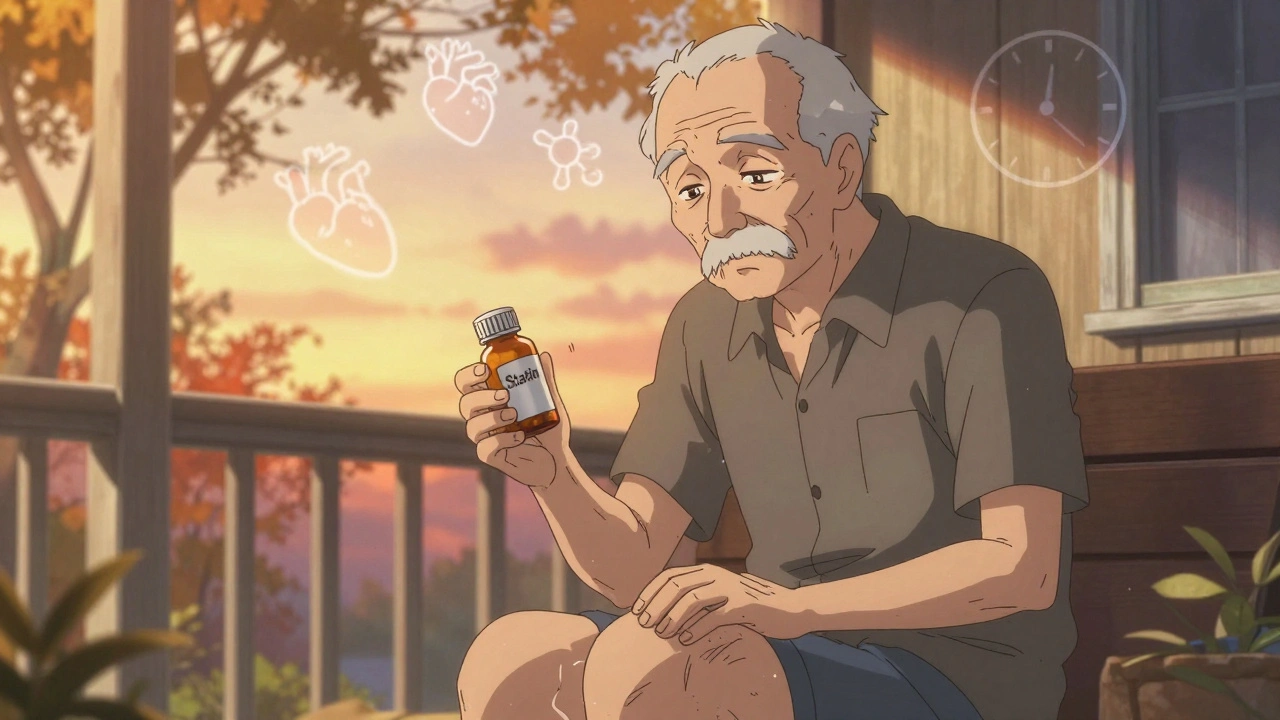
Statin Discontinuation Risk Assessment Tool
Disclaimer: This tool is for informational purposes only. Always consult with your doctor before making any changes to your medication.
Stopping statins isn’t as simple as just skipping a pill. For millions of people, these drugs have become a daily part of life-like brushing teeth or drinking coffee. But what happens when the benefits no longer outweigh the downsides? Especially as people age, gain other health problems, or just feel worse on the medication, the question isn’t whether they can stop statins-it’s whether they should, and how to do it without putting their heart at risk.
Why People Stop Statins
The most common reason? Muscle pain. Not everyone gets it, but for those who do, it’s real. Aching legs, tired arms, stiffness that doesn’t go away-even light activity feels heavy. Studies show that up to 87% of statin discontinuations are linked to these kinds of symptoms. Many patients assume the pain is just aging, but when it starts after beginning statins, the connection is hard to ignore. Fear plays a big role too. People hear about statins increasing diabetes risk, liver damage, or memory issues. While the actual chances are low-especially compared to the benefit of preventing a heart attack-those fears stick. And when a patient feels like they’re being told to take a pill for life with no plan to recheck if it’s still needed, frustration builds. Reddit threads and patient forums are full of stories like: “I stopped after six months and my muscles felt normal again. But now I’m terrified I’ll have a stroke.” Then there’s the practical side. Older adults often take 10 or more medications. Swallowing pills becomes a chore. Interactions with other drugs, changes in kidney or liver function, or even switching to a nursing home can lead to statins being dropped-not because someone decided it was best, but because the system didn’t catch it.When Stopping Is Safe
Not everyone needs statins forever. In fact, for some, continuing them does more harm than good. If you’re over 75 and have never had a heart attack, stroke, or blocked artery, stopping statins may be safe. The 2024 review in the Journal of the American Geriatrics Society looked at older adults nearing end-of-life and found no increase in death risk after stopping statins-even if they had high cholesterol. For patients with a life expectancy of less than two years-due to advanced cancer, dementia, or severe heart failure-stopping statins isn’t risky. It’s often the right choice. Why? Because statins take years to show benefit. They work slowly, by preventing plaque buildup over time. If you don’t have years left, the payoff is gone. Meanwhile, the side effects-muscle weakness, fatigue, dizziness-can make your remaining time worse. For people in hospice or with terminal illness, guidelines from MyPCnow and the American Geriatrics Society agree: stop statins. It’s not giving up. It’s choosing comfort over abstract future risk.When You Shouldn’t Stop
If you’ve had a heart attack, angioplasty, bypass surgery, or a stroke caused by plaque, you’re in the high-risk group. Stopping statins here is dangerous. A 2021 study in JAMA Network Open tracked over 100,000 people who stopped statins. For those with prior heart disease, one extra major heart event happened every 77 people who stopped each year. That’s not small. That’s a real, measurable jump in risk. Even for people without heart disease but with very high cholesterol, diabetes, or chronic kidney disease, stopping statins can increase heart attack risk by about 1 in 112 per year. That’s still significant. These aren’t numbers to ignore. The key is context. Someone with stable heart disease and no side effects? Keep taking it. Someone with the same heart disease but severe muscle pain, falling often, and only months to live? That’s a different story.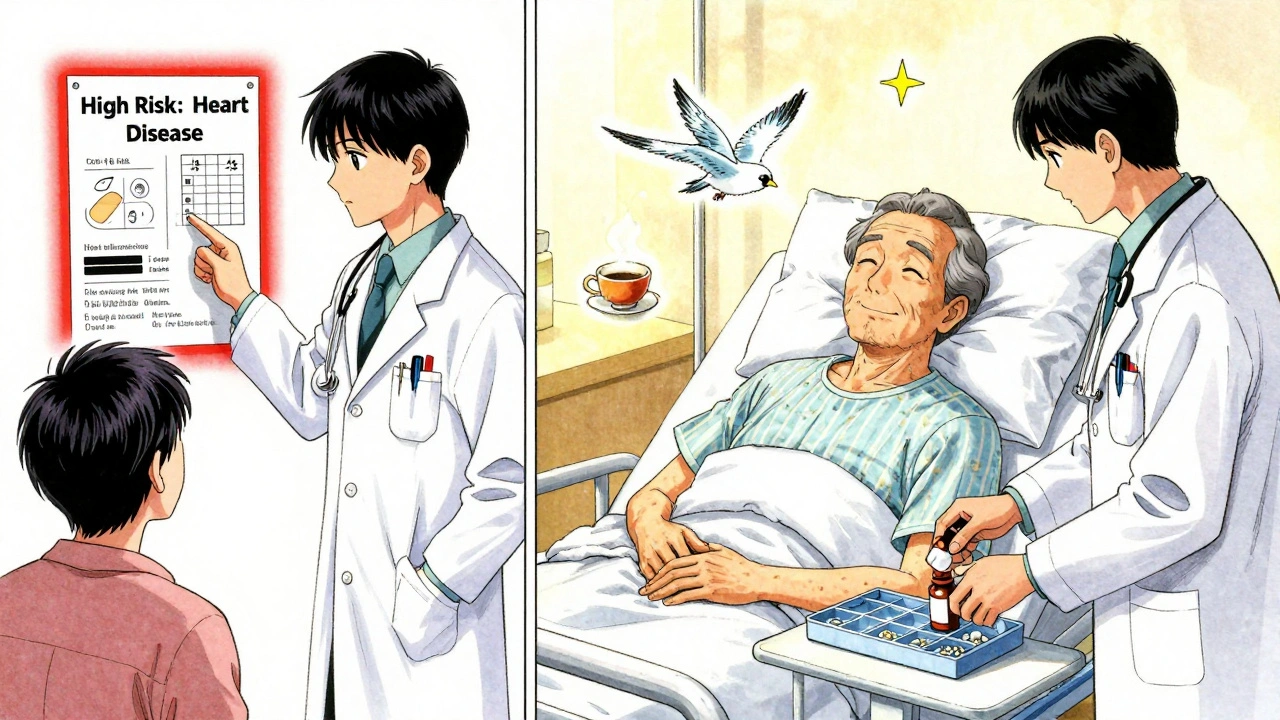
How to Stop Safely
Never just quit cold turkey. Even if you’re not having side effects, stopping suddenly can cause a rebound spike in cholesterol. It doesn’t always lead to disaster, but it’s unnecessary risk. The safest approach is to talk to your doctor. Not just once, but as part of a regular review. Every year or two, ask: “Is this still helping me?” Especially after age 70, or if you’ve had major health changes. If you’re stopping because of side effects, try these steps:- Switch to a different statin. Rosuvastatin and pravastatin are often better tolerated than simvastatin or atorvastatin.
- Reduce the dose. Half a pill of atorvastatin may still give you 80% of the benefit with fewer side effects.
- Try every-other-day dosing. Some people do fine on statins every 48 hours instead of daily.
- Consider non-statin options. Ezetimibe lowers cholesterol with minimal side effects. PCSK9 inhibitors work well but cost more. Fibrates or omega-3s help in specific cases but aren’t replacements for statins in high-risk patients.
What Happens After You Stop
Some people feel better right away. Energy returns. Muscle pain fades. Sleep improves. That’s good news. Others worry. They track every twinge in their chest, every skipped heartbeat. Anxiety can mimic heart symptoms. That’s why follow-up matters-not just for labs, but for reassurance. If you’re stopping because of age or poor health, your doctor should monitor you for signs of decline. Are you falling more? Losing muscle? Feeling weaker? These aren’t just signs of aging-they can be signs that stopping statins was the right call, or that something else is going on. For those with heart disease who stop, lifestyle becomes even more critical. Walk daily. Eat less sugar and saturated fat. Control blood pressure. Don’t smoke. These steps can’t replace statins for high-risk people, but they help fill the gap.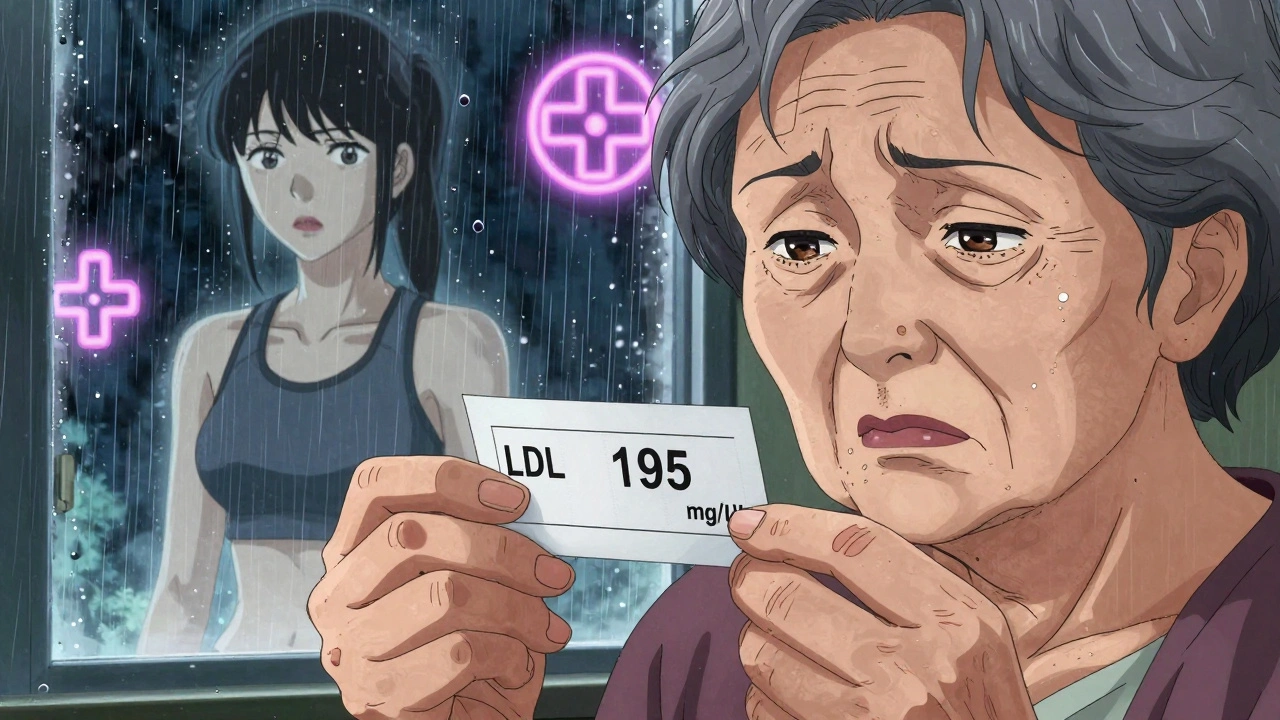
The Bigger Picture: Deprescribing Is Medicine Too
We’re taught to add drugs, not take them away. But medicine isn’t just about fixing what’s broken-it’s about preserving quality of life. In Australia, where life expectancy is high and chronic disease common, deprescribing is gaining traction. Pharmacists are now trained to help patients review their meds. Geriatricians routinely ask: “What’s the goal here? To live longer? Or to live better?” The ongoing trial in Europe-called “Discontinuing Statins in Multimorbid Older Adults”-is following 1,800 people over 70 with multiple health issues. They’re comparing those who stop statins to those who keep them. The goal? To see if stopping affects quality of life, falls, muscle loss, and heart events over two years. Results are due in late 2025. This isn’t about rejecting statins. It’s about using them wisely.What to Ask Your Doctor
If you’re thinking about stopping, here’s what to say:- “What’s my risk of a heart attack or stroke if I stop?”
- “Am I on this because I had heart disease, or just because my cholesterol is high?”
- “Could I try a lower dose or a different statin first?”
- “If I stop, how often should I check my cholesterol?”
- “Will stopping affect my other medications?”
Final Thoughts
Statin discontinuation isn’t failure. It’s not rebellion. It’s thoughtful medicine. For some, stopping means relief from pain and more energy. For others, it means avoiding unnecessary pills in the final years of life. For those with heart disease, staying on statins could mean avoiding a life-altering event. The answer isn’t the same for everyone. It depends on your history, your goals, your body, and your life expectancy. The best decision isn’t made by a guideline-it’s made by you and your doctor, together, with clear facts and honest conversation. If you’re unsure, ask for a second opinion. Talk to a pharmacist. Get your cholesterol tested. Reassess every year. Your health isn’t a one-time prescription. It’s a journey-and sometimes, the right step is to take something away.Can I stop statins if I feel fine?
If you’ve never had heart disease and are over 75, you may be able to stop safely, especially if you have other health issues. But if you’ve had a heart attack, stroke, or stent, stopping increases your risk of another event. Always check with your doctor before making any changes.
Do statins cause muscle damage?
Statins can cause muscle pain or weakness in about 5-10% of users, but true muscle damage (rhabdomyolysis) is rare-less than 1 in 10,000. Most muscle symptoms are mild and go away if you switch statins, lower the dose, or stop temporarily. Blood tests for creatine kinase can help confirm if it’s statin-related.
Will my cholesterol go back up if I stop?
Yes, cholesterol levels usually rise within 4-8 weeks after stopping statins. For people with genetic high cholesterol or heart disease, this can be dangerous. For older adults without heart disease, a rise in cholesterol may not matter as much if their life expectancy is short. Get your levels checked after stopping to understand the change.
Are there natural alternatives to statins?
Diet, exercise, and weight loss help lower cholesterol, but they don’t replace statins for high-risk people. Supplements like red yeast rice contain a natural statin and carry similar risks. Ezetimibe and PCSK9 inhibitors are prescription alternatives with fewer muscle side effects. Omega-3s and fibrates help in specific cases but aren’t substitutes for statins in preventing heart attacks.
Is it safe to stop statins for end-of-life care?
Yes. Major guidelines, including those from the American Geriatrics Society and MyPCnow, recommend stopping statins for patients with a life expectancy under two years. The benefits take years to appear, while side effects impact daily life now. Stopping reduces pill burden and can improve comfort and quality of life near the end.
How long does it take to feel better after stopping statins?
If muscle pain was the issue, many people notice improvement within 1-2 weeks. For others, it may take 4-6 weeks. Energy levels, sleep, and mood often improve gradually. If symptoms don’t improve or get worse, see your doctor-something else might be going on.
Can I restart statins later if I change my mind?
Yes, you can restart statins at any time. But if you stopped because of side effects, start with a lower dose or a different type. Don’t jump back to your old dose. Talk to your doctor about why you’re restarting and what your goals are now.


Author
Mike Clayton
As a pharmaceutical expert, I am passionate about researching and developing new medications to improve people's lives. With my extensive knowledge in the field, I enjoy writing articles and sharing insights on various diseases and their treatments. My goal is to educate the public on the importance of understanding the medications they take and how they can contribute to their overall well-being. I am constantly striving to stay up-to-date with the latest advancements in pharmaceuticals and share that knowledge with others. Through my writing, I hope to bridge the gap between science and the general public, making complex topics more accessible and easy to understand.