
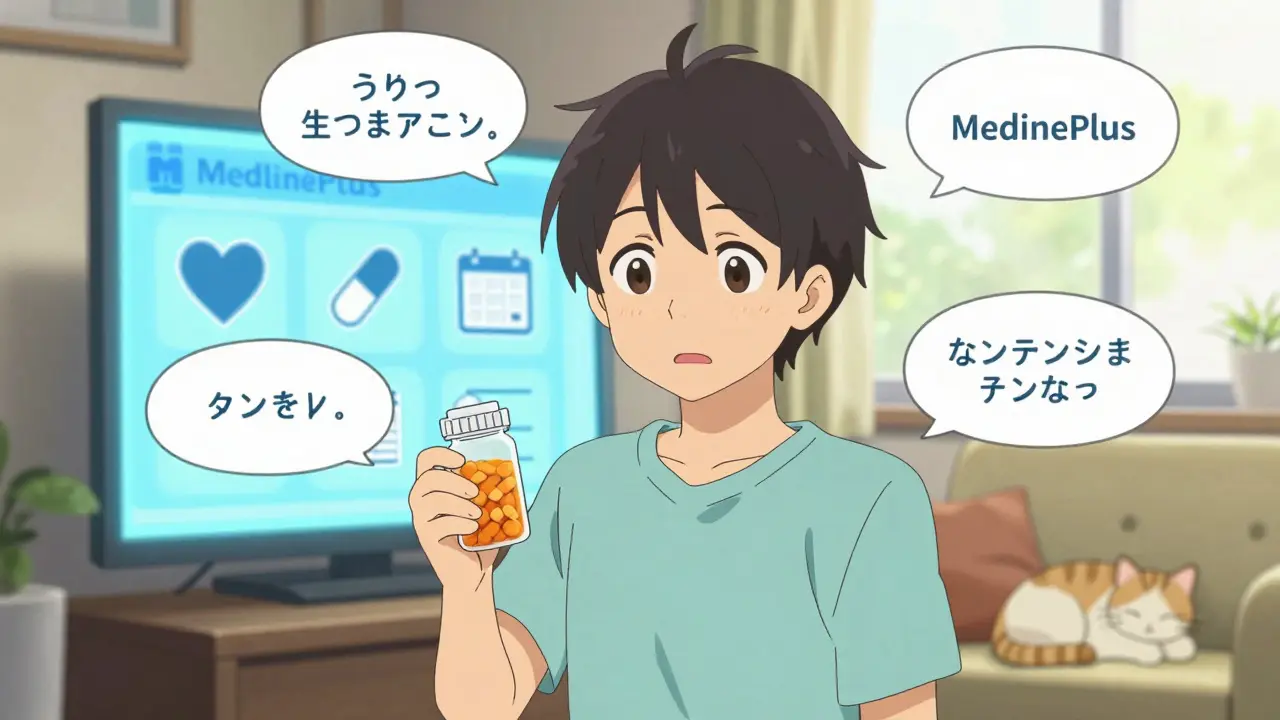
When you’re taking a generic drug, you need to know exactly what you’re getting. Not all generics are the same, and misinformation can lead to dangerous mistakes. Maybe you’re switching from a brand-name pill to a cheaper version, or your pharmacist handed you a new bottle with a different label. You want to be sure it’s safe, effective, and matches what your doctor prescribed. The good news? There are trusted, free, and official websites that give you accurate, up-to-date information about generic drugs - no guesswork, no ads, no fluff.
MedlinePlus: The Easiest Place for Patients to Understand Generic Drugs
MedlinePlus is the go-to resource for most people who just want clear answers. Run by the U.S. National Library of Medicine, it’s free, ad-free, and written in plain language. If you’ve ever struggled with medical jargon, this site fixes that. Each drug page explains what the medicine is for, how to take it, possible side effects, and what to avoid - all at a 6th to 8th grade reading level. It’s not just for English speakers, either. All major drug pages are available in Spanish, and more languages are being added thanks to a $15 million federal funding boost in 2023.
It covers over 17,500 drugs, including most generics you’ll find at your local pharmacy. You’ll find info on common ones like metformin, lisinopril, and levothyroxine. The site updates 15 to 20 times a day, so if the FDA issues a safety alert, you’ll see it within hours. Patients love it - it has a 4.7 out of 5 rating from over 1,200 reviews. One user wrote, “I showed this to my mom, and she finally understood why she couldn’t take ibuprofen with her blood thinner.”
But it’s not perfect. If you need exact dosing instructions for a rare generic or want to know if two generics are truly interchangeable, MedlinePlus might not have the details. That’s where other resources come in.
DailyMed: The Official Source for FDA Drug Labels
If you want the real deal - the exact wording the FDA approved for a drug’s label - DailyMed is your only source. It’s not designed for casual browsing. The layout is technical, full of legal language and medical terms. But that’s exactly why pharmacists, doctors, and health systems rely on it. Every generic drug sold in the U.S. must have its label submitted to the FDA, and DailyMed is where those documents live.
As of October 2023, DailyMed had over 92,000 drug listings. It’s updated within 72 hours of any FDA change, and 98.7% of updates are posted in that window. That speed matters. In 2022, a batch of generic metformin was recalled due to a contaminant. DailyMed was the first place the FDA posted the official recall notice. Pharmacies used it to pull the product from shelves within hours.
It’s free, no login needed, and works on any browser. But don’t expect a nice app or mobile-friendly design. The site scores low on usability - only 68 out of 100 in a 2022 study. If you’re not trained in reading drug labels, it can feel overwhelming. Still, it’s the gold standard for accuracy. As Dr. Lucinda Maine, CEO of the American Association of Colleges of Pharmacy, says, “DailyMed should be the first stop for any medication question requiring regulatory accuracy.”
Drugs.com: The Fastest Tool for Quick Checks
When you’re in a hurry - maybe you’re at the pharmacy counter, or your phone buzzes with a new prescription - Drugs.com is the fastest way to get answers. It handles 12 million searches a day. The site combines official FDA data with clinical references from AHFS DI and Micromedex, updating hourly. You can search by brand name, generic name, or even upload a picture of the pill using their Pill Identifier tool, which correctly matches 89% of unknown pills based on 2022 testing.
Its biggest strength? Drug interaction checker. In a 2023 Johns Hopkins study, it caught 92.4% of dangerous interactions between medications - better than most free tools. It also lists common side effects, warnings, and what to do if you miss a dose. Many patients and even some nurses use it daily. One pharmacist in Ohio told a survey, “I use Drugs.com when I’m on my way to work. I check three or four meds before I even get to the pharmacy.”
But it’s not all perfect. The site has ads - a lot of them. Some users say the pop-ups and sponsored links make it hard to focus. It also doesn’t show the full FDA label like DailyMed does. So while it’s great for quick checks, don’t rely on it for legal or compliance purposes.
The Orange Book: Knowing Which Generics Are Truly Interchangeable
Not all generic drugs are created equal. For some medicines - like levothyroxine for thyroid issues, warfarin for blood thinning, or phenytoin for seizures - even tiny differences in how the body absorbs the drug can cause serious problems. That’s where the FDA’s Orange Book comes in.
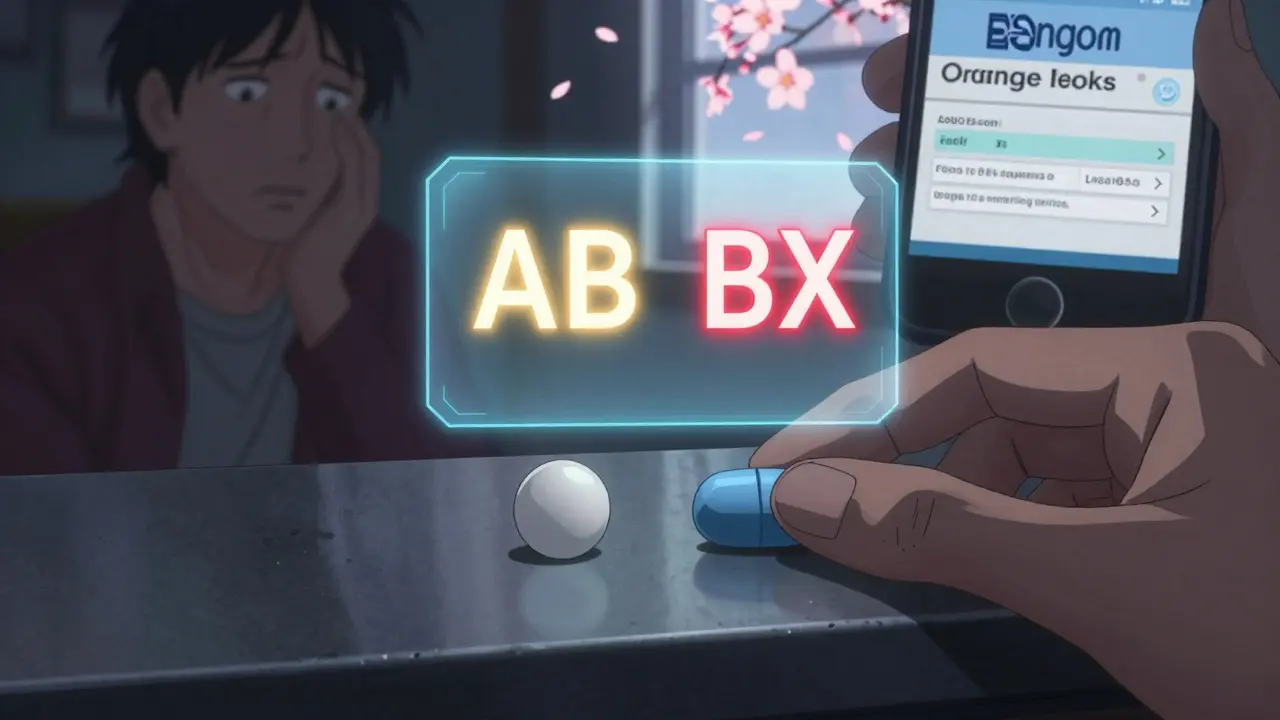
Officially called “Approved Drug Products with Therapeutic Equivalence Evaluations,” the Orange Book lists every approved generic and rates whether it’s considered “AB” - meaning it’s therapeutically equivalent to the brand-name version. As of November 2023, it included over 20,000 generic products. If a generic is rated “AB,” you can safely swap it. If it’s “BX,” it’s not recommended for substitution.
The Orange Book is free to use online. You can search by drug name or active ingredient. It’s updated monthly. But it’s not user-friendly. You need to know the exact drug name, and the interface is clunky. Still, it’s the only official source for therapeutic equivalence ratings. Pharmacists use it to decide which generics they can legally substitute. Patients should check it if they’ve had issues switching generics before - especially with narrow therapeutic index drugs.
When to Use Which Resource
You don’t need to use all of them. But knowing which one to pick saves time and reduces risk.
- For patients and families: Start with MedlinePlus. It’s simple, safe, and explains things in plain language.
- For quick lookups at the pharmacy or on the go: Use Drugs.com. It’s fast and has a great mobile app.
- For legal, regulatory, or pharmacy compliance: Always check DailyMed. It’s the official FDA label.
- For switching generics with serious drugs: Check the Orange Book to make sure the substitution is approved.
Most hospital pharmacists use at least three of these daily. Community pharmacists, especially in smaller towns, rely more on free tools because they can’t afford paid subscriptions like Lexicomp. But even then, they combine MedlinePlus for patient education with DailyMed for verification.
What’s Missing - And Why You Should Be Careful
Even the best free resources have gaps. DailyMed doesn’t always show real-world data on how a generic performs in older adults or people with kidney disease. Drugs.com doesn’t track every rare side effect. And the Orange Book hasn’t caught all bioequivalence issues with complex generics yet.
Experts warn that relying on just one source can be risky. A 2022 study by the Institute for Safe Medication Practices found that 7.4% of reported medication errors involved confusion over generic drugs - often because patients or providers assumed all generics were identical. The solution? Use multiple trusted sources. Don’t just trust the pharmacist’s word. Don’t just rely on a Google search. Go to the official sites.
And watch out for fake pharmacy websites. The FDA’s BeSafeRx campaign has helped over 12 million people avoid counterfeit drugs by directing them to verified sources like the ones listed here. If a site asks for your credit card before showing drug info, or if it looks unprofessional, walk away.
What’s Coming Next
These resources are getting better. In 2023, DailyMed launched a new API that lets electronic health records pull label data automatically. The Orange Book is being updated with real-world evidence to improve equivalence ratings. MedlinePlus is adding multilingual alerts for 15 languages by late 2024. And AI tools are starting to help predict interactions - but experts stress that free, government-backed sites will always be essential for fair access.
For now, the best advice is simple: Use the right tool for the job. If you’re learning about your medication, use MedlinePlus. If you need to verify a label, use DailyMed. If you’re checking for interactions on the fly, use Drugs.com. And if you’re switching a high-risk generic, check the Orange Book. These aren’t just websites - they’re safety nets. And you deserve to know what’s in your medicine.
Can I trust generic drugs from online pharmacies?
Only if the pharmacy is verified. Many websites sell fake or contaminated generics. Stick to U.S.-based pharmacies that require a prescription and are listed on the National Association of Boards of Pharmacy’s Verified Internet Pharmacy Practice Sites (VIPPS) list. Never buy from sites that don’t ask for a prescription or offer drugs at prices that seem too good to be true. Always cross-check the drug name and dosage using MedlinePlus or DailyMed to confirm what you’re receiving matches the approved version.
Why does my generic look different from the last one I got?
It’s normal. Generic drugs can come from different manufacturers, and each one uses different fillers, colors, or shapes. The active ingredient must be the same, but the appearance can change. That’s why it’s important to check the drug name and strength - not the pill’s color or markings. Use Drugs.com’s Pill Identifier or look up the drug on DailyMed to confirm it’s the same medication. If you’re unsure, ask your pharmacist. They can tell you if it’s a different manufacturer but still approved.
Is there a free app for checking generic drugs?
Yes. Drugs.com has a free mobile app with a pill identifier and interaction checker. MedlinePlus also has a mobile-friendly website that works on phones and tablets. Neither requires an account. DailyMed doesn’t have a dedicated app, but its website works fine on mobile browsers. Avoid apps that aren’t from known health organizations - many are ad-driven or sell your data. Stick to the official sources: MedlinePlus, Drugs.com, and DailyMed.
How do I know if a generic is as good as the brand name?
By law, the FDA requires generics to have the same active ingredient, strength, dosage form, and route of administration as the brand. They must also be absorbed into the body at the same rate and amount - within 80% to 125% of the brand. That’s called bioequivalence. For most drugs, this means they work the same. But for a small number of drugs - like thyroid meds, seizure drugs, and blood thinners - even small differences matter. Check the Orange Book for the “AB” rating. If it’s there, the generic is considered interchangeable. If it’s “BX,” talk to your doctor before switching.
Are these resources updated in real time?
Most updates happen within 24 to 72 hours. DailyMed updates within 10 business days of FDA approval, but 98.7% of changes appear within 72 hours. Drugs.com pulls data hourly from FDA and Micromedex. MedlinePlus updates 15 to 20 times a day. The Orange Book updates monthly. For urgent safety alerts - like a recall or new warning - these sites are among the fastest to publish official information. If you hear about a drug issue on the news, always check one of these sites to confirm before making any changes to your medication.


Author
Mike Clayton
As a pharmaceutical expert, I am passionate about researching and developing new medications to improve people's lives. With my extensive knowledge in the field, I enjoy writing articles and sharing insights on various diseases and their treatments. My goal is to educate the public on the importance of understanding the medications they take and how they can contribute to their overall well-being. I am constantly striving to stay up-to-date with the latest advancements in pharmaceuticals and share that knowledge with others. Through my writing, I hope to bridge the gap between science and the general public, making complex topics more accessible and easy to understand.