
DIC Risk Calculator
This tool calculates the likelihood of drug-induced disseminated intravascular coagulation using the International Society on Thrombosis and Haemostasis (ISTH) scoring system.
Drug-induced disseminated intravascular coagulation (DIC) isn’t just a rare complication-it’s a silent killer that can turn a routine medication into a life-threatening emergency. Unlike sepsis or trauma, where DIC develops as a consequence of a broader crisis, drug-induced DIC can strike without warning, even in otherwise healthy patients. It’s not about overdosing. It’s about the body’s violent, uncontrolled response to a drug it shouldn’t have been exposed to. And when it happens, the clock starts ticking immediately.
What Exactly Is Drug-Induced DIC?
DIC isn’t a disease. It’s a syndrome-a cascade gone rogue. Your body’s clotting system, designed to stop bleeding, goes into overdrive. Tiny clots form everywhere-in the brain, kidneys, lungs, liver. These clots clog small blood vessels, starving organs of oxygen. Then, as clotting factors and platelets get used up, the body can’t form clots anymore. The result? Massive, uncontrolled bleeding.
Drug-induced DIC happens when certain medications directly trigger this process. Some activate tissue factor, the body’s main clotting switch. Others damage blood vessel walls. A few even mimic natural clotting proteins. The result is the same: chaos in the bloodstream.
According to the WHO’s global adverse drug reaction database (Vigibase), over 4,600 serious cases of drug-related DIC were reported between 1968 and 2015. And that’s just what got documented. Many cases likely go unrecognized because doctors don’t suspect the drug as the cause.
Which Drugs Are Most Likely to Cause It?
Not all drugs carry the same risk. Some are notorious. Others are rarely flagged-even though they cause DIC.
The top offenders, based on real-world reporting data:
- Bevacizumab (Avastin): A monoclonal antibody used in cancer. ROR 2.02. One of the strongest signals.
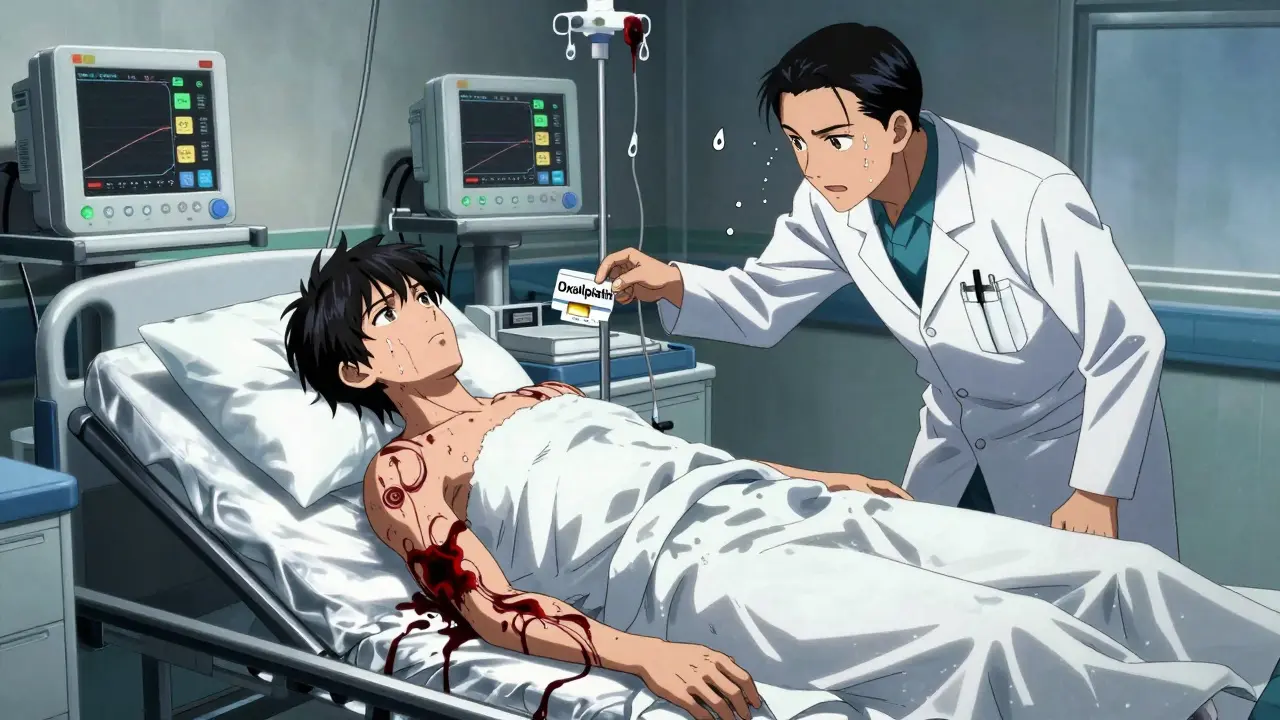
- Oxaliplatin: A chemotherapy drug. ROR 1.77. Often causes DIC within days of infusion.
- Dabigatran (Pradaxa): An anticoagulant. Surprisingly, it can trigger clotting instead of preventing it.
- Gemtuzumab ozogamicin: A targeted cancer therapy. ROR of 28.7-the highest ever recorded for DIC.
- Vancomycin: An antibiotic. Rare, but documented in multiple case reports.
What’s alarming? Many of these drugs don’t even list DIC as a possible side effect in their official prescribing information. Doctors are flying blind. A 2020 study found that nearly half of the drugs linked to DIC in Vigibase had no mention of it in their product summaries.
How Do You Recognize It?
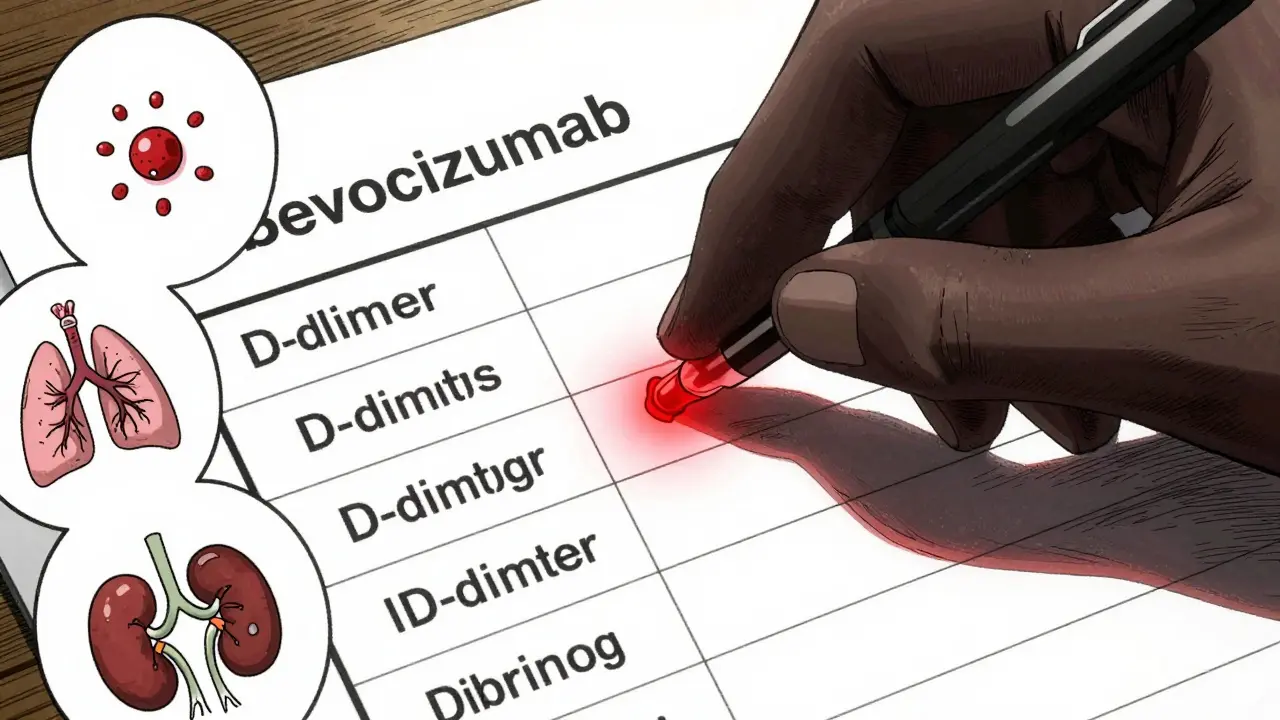
DIC doesn’t come with a bell. It creeps in. One day, a patient on chemotherapy has a minor nosebleed. The next, their IV site won’t stop oozing. Their platelet count drops from 180 to 45 in 48 hours. Their PT and aPTT are prolonged. D-dimer soars above 10 times normal. Fibrinogen crashes below 1.5 g/L.
The International Society on Thrombosis and Haemostasis (ISTH) scoring system is the gold standard for diagnosis:
- Platelet count: <100 × 10⁹/L = 1 point; <50 × 10⁹/L = 2 points
- Prothrombin time: >3 seconds longer than normal = 1 point; >6 seconds = 2 points
- Fibrin degradation products: Strongly elevated = 3 points
- Fibrinogen: <1.0 g/L = 1 point
A score of 5 or higher means overt DIC. But don’t wait for the score. If a patient on a high-risk drug suddenly develops unexplained bleeding or organ failure-think DIC. Don’t overthink it. Act.
Stopping the Drug Is Step One-No Exceptions
Everything else hinges on this: stop the drug immediately. No second opinions. No waiting for lab results. If the patient is on oxaliplatin and starts bleeding, halt the infusion. If they’re on bevacizumab and their platelets plummet, cancel the next dose. Delaying even 12 hours can mean the difference between survival and death.
Unlike sepsis-induced DIC, where antibiotics are the priority, drug-induced DIC demands one thing: removal of the trigger. Continuing the drug is catastrophic. A 2021 case report described a patient who developed DIC after oxaliplatin. He survived only because his oncologist recognized the link and stopped treatment within hours. The alternative? Multiorgan failure and death.
Supportive Care: What Works and What Doesn’t
Once the drug is stopped, the focus shifts to supporting the body while it recovers. This isn’t about fixing DIC-it’s about buying time.
Platelets: Give them only if the patient is bleeding or about to have surgery. Don’t transfuse just because the count is low. The threshold? 50 × 10⁹/L for major bleeding or invasive procedures. For minor bleeding, 20 × 10⁹/L is enough. Over-transfusing can make clots worse.
Fibrinogen: Keep it above 1.5 g/L. Below that, bleeding risk spikes. Use fibrinogen concentrate if available. Cryoprecipitate is an alternative. Don’t use fresh frozen plasma (FFP) alone-it’s inefficient and carries volume overload risks.
FFP and cryoprecipitate: Use only when specific factors are low. Don’t use FFP as a blanket fix. It’s not a magic bullet.
Anticoagulants like heparin: Controversial. In some cases, low-dose heparin may help prevent further clotting. But avoid it in patients with suspected heparin-induced thrombocytopenia (HIT), which can mimic DIC. And never use warfarin in acute DIC-it depletes natural anticoagulants and can cause skin necrosis.
Antithrombin or thrombomodulin: These experimental agents showed promise in trials-but only in patients NOT on heparin. So if you’re considering them, stop heparin first. Otherwise, they’re useless.
What to Avoid at All Costs
There are traps in DIC management. Falling into them kills patients.
- Don’t give warfarin. It causes a temporary hypercoagulable state. Skin necrosis isn’t just a side effect-it’s a disaster.
- Don’t transfuse platelets routinely. You’re feeding the clotting fire. Only transfuse when bleeding is active or imminent.
- Don’t ignore the medication history. One ICU doctor in Perth told me he missed a case of DIC because the patient was on a new herbal supplement. Turns out, it contained a contaminant that triggered clotting. Always ask: What’s new? What changed?
- Don’t assume it’s sepsis. Many patients with drug-induced DIC have fever and low blood pressure. But if they’re not infected, antibiotics won’t help. And delaying drug withdrawal will kill them.
Real-World Outcomes: The Hard Truth
DIC doesn’t care how smart you are. It doesn’t care if you’re at a top hospital. Mortality is brutal. Studies show 40-60% death rates in severe cases. In one Reddit thread, an ICU attending with 15 years of experience said he’s seen 12 cases of drug-induced DIC. Eight died. That’s 67% mortality.
Survivors? They often have long recoveries. One patient on bevacizumab spent 14 days in ICU. He needed 84 units of platelets and 56 units of FFP. He survived-but lost kidney function. Another, given dabigatran, required idarucizumab to reverse the drug. She lived, but her platelets took six weeks to normalize.
There’s no miracle cure. No drug that reverses DIC. The only thing that works is stopping the trigger and supporting the body until it heals itself.
What’s Changing? New Guidelines and Awareness
Things are improving-but slowly.
In 2022, the International Council for Standardization in Haematology (ICSH) released the first-ever guidelines for monitoring high-risk drugs. They recommend weekly blood counts and coagulation tests for patients on bevacizumab, oxaliplatin, and similar agents. That’s a big step.
The European Medicines Agency (EMA) issued a safety alert in January 2023 for seven antibody-drug conjugates linked to DIC. Manufacturers now have to update risk management plans.
Research is also underway to find genetic markers that predict who’s at risk. A trial (NCT04567891) is testing whether certain gene variants make people more likely to develop DIC from certain drugs. If successful, we might one day screen patients before giving them high-risk drugs.
But until then, the best tool is awareness. Know the drugs. Know the signs. Act fast.
Final Takeaway: Speed Saves Lives
Drug-induced DIC is rare. But when it happens, it’s fast, brutal, and often preventable. The difference between life and death often comes down to one question: Did the clinician ask, "What did this patient just start taking?"
If you’re treating a patient with sudden bleeding, low platelets, and organ failure-check their drug list. Don’t wait for the lab to confirm DIC. If the drug is on the list of high-risk agents, stop it. Now.
There’s no time for hesitation. No time for second opinions. No time for protocol delays. In drug-induced DIC, the clock starts the moment the drug enters the bloodstream. And the only antidote is stopping it.
Can a common drug like aspirin cause DIC?
Aspirin alone rarely causes DIC. It’s an antiplatelet, not a direct activator of the coagulation cascade. However, in rare cases of overdose or in patients with severe underlying conditions (like sepsis or cancer), aspirin can contribute to bleeding complications that mimic DIC. But true drug-induced DIC from aspirin is virtually unheard of in clinical practice.
How long does it take for DIC to develop after taking a drug?
It varies. With chemotherapy drugs like oxaliplatin or bevacizumab, DIC can develop within 24 to 72 hours after infusion. For anticoagulants like dabigatran, it may take days to weeks. In some cases, especially with herbal supplements or contaminated medications, symptoms can appear within hours. The key is to watch for sudden changes in bleeding or lab values after starting a new drug.
Is DIC reversible?
Yes-if caught early and the triggering drug is stopped immediately. The body can regenerate platelets and clotting factors over days to weeks. But if organ damage has already occurred (like kidney failure or stroke), those effects may be permanent. Recovery depends on how quickly intervention happens and how severe the coagulopathy became.
Can DIC happen after stopping a drug?
Yes, but it’s rare. Some drugs, especially those with long half-lives or active metabolites, can continue triggering DIC even after discontinuation. This is most common with drugs like bevacizumab, which can remain in the system for weeks. If DIC symptoms appear after stopping a drug, the drug is still likely the cause-especially if it’s on the high-risk list.
Why don’t drug labels warn about DIC more often?
Because the link isn’t always obvious. DIC is rare, and it’s often misdiagnosed as sepsis or liver failure. Drug manufacturers rely on spontaneous reporting systems like Vigibase, which depend on clinicians to report cases. Many cases go unreported, so the signal doesn’t reach regulators. It’s a systemic blind spot-until enough cases pile up, and then the label gets updated, often years too late.


Author
Mike Clayton
As a pharmaceutical expert, I am passionate about researching and developing new medications to improve people's lives. With my extensive knowledge in the field, I enjoy writing articles and sharing insights on various diseases and their treatments. My goal is to educate the public on the importance of understanding the medications they take and how they can contribute to their overall well-being. I am constantly striving to stay up-to-date with the latest advancements in pharmaceuticals and share that knowledge with others. Through my writing, I hope to bridge the gap between science and the general public, making complex topics more accessible and easy to understand.