
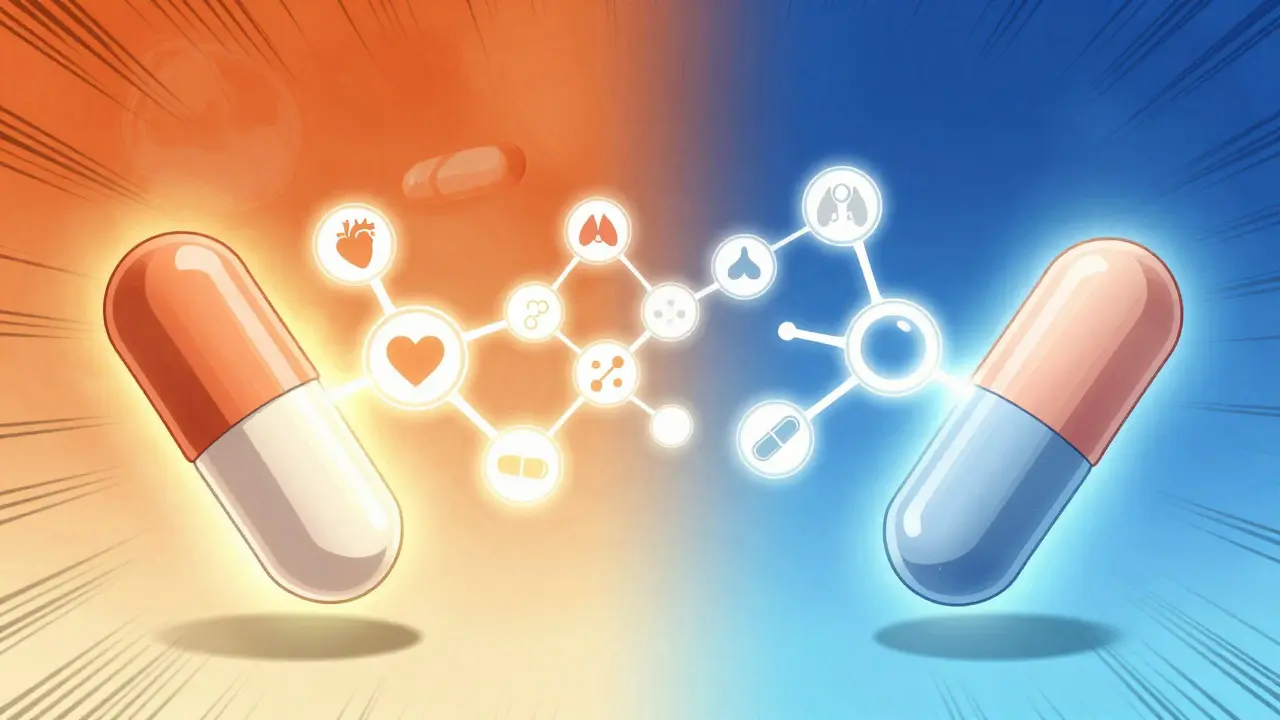
When you pick up a prescription, you might see two options: the familiar brand-name pill or a cheaper generic version. Many people wonder - does switching to a generic drug change how it interacts with other medicines you’re taking? The short answer is no. The risk of drug interactions is essentially the same for generic and brand-name medications. But there’s more to it than that.
What Makes a Generic Drug the Same?
Generic drugs aren’t copies. They’re required by law to contain the exact same active ingredient, in the same strength, and delivered the same way as the brand-name version. If your doctor prescribes lisinopril, whether you get the brand-name Zestril or a generic version, the molecule doing the work is identical. The U.S. Food and Drug Administration (FDA) demands that generics prove they deliver the same amount of that active ingredient into your bloodstream at the same rate as the brand. This is called bioequivalence.To get approved, a generic must fall within 80% to 125% of the brand’s pharmacokinetic numbers - specifically, the area under the curve (AUC) and peak concentration (Cmax). That means the body absorbs the drug within a narrow, scientifically accepted range. Most of the time, the difference is less than 5%. For drugs with a narrow therapeutic index - like warfarin, levothyroxine, or lithium - the rules are tighter. The FDA requires bioequivalence to stay between 90% and 111% to reduce any risk of under- or overdosing.
Why People Think Generics Are Different
It’s not the active ingredient that causes confusion. It’s the rest of the pill. Generics can have different fillers, dyes, preservatives, or coatings. These are called excipients. A generic version of a pill might use lactose as a filler, while the brand uses corn starch. For most people, this doesn’t matter. But for someone with a rare allergy to a specific dye or a severe lactose intolerance, an excipient could trigger a reaction - not a drug interaction, but a side effect.Then there’s the psychological factor. Studies show that when patients switch from a brand-name drug to a generic, some report new side effects - even when nothing has changed medically. One 2022 Consumer Reports survey found that 18% of people believed generics had different interaction risks, but only 4% actually experienced a change after switching. WebMD data from 2019 to 2022 showed complaints spiked in the first three months after a new generic hit the market, then dropped back down. That’s a classic nocebo effect - the mind expecting trouble, so it finds it.
Real-World Evidence: Do Interactions Really Differ?
Large-scale studies have looked hard for differences. A major 2020 study in Scientific Reports tracked over 17,000 patients on 17 cardiovascular drugs. It compared brand-name and generic versions across death rates and major heart events. The results? Generic users had fewer adverse events. The estimated rate of major cardiac events was 83.6 per 1,000 patient-years for brand-name users, but only 51.3 for generic users. After adjusting for other factors, generics were associated with a lower risk.The FDA’s own adverse event database, FAERS, from 2015 to 2020, showed generic drugs had a 0.82% rate of reported drug interaction-related events. Brand-name drugs were at 0.78%. The difference wasn’t statistically significant. In other words, no real difference.
Dr. Aaron Kesselheim, a professor at Harvard Medical School, put it plainly: “The vast majority of evidence suggests that generic drugs are therapeutically equivalent to their brand-name counterparts, including regarding drug interaction profiles.” The FDA’s Center for Drug Evaluation and Research agrees: differences in inactive ingredients are not expected to affect how the drug works or how it interacts with other medicines.
When Could Things Go Wrong?
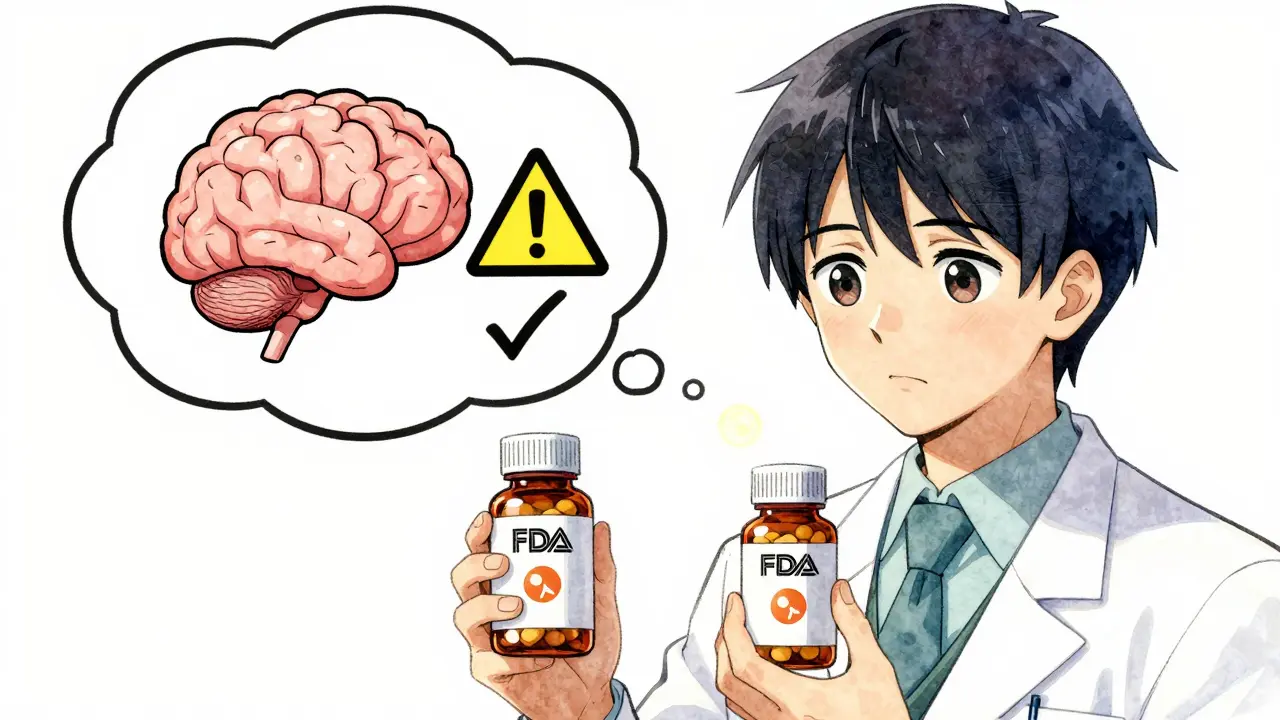
There are rare cases where switching between generics - not between brand and generic - might cause a problem. Imagine you’ve been on one generic version of levothyroxine for years. Your doctor switches you to a different generic made by another company. Both are FDA-approved. Both are bioequivalent to the brand. But because they’re made with different excipients or manufacturing processes, your body might absorb them slightly differently. For a drug with a narrow therapeutic index, even a 5% shift in absorption can matter.This is why pharmacists at top medical centers like UCSF now check both active and inactive ingredients when a patient reports a change in symptoms after switching. The FDA’s Orange Book now includes excipient information for every approved generic, so pharmacists can spot potential issues - like a pill containing gluten or a dye linked to sensitivities.
Also, if you’re on multiple medications and your pharmacist switches you between different generic versions of the same drug, you could be getting slightly different absorption patterns. That’s why some doctors write “dispense as written” on prescriptions for NTI drugs - to prevent automatic switching. But this is the exception, not the rule.
What About Other Countries?
The U.S. allows an 80-125% bioequivalence range. The European Medicines Agency (EMA) uses a tighter 90-111% range, especially for sensitive drugs. But even with stricter standards, the EMA’s 2022 report concluded: “The risk of drug interactions with generic medicines is not higher than with the reference medicine.” Australia’s TGA, Canada’s Health Canada, and the UK’s MHRA all follow similar rules. Global data shows no pattern of increased interaction risks with generics.
What Should You Do?
If you’re taking a generic drug and feel fine - stick with it. If you’ve had no issues with the brand, switching to a generic is safe. If you’ve never tried a generic, there’s no reason to avoid it. The savings are huge. In the U.S. alone, generics saved the healthcare system $1.68 trillion over the last decade.But pay attention to your body. If you notice new side effects after switching - dizziness, nausea, fatigue, or a change in how your condition is controlled - tell your doctor or pharmacist. It’s not likely to be a drug interaction. It could be an excipient reaction, or your body just needs time to adjust. Your pharmacist can check the excipients in your new pill and compare them to your old one.
Don’t assume a more expensive brand is safer. Don’t assume a cheaper generic is riskier. The science doesn’t support either. What matters is the active ingredient - and that’s the same.
What If You’re on a Narrow Therapeutic Index Drug?
For drugs like warfarin, digoxin, cyclosporine, or levothyroxine, consistency matters. Once you’re stabilized on a specific generic version, it’s best to stay on that same one. If your pharmacy switches to a different generic, ask them to note the change in your record. Your doctor might want to check your blood levels after the switch - not because generics are unsafe, but because even small changes in absorption can matter when the margin for error is tiny.Some states allow pharmacists to automatically substitute generics. Others require the prescriber to say “dispense as written.” If you’re on one of these critical drugs, ask your doctor if they’ve added that note to your prescription.
Bottom Line
Drug interactions depend on the active ingredient - not whether the pill is branded or generic. The science, the regulators, and the real-world data all agree: the risk is the same. Generics are not second-rate. They’re rigorously tested, widely used, and proven safe. The only time you might see a difference is if you’re sensitive to an inactive ingredient - and even then, it’s not a drug interaction. It’s an allergy or intolerance.Save money. Take the generic. Talk to your pharmacist if something feels off. But don’t let myths stop you from using a safe, effective, and affordable option.


Author
Mike Clayton
As a pharmaceutical expert, I am passionate about researching and developing new medications to improve people's lives. With my extensive knowledge in the field, I enjoy writing articles and sharing insights on various diseases and their treatments. My goal is to educate the public on the importance of understanding the medications they take and how they can contribute to their overall well-being. I am constantly striving to stay up-to-date with the latest advancements in pharmaceuticals and share that knowledge with others. Through my writing, I hope to bridge the gap between science and the general public, making complex topics more accessible and easy to understand.