
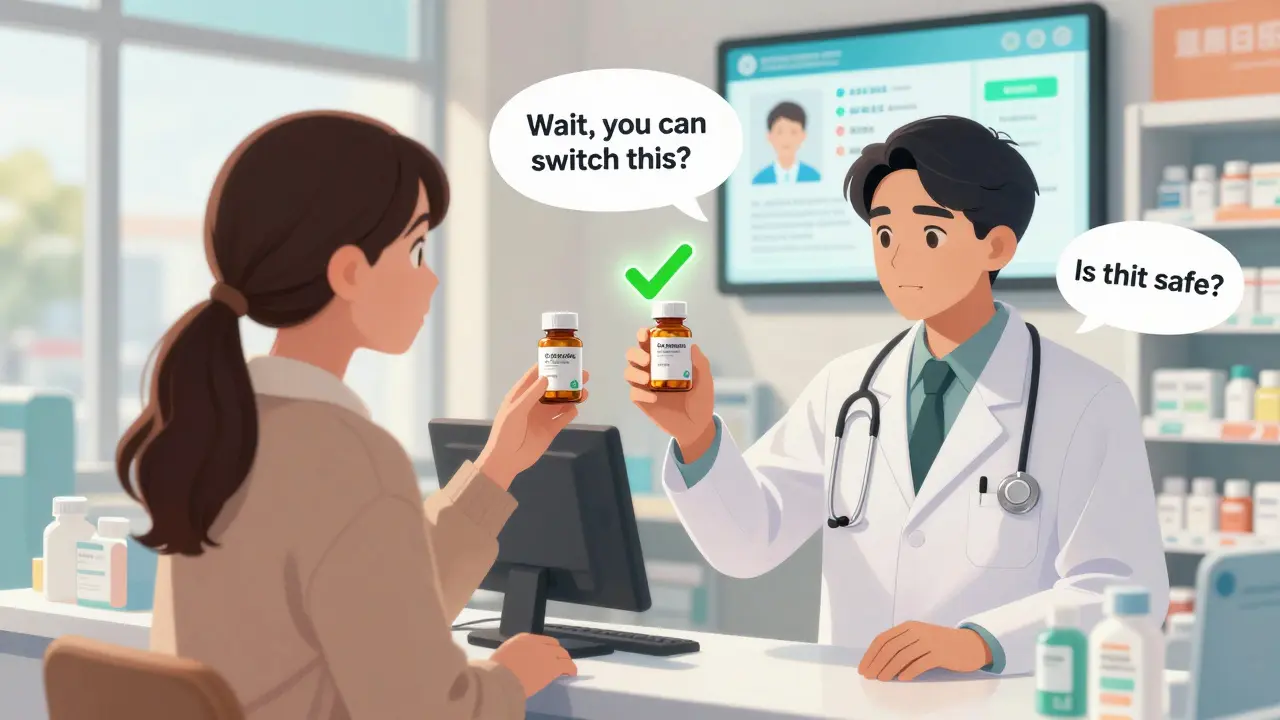
When you walk into a pharmacy to pick up a prescription, you probably assume the pharmacist just fills the doctor’s order. But in many parts of the U.S., that’s no longer the whole story. Today, pharmacists can do far more than count pills. In some states, they can switch your medication, start a new treatment, or even prescribe birth control - all without calling your doctor. This isn’t science fiction. It’s the new reality of pharmacist substitution authority.
What Exactly Is Pharmacist Substitution Authority?
Pharmacist substitution authority means the legal right for pharmacists to change or replace a prescribed medication under specific conditions. It’s not about making random swaps. Every change has rules, limits, and safeguards built in. The most common form is generic substitution, which is allowed in all 50 states. If your doctor prescribes Lipitor, and a generic version of atorvastatin is available, the pharmacist can give you the cheaper generic unless the doctor specifically wrote “dispense as written.” But it goes further. In a handful of states, pharmacists can do something called therapeutic interchange. That means swapping one drug for another in the same class - like switching from one statin to another, or from one antidepressant to a different one - even if they’re not chemically identical. This isn’t just about cost. It’s about finding the best fit for your body, side effects, or insurance coverage. Only Arkansas, Idaho, and Kentucky have full therapeutic interchange laws on the books as of 2025. Even there, it’s not automatic. The doctor has to write “therapeutic substitution allowed” on the prescription. And the pharmacist must tell you about the change and get your permission before switching.How Far Can Pharmacists Go? From Substitution to Independent Prescribing
Some states have gone even further. In Maryland, pharmacists can prescribe birth control to anyone over 18. In Maine, they can hand out nicotine patches without a doctor’s script. California lets pharmacists “furnish” certain medications - a legal term that means they can provide them without a traditional prescription. New Mexico and Colorado use statewide protocols, so the board of pharmacy sets the rules, and pharmacists follow them. No new law needed each time they want to add a new service. The most advanced model is independent prescribing. In these cases, pharmacists can start, adjust, or stop medications based on standing orders or clinical protocols - no doctor approval required. All 50 states now allow this for at least one condition, usually things like flu shots, emergency contraception, or naloxone for opioid overdoses. Some states let pharmacists manage chronic conditions like high blood pressure or diabetes under protocols. In rural areas, where a doctor might be 50 miles away, this can mean the difference between getting treatment and going without.Collaborative Practice Agreements: The Middle Ground
Not every state lets pharmacists act alone. Many use collaborative practice agreements (CPAs). These are formal, written contracts between a pharmacist and a doctor (or group of doctors) that outline exactly what the pharmacist can do. The agreement might say: “Pharmacist can adjust warfarin doses if INR is above 4.0,” or “Pharmacist can prescribe antibiotics for uncomplicated UTIs in women under 65.” Every CPA must include clear rules: when to act, when to refer, what tests to order, and how to document everything. These agreements are allowed in all 50 states and D.C., but their use varies wildly. In some places, they’re common in clinics and hospitals. In others, they’re rare because doctors are hesitant to sign them. The big shift lately? More states are letting pharmacists lead these agreements - meaning they design the protocols, not just follow them.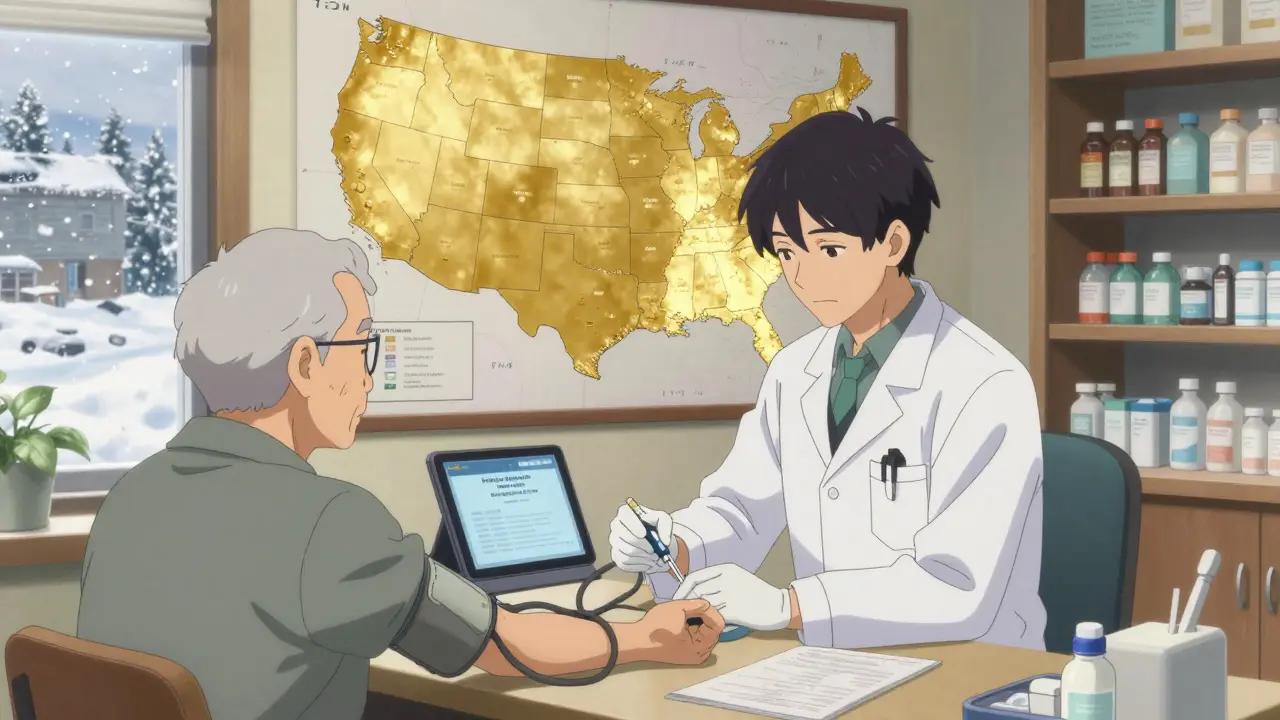
Why Is This Changing Now?
This isn’t random. It’s a response to real problems. The U.S. has a serious shortage of primary care doctors. By 2034, the Association of American Medical Colleges predicts a gap of 124,000 physicians. Rural communities are hit hardest - 60 million Americans live in areas where there aren’t enough doctors. Pharmacies, on the other hand, are everywhere. There are over 60,000 community pharmacies in the U.S. Most are open late, on weekends, and don’t need appointments. Pharmacists are trained to understand drugs inside and out. They spot interactions, check for allergies, and know which meds work best for specific patients. When you’re stuck in a rural town without a doctor, a pharmacist with prescribing authority can refill your blood pressure med, test your blood sugar, and adjust your insulin - all in one visit. Legislators are taking notice. In 2025 alone, 211 bills were introduced in 44 states to expand pharmacist scope. Sixteen of those bills became law. At the federal level, the Ensuring Community Access to Pharmacist Services Act (ECAPS) is moving through Congress. If passed, it would force Medicare to pay pharmacists for services like testing, vaccinations, and chronic disease management - the same way it pays doctors. That could unlock funding for hundreds of new pharmacist-led clinics.The Pushback: Who’s Against It?
Not everyone agrees. The American Medical Association (AMA) still worries that pharmacists don’t have the same training as physicians. They point out that pharmacists don’t do physical exams or diagnose complex illnesses. The AMA’s policy says it wants to study whether pharmacists are refusing to fill valid prescriptions - a claim pharmacists say is misleading. Most refusals are based on safety, not ethics. Another concern? Corporate influence. Big pharmacy chains like CVS and Walgreens have spent millions lobbying for expanded authority. Critics say they want pharmacists to do more so they can bill insurance for more services - turning pharmacies into mini-clinics. But supporters argue that if a pharmacist can help you manage your diabetes, why should you wait weeks for a doctor’s appointment? There are also real logistical hurdles. Even when laws change, insurance companies often don’t recognize pharmacists as providers. So even if a pharmacist prescribes a drug, the claim might get denied. Coding is a mess. What’s the right CPT code for a pharmacist adjusting a blood thinner? There isn’t always a clear answer.
What’s Required to Exercise This Authority?
You can’t just walk in and start prescribing. There are strict requirements:- Pharmacists must have a Doctor of Pharmacy (Pharm.D.) degree - that’s the standard now.
- Many states require additional certification, like in anticoagulation, diabetes, or immunization.
- Continuing education is mandatory. In states with prescribing authority, pharmacists must take annual training on clinical decision-making.
- They must document every action in the patient’s record and notify the prescriber when they make a change.
- Some states limit who they can treat - for example, no prescribing for children under 12, or no switching meds for patients with liver disease.
What Does This Mean for You?
If you’re on a chronic medication and your doctor is hard to reach, ask your pharmacist: “Can you help me adjust this?” In many places, the answer is yes. If you need birth control and don’t want to wait for an appointment, check if your state allows pharmacists to prescribe it. If you live in a rural area, your local pharmacy might be your best bet for managing high blood pressure or asthma. It also means you need to be more involved. If your pharmacist switches your medication, ask: “Why this one? Is it different? Should I watch for side effects?” You have the right to say no. In Idaho, the law says pharmacists must clearly tell you the drug is different and that you can refuse.The Future Is Already Here
The role of the pharmacist is changing fast. No longer just the person who hands you your pills, they’re becoming key players in everyday healthcare. With physician shortages growing and healthcare costs rising, pharmacists offer a practical, accessible solution. The next few years will decide whether this expansion sticks - and whether insurance systems catch up. The bottom line? Pharmacists aren’t replacing doctors. They’re filling gaps. And for millions of Americans who can’t get timely care, that’s not just convenient - it’s life-changing.Can a pharmacist prescribe any medication?
No. Pharmacists can only prescribe or substitute medications under specific laws that vary by state. Most commonly, they’re allowed to provide vaccines, emergency contraception, naloxone, nicotine replacement, and certain treatments for minor conditions like UTIs or allergies. Some states allow them to manage chronic conditions like high blood pressure or diabetes under protocols, but they can’t prescribe controlled substances like opioids or benzodiazepines without special authorization - and even then, it’s rare.
Do I need to tell my doctor if my pharmacist changes my medication?
Yes, and in most states, the pharmacist is legally required to notify your prescriber. This keeps your medical records accurate and ensures your doctor knows what’s going on. In states with therapeutic interchange laws like Kentucky and Idaho, notification is mandatory. Even in states without formal interchange rules, pharmacists are expected to communicate changes, especially for high-risk medications like blood thinners or insulin.
Is pharmacist substitution safe?
Studies show it is. Research from the Journal of the American Pharmacists Association found that pharmacist-led medication adjustments for blood pressure and cholesterol resulted in better control rates than usual care - with no increase in adverse events. Pharmacists are trained to evaluate drug interactions, patient history, and lab results before making changes. The key is that these actions are done within clear, evidence-based protocols - not on a whim.
Why don’t all states allow therapeutic interchange?
It’s a mix of politics, tradition, and fear. Some medical groups resist any expansion of pharmacist authority, fearing loss of control. Others worry about liability or inconsistent training. States with strong pharmacy associations and rural access issues tend to move faster. States with powerful medical lobbying groups often delay or block these laws. It’s not about safety - it’s about who gets to make decisions in healthcare.
Will my insurance cover services from a pharmacist?
Sometimes - but not always. Most private insurers don’t yet recognize pharmacists as billable providers for clinical services. Medicare doesn’t pay for most pharmacist-prescribed services unless they’re part of a pilot program. That’s why the federal ECAPS bill is so important. If it passes, it would require Medicare to reimburse pharmacists for services like testing and chronic disease management, which would pressure private insurers to follow suit.


Author
Mike Clayton
As a pharmaceutical expert, I am passionate about researching and developing new medications to improve people's lives. With my extensive knowledge in the field, I enjoy writing articles and sharing insights on various diseases and their treatments. My goal is to educate the public on the importance of understanding the medications they take and how they can contribute to their overall well-being. I am constantly striving to stay up-to-date with the latest advancements in pharmaceuticals and share that knowledge with others. Through my writing, I hope to bridge the gap between science and the general public, making complex topics more accessible and easy to understand.