

Stroke Risk vs. Fall Bleeding Risk Calculator
This tool calculates your annual stroke risk versus the risk of serious brain bleeding from falls while on anticoagulants. Based on clinical evidence, stroke risk typically outweighs fall-related bleeding risk for most patients.
Results will appear here after calculation
When someone is on blood thinners - whether it’s warfarin or one of the newer direct oral anticoagulants (DOACs) like apixaban or rivaroxaban - doctors often face a tough question: Should we keep them on the medication if they’re at risk of falling? Many assume the answer is no. But the science says otherwise. Stopping anticoagulants just because someone might fall doesn’t protect them - it might actually put them in greater danger.
Why Fall Risk Doesn’t Mean Stop Anticoagulation
The fear is simple: if an older adult falls while on a blood thinner, they could bleed badly - even inside the brain. It sounds terrifying. But the real numbers tell a different story. According to a 2023 review in European Geriatric Medicine, the annual risk of a serious brain bleed from a fall while on anticoagulants is only between 0.2% and 0.5%. Meanwhile, for someone with atrial fibrillation and a CHA2DS2-VASc score of 2 or higher, the chance of having a stroke in a year is 1.5% to 3%. That’s three to ten times higher than the bleeding risk from falling.Here’s the math that changes everything: you’d have to fall 295 times in one year for the risk of bleeding to outweigh the benefit of preventing a stroke. Most people don’t fall that often - even those in nursing homes, where falls happen more frequently. Yet, studies show 20% to 30% of patients who clearly need anticoagulants aren’t getting them - simply because their doctor or family is scared of falls.
What the Guidelines Say
Major medical groups agree: fall risk alone is not a reason to avoid anticoagulants. The American College of Physicians, the American Heart Association, and the Society of Hospital Medicine all say the same thing. In fact, the Society of Hospital Medicine included this practice in their "Things We Do for No Reason" campaign - meaning it’s a common but harmful habit that should stop.The key is not to ignore fall risk. It’s to manage it. Instead of stopping the blood thinner, you address the reasons why the person is falling. Is their vision blurry? Are they on too many sedatives? Is their bathroom slippery? Are their shoes worn out? Fix those, and you reduce the danger - without giving up the protection the anticoagulant provides.
DOACs Are Safer Than Warfarin for Fallers
If you’re worried about bleeding, the type of anticoagulant matters. DOACs - like apixaban, dabigatran, rivaroxaban, and edoxaban - are now the first choice for most people with atrial fibrillation. Why? Because they’re much safer than warfarin when it comes to brain bleeds. Studies show DOACs reduce the risk of intracranial hemorrhage by 30% to 50% compared to warfarin.And unlike warfarin, DOACs don’t need regular blood tests. They have fewer food and drug interactions. That makes them easier to manage, especially for older adults juggling multiple medications. In the U.S., about 80% of new anticoagulant prescriptions in 2022 were for DOACs - and for good reason.
Don’t be tempted to lower the dose of a DOAC "just to be safe." That’s a dangerous myth. Studies show cutting the dose doesn’t lower bleeding risk much - but it does cut the stroke protection. The same goes for trying to keep INR levels lower than recommended on warfarin. These shortcuts don’t work. They just leave the patient vulnerable to stroke.
How to Assess Fall Risk - The Right Way
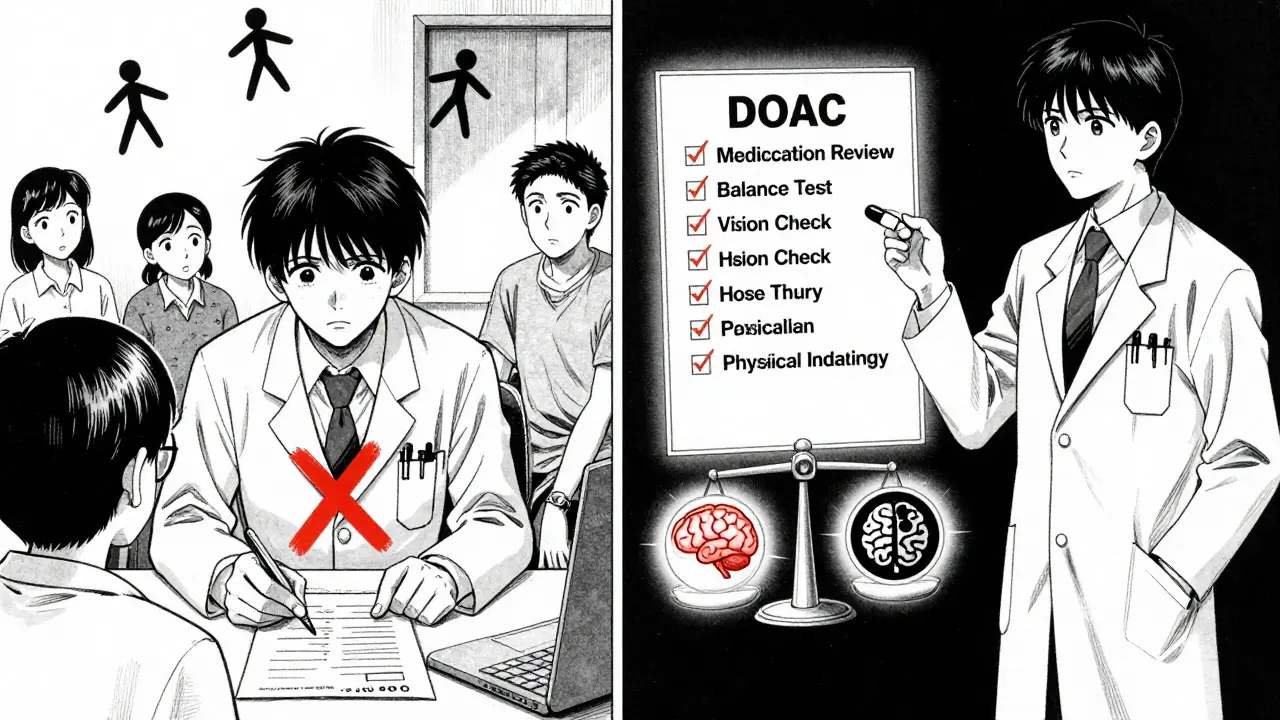
You can’t just say "they fall a lot" and assume it’s too risky. You need a real assessment. Here’s what a proper fall risk check includes:- Medication review: Are they taking sedatives, antihypertensives, or psychiatric drugs that make them dizzy or sleepy? Some can be stopped or switched.
- Gait and balance: The Timed Up and Go test is simple: time how long it takes the person to stand from a chair, walk 3 meters, turn, walk back, and sit down. If it takes more than 12 seconds, their fall risk is high.
- Vision and hearing: Poor eyesight or hearing loss increases fall risk. Get their eyes checked and hearing tested.
- Home safety: Look for loose rugs, poor lighting, no handrails, or slippery bathroom floors. Small changes - like adding grab bars or night lights - make a big difference.
- Orthostatic hypotension: Does their blood pressure drop when they stand? That’s a common cause of falls in older adults. Check it sitting and standing.
This full assessment takes 30 to 60 minutes. It’s not quick. But it’s worth it. Many clinics skip it because they’re busy. But skipping it means you’re not helping - you’re just avoiding a hard conversation.
When You Might Consider Stopping Anticoagulation
There are rare cases where stopping anticoagulants makes sense - but fall risk isn’t one of them. The only clear reasons to avoid anticoagulants are:- Active bleeding (like a stomach ulcer or recent brain bleed)
- A known bleeding disorder
- Uncontrolled high blood pressure (systolic over 180 mmHg)
For someone who is extremely frail, with a life expectancy under a year, the long-term benefit of stroke prevention may not matter. But even then, the decision should be based on overall health goals - not just falls. If the person values staying independent and avoiding a stroke, even for a few months, anticoagulation may still be the right choice.
What Happens When You Stop the Blood Thinner
When doctors stop anticoagulants because of fall risk, patients pay the price. A 2023 study found that among older adults with atrial fibrillation who were denied anticoagulation due to fall concerns, their stroke risk didn’t go down - it stayed high. Meanwhile, their risk of death from stroke increased.One study showed that patients who bled after falling while on anticoagulants had a death rate of 146 per 1,000 - which sounds scary. But here’s the key: non-anticoagulated fallers had a stroke death rate of 200 per 1,000. So even if a fall leads to bleeding, the overall survival rate is better with anticoagulation.
Real Stories, Real Choices
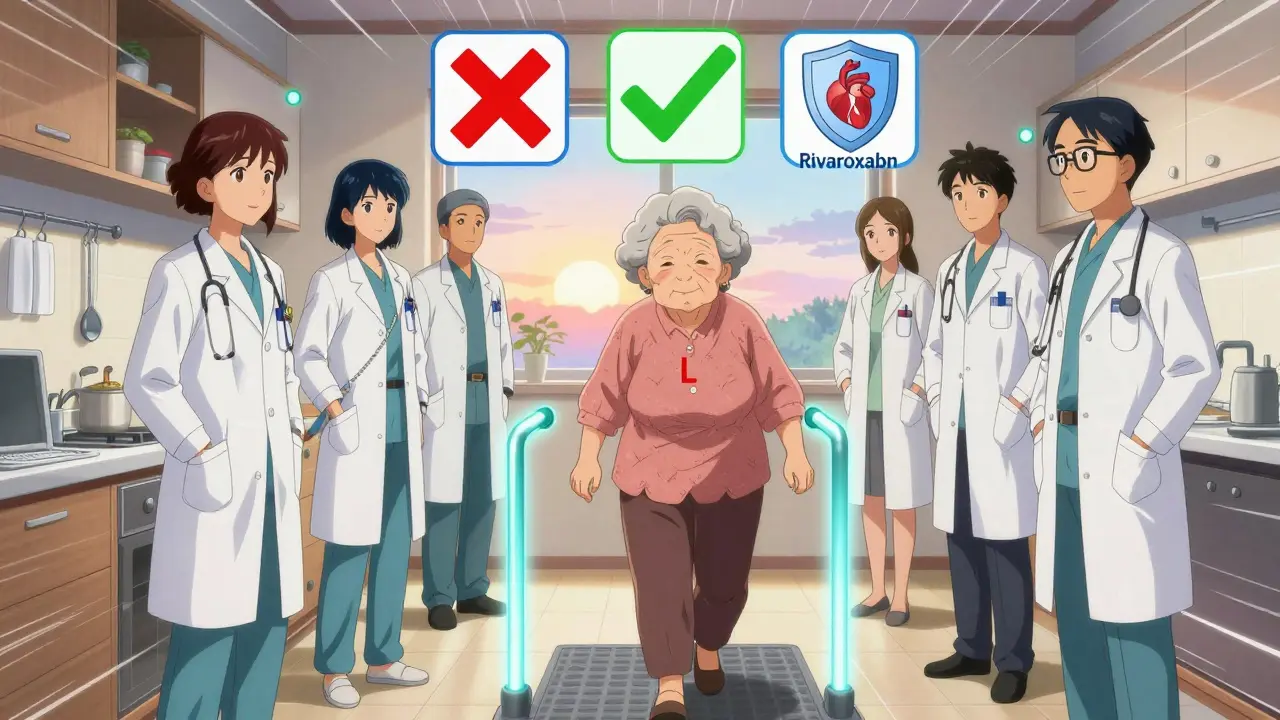
Take Mr. H, a 78-year-old man with a CHA2DS2-VASc score of 3. He’d had a recent fall and was scared. His doctor offered apixaban, but Mr. H chose not to take it. He didn’t want to risk bleeding. A year later, he had a stroke - and ended up in long-term care.Compare that to Mrs. L, 82, who also had atrial fibrillation and a history of falls. Her care team didn’t stop her rivaroxaban. Instead, they removed her nighttime sedative, fixed her bathroom with non-slip mats and grab bars, and started her on physical therapy. She hasn’t fallen in over a year. She walks her dog every morning. She’s still independent.
The difference? One patient was told to stop the medicine because of a fall. The other was helped to prevent falls - while keeping the medicine that kept her alive.
What You Can Do
If you or someone you care for is on anticoagulants and has fallen:- Don’t panic. Don’t stop the medication without talking to your doctor.
- Ask for a full fall risk assessment. Don’t accept "they’re just old" as an answer.
- Request a review of all medications - especially sleep aids, anxiety meds, and blood pressure pills.
- Ask about DOACs if they’re still on warfarin. It’s likely a safer option.
- Check the home: stairs, rugs, lighting, bathroom. Make it safer.
- Consider physical therapy. Balance training reduces falls by up to 40%.
Anticoagulants save lives. Falls are dangerous - but they’re fixable. The goal isn’t to avoid falls at all costs. It’s to reduce them while keeping the protection that prevents stroke. That’s how you protect both life and independence.
Should I stop my blood thinner if I’ve fallen before?
No. Falling once or even multiple times is not a reason to stop anticoagulants. The risk of stroke from untreated atrial fibrillation is far greater than the risk of bleeding from a fall. Instead of stopping the medication, focus on preventing future falls - with a full assessment of your medications, home environment, balance, and vision.
Are DOACs safer than warfarin for people who fall?
Yes. DOACs like apixaban, rivaroxaban, and dabigatran carry a 30% to 50% lower risk of brain bleeds compared to warfarin. They also don’t require frequent blood tests and have fewer interactions with food or other drugs. For older adults at risk of falling, DOACs are the preferred choice unless kidney function is severely reduced.
Can I reduce my DOAC dose to lower bleeding risk?
No. Lowering the dose of a DOAC doesn’t significantly reduce bleeding risk - but it does reduce how well it prevents strokes. Guidelines strongly advise against this. If you’re worried about bleeding, talk to your doctor about switching to a different anticoagulant or addressing other risk factors like high blood pressure or medication side effects.
What’s the best way to prevent falls while on blood thinners?
Start with a multifactorial assessment: review all medications (especially sedatives), test your balance with the Timed Up and Go test, check your vision and hearing, fix hazards at home (like loose rugs or poor lighting), and consider physical therapy. Addressing even one or two of these can cut your fall risk in half.
Is it okay to avoid anticoagulants if I’m over 80?
Age alone is not a reason to avoid anticoagulants. What matters is your stroke risk (measured by CHA2DS2-VASc score) and overall health. Many people over 80 benefit greatly from anticoagulation. If you’re otherwise healthy and active, the protection against stroke usually outweighs the risks. Talk to your doctor about your personal risk - don’t assume age means you shouldn’t be on blood thinners.


Author
Mike Clayton
As a pharmaceutical expert, I am passionate about researching and developing new medications to improve people's lives. With my extensive knowledge in the field, I enjoy writing articles and sharing insights on various diseases and their treatments. My goal is to educate the public on the importance of understanding the medications they take and how they can contribute to their overall well-being. I am constantly striving to stay up-to-date with the latest advancements in pharmaceuticals and share that knowledge with others. Through my writing, I hope to bridge the gap between science and the general public, making complex topics more accessible and easy to understand.