
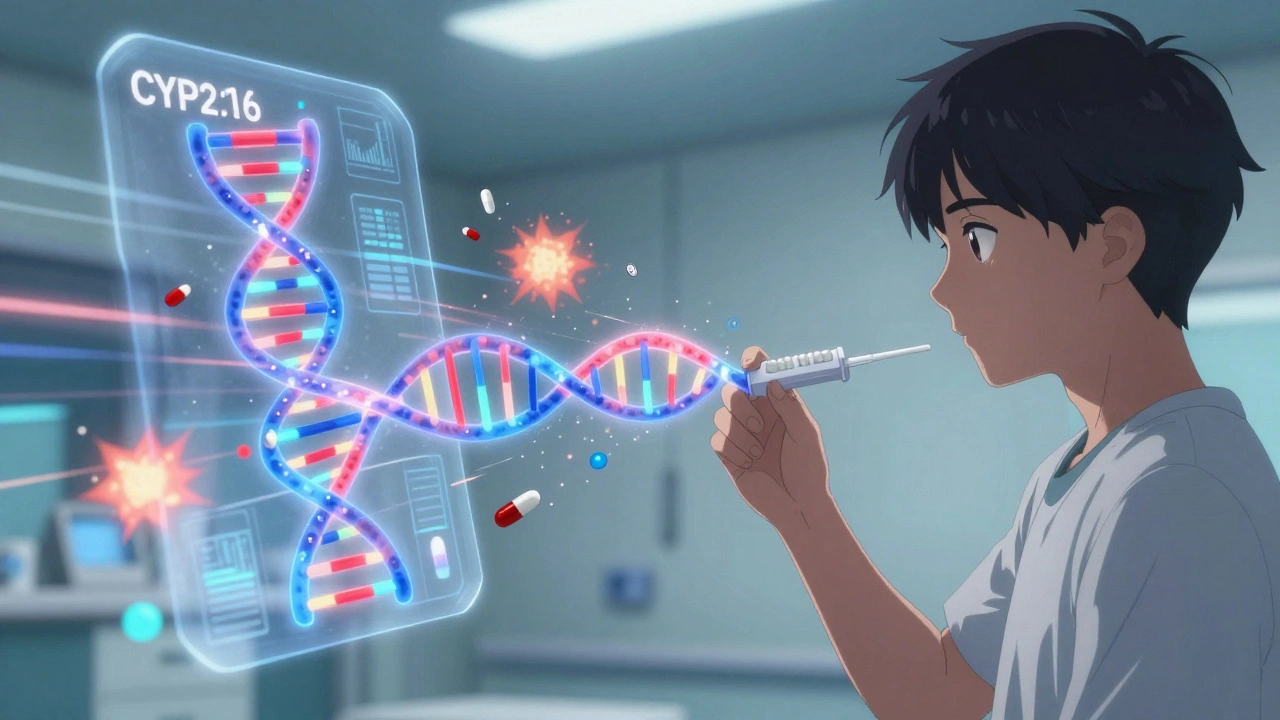
Pharmacogenomics Metabolizer Type Calculator
Enter your genetic variants for key enzymes. This calculator uses clinically validated gene-drug interactions to show your potential metabolizer type and medication implications.
Note: This tool provides educational information only. It should not replace professional medical advice or genetic testing.
Ever taken a medication that didn’t work - or made you feel worse? You’re not alone. For many people, the same dose of a drug that helps one person does nothing - or causes serious side effects - in another. The reason? Your genes. This isn’t luck or bad timing. It’s pharmacogenomics - the science of how your DNA shapes the way your body handles medicines.
Why Your Genes Control How Drugs Work
Your body doesn’t treat all drugs the same. It breaks them down, moves them around, and turns them into active forms using enzymes coded by your genes. One of the biggest players in this process is the cytochrome P450 enzyme family, especially CYP2D6, CYP2C19, and CYP3A4. These enzymes handle about 70-80% of all prescription drugs - from antidepressants and painkillers to blood thinners and cholesterol meds. Here’s the catch: people have different versions of these genes. Some people have a supercharged version that breaks down drugs too fast. Others have a broken version that barely works at all. These differences create what doctors call metabolizer types:- Poor metabolizers - drugs build up, causing toxicity
- Ultra-rapid metabolizers - drugs vanish before they can work
- Normal metabolizers - standard dosing works fine
- Intermediate metabolizers - need lower or adjusted doses
Real-Life Impact: From Depression to Heart Attacks
Pharmacogenomics isn’t theoretical. It’s saving lives right now. Take antidepressants. About 40-60% of people don’t respond to their first try. Why? Often, it’s because their genes make them break down SSRIs too quickly - or too slowly. A 2022 study in JAMA showed that when doctors used genetic testing to pick antidepressants, remission rates jumped from 39% to 66%. Side effects dropped by nearly 30%. In heart care, clopidogrel (Plavix) is used to prevent clots after stents. But if you have a CYP2C19 poor metabolizer variant, your body can’t activate the drug. That means you’re at 30% higher risk of a heart attack or stroke. The American College of Medical Genetics now recommends testing for this before prescribing clopidogrel. And then there’s chemotherapy. A drug called 5-fluorouracil (5-FU) can be deadly if you have a TPMT or DPYD gene variant. These variants are rare - about 0.2-0.5% of people - but without testing, the risk of fatal toxicity is real. Hospitals that test for these variants before treatment have cut severe reactions by over 90%.How Testing Works - And What It Can’t Do
Getting tested is simpler than you might think. A saliva swab or blood sample goes to a lab. Most tests look at 50-100 genes related to drug metabolism. Results come back in days to two weeks. The report tells your provider: “This drug is safe at standard dose,” “Use half the dose,” or “Avoid this drug entirely.” But here’s the reality check: not every drug needs genetic testing. For drugs with wide safety margins - like most antibiotics or antacids - genes don’t matter much. Pharmacogenomics shines where the margin is thin: psychiatric meds, painkillers, blood thinners, and cancer drugs. Also, not all tests are created equal. Some companies sell direct-to-consumer tests (like 23andMe) that give limited PGx info - usually just 7 drugs. These can be a starting point, but they’re not enough for clinical decisions. Full clinical panels, ordered by your doctor, look at dozens of genes and are interpreted by pharmacogenomics experts.
The Big Gaps: Who’s Left Out?
Here’s the uncomfortable truth: most pharmacogenomic research has been done on people of European descent. That means the data we rely on doesn’t reflect the genetic diversity of the world. For example, a variant in the SLCO1B1 gene that increases statin muscle damage risk is common in Europeans but rare in East Asians. Meanwhile, a CYP2D6 variant that makes people ultra-rapid metabolizers is far more common in North African and Middle Eastern populations than in Europeans. If your doctor uses guidelines based only on European data, your test might be misleading - or worse, dangerous. The NIH launched a $190 million initiative in 2023 to fix this. But until we have better data across populations, pharmacogenomics risks becoming a tool that only works well for some.Who Benefits Most - And Who Should Ask for Testing
You don’t need to be sick to benefit from pharmacogenomics. But certain groups see the biggest gains:- People who’ve tried multiple antidepressants without success
- Patients on blood thinners like warfarin with unstable INR levels
- Those with unexplained side effects from common meds
- People starting chemotherapy or long-term pain management
- Anyone with a family history of bad drug reactions

Barriers: Cost, Access, and the System
The science is ready. The system isn’t. Testing costs $250-$500 in the U.S. Insurance coverage is improving - 87% of Medicare Advantage plans cover at least one PGx test now - but many still require prior authorization, which can take weeks. Some patients get denied entirely. Doctors aren’t trained for this. A 2023 survey found nearly half of clinicians feel unprepared to interpret results. Electronic health records rarely flag genetic risks automatically. If your doctor doesn’t know what to do with your test, it’s just a piece of paper. But change is coming. The VA has tested over 100,000 veterans. Hospitals like Mayo Clinic and UCSF have built full PGx programs. The FDA approved the first comprehensive next-generation PGx test in early 2023. By 2030, experts predict routine testing at age 18 will be standard.What You Can Do Today
You don’t have to wait for the system to catch up. If you’re on a medication that’s not working, or has side effects you can’t explain, ask your doctor: “Could my genes be affecting how this drug works?” Bring up CYP2D6, CYP2C19, or TPMT by name - it shows you’ve done your homework. If you’ve had a bad reaction to a drug in the past, keep that record. Share it. It’s valuable data. And if you’ve used a DTC genetic test like 23andMe, don’t ignore the PGx results. Talk to a pharmacist or genetic counselor about them. They can help you understand what’s real, what’s speculative, and what to do next. Pharmacogenomics isn’t magic. It won’t fix every drug problem. But for the 1.3 million Americans who end up in the ER each year because of preventable drug reactions, it’s a lifeline. Your genes have been talking to you all along. It’s time we started listening.Can pharmacogenomics testing predict if I’ll get side effects from my medication?
Yes - for specific drugs and genes. Testing can identify if you’re at high risk for side effects from medications like clopidogrel, warfarin, SSRIs, codeine, or 5-fluorouracil. For example, if you’re a CYP2D6 poor metabolizer, you’re more likely to have severe side effects from certain antidepressants. But it can’t predict all side effects - only those linked to known gene-drug pairs. Currently, there are 24 clinically validated gene-drug pairs with clear guidelines.
Is pharmacogenomics testing covered by insurance?
Coverage is growing but inconsistent. As of 2023, 87% of Medicare Advantage plans and 65% of commercial insurers cover at least one pharmacogenomic test - usually for high-risk drugs like clopidogrel or thiopurines. However, many require prior authorization, and some tests are still denied. Tests ordered by a doctor for clinical reasons are more likely to be covered than those done through direct-to-consumer services.
Do I need to get tested more than once?
No. Your genes don’t change. A single test, done once in your lifetime, can guide your medication use for decades. That’s why many hospitals now offer pre-emptive testing - where your genetic data is stored in your medical record and referenced every time a new drug is prescribed.
Can I get pharmacogenomics testing from my regular doctor?
Some can, but many still don’t know how to order or interpret results. The best chance is to ask your doctor if your hospital or clinic has a pharmacogenomics program. Academic medical centers and large health systems (like the VA or Mayo Clinic) are most likely to offer it. If not, ask for a referral to a clinical pharmacist or genetic counselor who specializes in medication genetics.
Are direct-to-consumer tests like 23andMe reliable for drug response?
They can give you a hint, but they’re not enough for clinical decisions. 23andMe reports on only 7 medications and tests a limited number of gene variants. Clinical tests look at 50-100 genes, use FDA-validated methods, and are interpreted by experts. Use DTC results as a conversation starter with your doctor - not as a final answer.
What if my genetic test says I’m a poor metabolizer - does that mean I can’t take any medication?
No. It means some drugs may need to be avoided or adjusted. For example, if you’re a CYP2D6 poor metabolizer, you might avoid codeine or tramadol, but you can still take other painkillers like acetaminophen or ibuprofen safely. Your doctor will choose alternative medications that don’t rely on the affected enzyme. Pharmacogenomics doesn’t limit your options - it helps you pick the right ones.


Author
Mike Clayton
As a pharmaceutical expert, I am passionate about researching and developing new medications to improve people's lives. With my extensive knowledge in the field, I enjoy writing articles and sharing insights on various diseases and their treatments. My goal is to educate the public on the importance of understanding the medications they take and how they can contribute to their overall well-being. I am constantly striving to stay up-to-date with the latest advancements in pharmaceuticals and share that knowledge with others. Through my writing, I hope to bridge the gap between science and the general public, making complex topics more accessible and easy to understand.