

Most people think of hepatitis as something that lasts forever - a lifelong battle with the liver. But hepatitis A is different. It doesn’t stick around. It doesn’t turn chronic. It hits hard, but it leaves. And if you know what to expect, you can get through it without panic.
What Hepatitis A Actually Does to Your Body
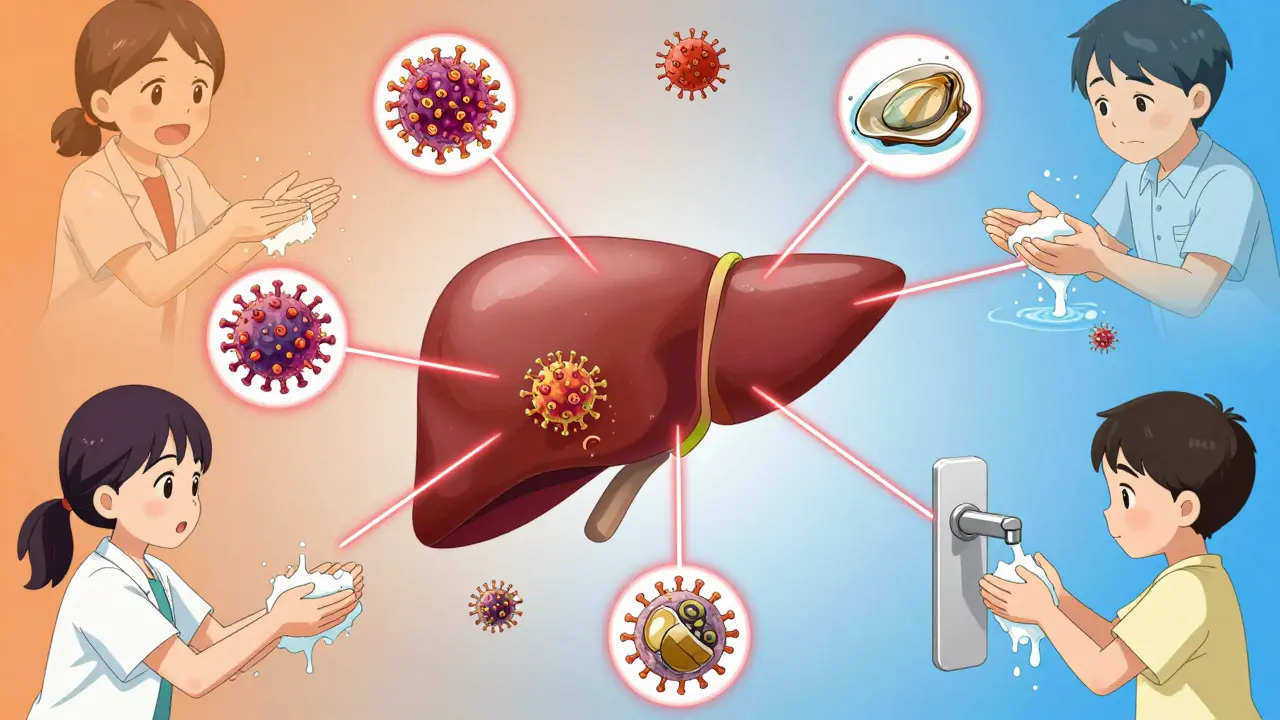
Hepatitis A is caused by a virus called HAV - short for hepatitis A virus. It doesn’t attack your lungs or your heart. It targets one place: your liver. The virus enters through your mouth, usually from contaminated food or water, or from touching something an infected person has touched and then touching your face. Once inside, it travels to your liver and starts multiplying. Your immune system notices and fights back. That’s when symptoms show up. Unlike hepatitis B or C, hepatitis A doesn’t hide in your body. It doesn’t become a long-term problem. You either get sick and recover - or you don’t get sick at all. In kids under 6, 70% show no symptoms. In adults? Almost everyone feels it. The virus peaks in your stool two weeks before jaundice starts. That’s when you’re most contagious. By the time your skin turns yellow, you’re already on the downswing.How You Catch It - And How Easily
You don’t need to be in a dirty environment to catch hepatitis A. It’s in the small things. A waiter with unwashed hands after using the bathroom. A salad washed in contaminated water. A child who didn’t wash up after diaper duty and then touched a doorknob. The virus survives for weeks on surfaces. It laughs at hand sanitizers. Only soap and water will kill it. Even then, you need to scrub for 20 seconds - the time it takes to sing "Happy Birthday" twice. Outbreaks in the U.S. spiked between 2016 and 2019, mostly linked to homeless populations and people who use drugs. But foodborne outbreaks still happen. In 2022, the FDA tracked 17 outbreaks tied to contaminated produce. One bad batch of green onions, one infected food worker - and suddenly, dozens of people get sick. It’s not rare. It’s predictable.What Symptoms to Watch For
Symptoms don’t creep in. They drop like a brick. You might feel fine one day, then the next, you’re exhausted, nauseous, and your urine looks like cola. Here’s what most people experience:- Jaundice (yellow skin or eyes) - happens in 40-80% of adults
- Dark urine - reported by nearly 9 out of 10 people
- Extreme fatigue - affects more than half, often the worst symptom
- Loss of appetite - you lose interest in food, even your favorites
- Nausea and vomiting - can be severe enough to need fluids by IV
- Abdominal pain - usually in the upper right side, under your ribs
- Clay-colored stools - your poop turns pale because your liver isn’t processing bile
- Fever - mild to moderate, usually under 101°F
How Long It Takes to Recover
Recovery isn’t a straight line. It’s a rollercoaster. Most people feel awful for about 4 to 8 weeks. But here’s the real timeline:- Days 1-14: You feel tired, nauseous, maybe a low fever. No jaundice yet.
- Days 15-30: Jaundice hits. You feel worse. This is the peak.
- Week 3-6: Symptoms start to fade. Appetite returns. Energy creeps back.
- Week 8: Median recovery time. 85-90% of people are back to normal.
- Week 12: Liver enzymes return to normal in 80% of people.
- Month 6: 95% of people have fully recovered.
What You Should and Shouldn’t Do While Recovering
There’s no cure for hepatitis A. Your immune system handles it. But you can help it along - or mess it up. DO:- Rest. Seriously. Pushing through fatigue delays healing.
- Drink water. Dehydration from vomiting or poor appetite is the #1 reason people end up in the hospital.
- Eat small, low-fat meals. Your liver can’t process heavy foods. Stick to rice, toast, bananas, broth.
- Move gently. A 30-minute walk a day helps your liver recover faster.
- Avoid alcohol completely. Even a sip can stress your liver when it’s already fighting.
- Take acetaminophen (Tylenol) over 2,000 mg per day. It’s toxic to a damaged liver.
- Use herbal supplements like kava, green tea extract, or high-dose vitamin A. They can harm your liver.
- Go back to work or school until at least one week after jaundice appears - or until your doctor says you’re no longer contagious.
How to Prevent It - Before You Get Sick
The best way to avoid hepatitis A? Get vaccinated. The hepatitis A vaccine is one of the most effective vaccines out there. After the first shot, you’re 95% protected in four weeks. After the second shot - given 6 to 18 months later - you’re nearly 100% protected for life. The CDC recommends it for all kids at age 1. But adults? Especially if you travel, work in food service, or live in an area with outbreaks? You need it too. If you’ve been exposed and haven’t been vaccinated, you still have a window. Get the vaccine or a shot of immune globulin within two weeks of exposure. It can stop the infection before it starts. Beyond vaccines:- Wash your hands with soap and water after using the bathroom, before eating, and after changing diapers.
- Don’t eat raw shellfish from unknown sources. It’s a common carrier.
- Boil water or use bottled water if you’re traveling to areas with poor sanitation.
- Clean surfaces with bleach solution (5-10 tablespoons per gallon of water). HAV dies within 2 minutes.

Who’s at Highest Risk?
It’s not just travelers or drug users. Risk factors include:- Living with or caring for someone who has hepatitis A
- Working in childcare or healthcare
- Using recreational drugs
- Being homeless or in unstable housing
- Traveling to countries with high rates of HAV (parts of Africa, Asia, Central/South America)
- Being over 50 - you’re more likely to have severe symptoms or liver failure
What Happens After You’re Done?
Once you recover, you’re immune for life. No more hepatitis A. Your body remembers the virus and will fight it off instantly if you ever see it again. Most people return to normal life without lasting damage. Liver enzymes go back to normal. Energy returns. You eat again. You work again. But it takes time. Don’t rush it. One study found adults lost an average of 15 workdays. That’s three weeks of lost income, lost productivity, lost sleep. And while hepatitis A doesn’t cause liver cancer or cirrhosis, the stress it puts on your body - especially if you’re older or already have liver disease - can be serious. That’s why prevention isn’t optional. It’s essential.When to Call a Doctor
You don’t need to panic every time you feel tired. But call your doctor if:- Your skin or eyes turn yellow
- You can’t keep fluids down for more than 24 hours
- You’re confused, drowsy, or have trouble staying awake
- Your abdomen swells or you feel intense pain
- You’re over 50 and have symptoms - don’t wait
Can you get hepatitis A more than once?
No. Once you recover from hepatitis A, your body develops lifelong immunity. You won’t get it again, even if you’re exposed to the virus later. This is why the vaccine works so well - it tricks your immune system into thinking it’s been infected, so it builds the same protection without making you sick.
Is hepatitis A the same as hepatitis B or C?
No. Hepatitis A is acute and never becomes chronic. Hepatitis B and C can live in your body for years, silently damaging your liver, leading to cirrhosis or liver cancer. Hepatitis A doesn’t do that. It’s a short, intense illness that clears on its own. The vaccines for B and C are different, and there’s no cure for chronic hepatitis C without medication - but hepatitis A? You recover fully without treatment.
How long are you contagious with hepatitis A?
You’re most contagious two weeks before symptoms appear - and you can spread it even if you feel fine. Once jaundice shows up, you’re still contagious for about a week. After that, your virus levels drop sharply. Most health departments say you can return to work or school one week after jaundice begins, as long as you’re feeling better and practicing good hygiene.
Can you get hepatitis A from kissing?
It’s unlikely, but possible. The virus is mainly spread through fecal matter, not saliva. But if someone has poor hand hygiene after using the bathroom and then touches their mouth or yours during kissing, transmission could happen. The real risk comes from close personal contact - sharing utensils, toothbrushes, or caring for someone who’s sick. Avoid these during an outbreak.
Do I need the hepatitis A vaccine if I’ve already had it?
No. If you’ve had a confirmed case of hepatitis A, you don’t need the vaccine. Your body has natural, lifelong immunity. But if you’re unsure whether you had it - especially if you’re over 40 and never got vaccinated - a simple blood test can check for antibodies. If you’re negative, get the shot. It’s safer than guessing.


Author
Mike Clayton
As a pharmaceutical expert, I am passionate about researching and developing new medications to improve people's lives. With my extensive knowledge in the field, I enjoy writing articles and sharing insights on various diseases and their treatments. My goal is to educate the public on the importance of understanding the medications they take and how they can contribute to their overall well-being. I am constantly striving to stay up-to-date with the latest advancements in pharmaceuticals and share that knowledge with others. Through my writing, I hope to bridge the gap between science and the general public, making complex topics more accessible and easy to understand.