

When a doctor prescribes a medication like vancomycin, lithium, or tacrolimus, they’re not just giving you a pill-they’re relying on precise lab results to know if the dose is right. Too little, and the drug won’t work. Too much, and it could kill you. That’s why medication monitoring isn’t optional-it’s a lifeline. But here’s the problem: if the lab test itself isn’t accurate, everything else falls apart. Confirming that a lab’s monitoring test works exactly as it should isn’t just paperwork. It’s what stops mistakes before they happen.
Why Lab Verification Matters More Than You Think
Every time a patient gets a blood test to check their drug levels, someone at the lab has to be sure the machine, the reagents, and the process are all working perfectly. This isn’t guesswork. It’s a science with strict rules. The difference between a correct result and a dangerous one can be as small as 0.5 ng/mL for digoxin or 5 mcg/mL for vancomycin. And if the lab doesn’t verify that their test can detect those tiny changes accurately, they’re putting lives at risk.
The U.S. government doesn’t leave this to chance. Under CLIA ’88 regulations, every lab that runs medication monitoring tests must prove their tests meet specific performance standards. This isn’t a suggestion. It’s the law. Labs that skip this step face fines of $7,500 per violation. And it’s not just about money-incorrect results lead to real harm. The Institute of Medicine estimates that medication errors cause 7,000 to 9,000 deaths each year in the U.S. A large chunk of those come from labs giving wrong drug level readings.
Verification vs. Validation: What’s the Difference?
Not all lab tests are created equal. There are two main paths to making sure a test is reliable: verification and validation. They sound similar, but they’re very different.
Verification is for tests that already have FDA approval. Think of it like checking if a new tire matches the manufacturer’s specs. The lab doesn’t build the test-they just confirm it works the way the maker says it should. This process usually takes 80 hours and costs between $2,500 and $5,000. It’s straightforward, fast, and reliable. Labs use this for common drugs like lithium, phenytoin, and vancomycin, where FDA-cleared tests are widely available.
Validation is for tests the lab makes themselves. These are often for rare drugs like clozapine metabolites, where no commercial test exists. Here, the lab has to build the whole process from scratch-figure out how sensitive it is, how specific it is, how it handles interference from other substances. This takes 120+ hours and costs $7,500 to $15,000. It’s complex. And it’s risky: nearly 19% of these tests fail the first time and have to be redone. Validation is necessary for niche cases, but it’s slow. It’s not something you can rush for an emergency.
Here’s what matters: if your doctor is monitoring a drug that has an FDA-approved test, the lab should be using verification-not validation. If they’re doing validation for a test that already exists, they’re wasting time and money-and maybe cutting corners.
The 9-Step Process Labs Must Follow
There’s a clear, proven way to do this right. The Association of Public Health Laboratories (APHL) created a toolkit that 98% of U.S. labs now follow. Here’s how it works:
- Develop the plan - Write down exactly what you’re going to test and how. This includes precision, accuracy, linearity, and interference checks. Takes 8-16 hours.
- Get approval - The lab director signs off. No exceptions. This step alone can take 24-72 hours.
- Run the tests - For verification, run 20+ replicates over 5 days. For validation, you need even more. This is where most labs get stuck-finding enough patient samples or dealing with equipment downtime.
- Analyze the data - Use statistics to check if precision is under 1/4 of the total allowable error. For vancomycin, that means less than 3.75% error. For digoxin? Less than 2.5%.
- Re-evaluate if needed - About 30% of tests need tweaks. Maybe the linearity fails at high levels. Maybe a metabolite is interfering.
- Write the summary - Document every number, every result. This report becomes part of your permanent records.
- Create SOPs and training docs - Anyone who runs this test in the future needs to know how. This step often gets rushed, leading to errors down the line.
- Final approval - The director reviews everything again. No shortcuts.
- Launch the test - Now it’s ready for patient samples. But it’s not done. Ongoing quality control is required every single day.
That’s 40-60 hours of focused work for a single test. Multiply that by three new drugs a lab wants to add, and you’re looking at 200+ staff hours. Many labs don’t have the staff. That’s why some delay or skip steps-especially in smaller hospitals.

The Hidden Risks Labs Often Miss
Most labs focus on precision and accuracy. But the biggest dangers come from things no one thinks about.
Interference is the silent killer. For example, carbamazepine can give false results if a patient is also taking another drug that looks similar to the lab machine. A 2022 study found that 5-8% of carbamazepine tests were wrong because labs didn’t test for common drug interactions. The same goes for immunosuppressants like tacrolimus-metabolites can trick the test into reading a higher level than what’s really there. Mayo Clinic found 17% of their samples had this issue before they upgraded their validation process.
Lower limit of quantitation is another blind spot. Only 64% of labs check how low their test can reliably measure. For drugs like digoxin, where the therapeutic range is 0.5-4.0 ng/mL, missing a level at 0.4 ng/mL could mean a patient gets overdosed because the lab says they’re “in range” when they’re actually underdosed.
And then there’s documentation. A 2024 survey of lab professionals found that 78% consider paperwork the biggest burden. Manufacturers often don’t give clear performance claims. One lab director said, “I spent three weeks trying to get Abbott’s specs for a new test-and they still didn’t tell me the interference thresholds.”
What Happens When Labs Get It Wrong
The FDA’s MAUDE database is full of horror stories. In 2021, a lab failed to verify cross-reactivity in their digoxin test. The machine couldn’t tell the difference between digoxin and a similar compound. Twenty-three patients got doses based on false readings. Some were overdosed. One patient had cardiac arrest. They survived-but barely.
On the flip side, labs that follow the APHL toolkit have 63% fewer regulatory violations. A 2021 CDC study found that labs using the full process had 47% fewer medication errors than those that didn’t. One hospital in Ohio reduced their therapeutic drug monitoring errors by 80% in just 18 months by adopting the checklist.
It’s not just about avoiding lawsuits. It’s about trust. When a patient’s doctor gets a lab report saying their drug level is perfect, they need to know it’s true. That trust is built on verification-not hope.
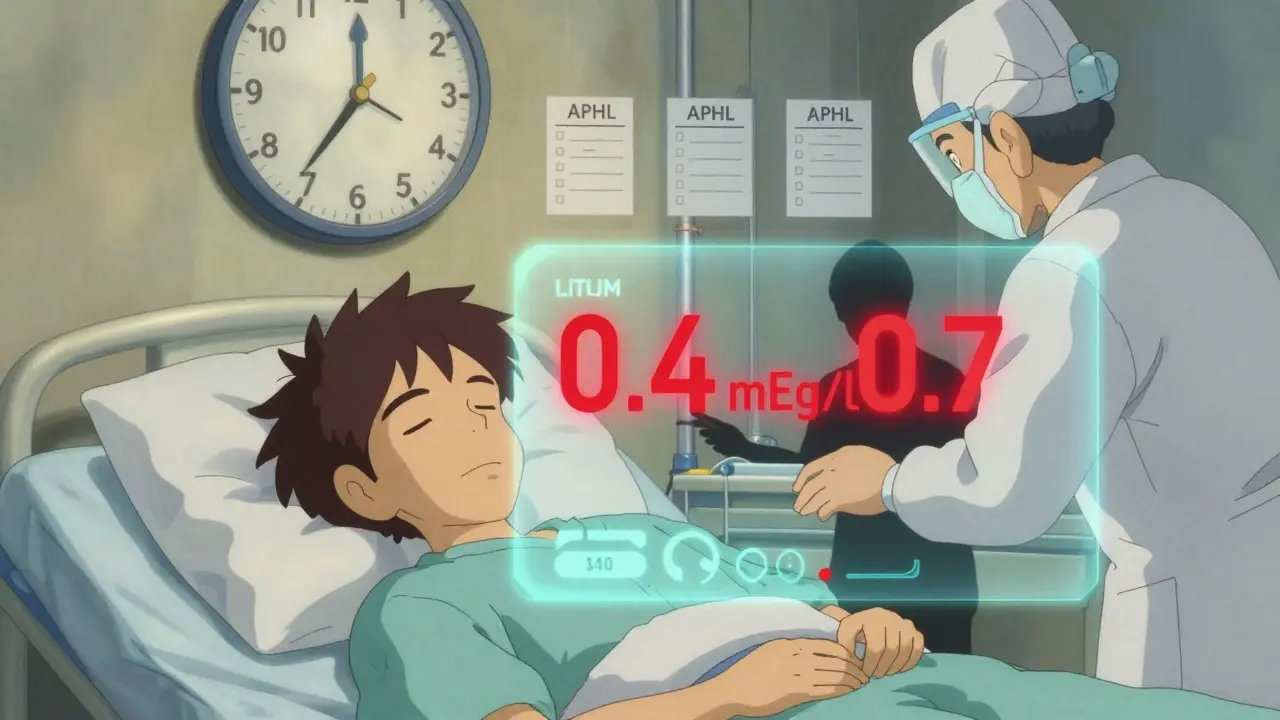
What You Can Do as a Patient or Provider
You don’t run the lab. But you can ask questions.
- If you’re on a drug with a narrow therapeutic range (like lithium, warfarin, or cyclosporine), ask your doctor: “Is this test FDA-cleared?” If yes, the lab should be verifying, not validating.
- Ask if the lab follows the APHL toolkit. Most major hospitals do. Smaller ones may not.
- If your levels keep changing without a clear reason, ask if interference testing was done. Metabolites from other drugs can throw off results.
- Ask how often the lab checks the lower limit of quantitation. If they can’t tell you, it’s a red flag.
Providers: If you’re prescribing a drug that needs monitoring, make sure your lab has a documented verification process. Don’t assume. Ask for their validation report. If they can’t produce it, find a lab that can.
The Future: Automation, Regulation, and Staffing
The field is changing fast. The FDA is tightening rules-new guidance in January 2024 now requires labs to test for 15 metabolites instead of 8 for immunosuppressants. The CLSI is rolling out new standards (EP44-Ed2) specifically for high-risk drugs. EHR systems like Epic are now auto-flagging low or high drug levels before the doctor even sees the report.
But there’s a catch: staffing. 68% of lab directors say they can’t hire enough trained staff to keep up with verification demands. That’s why some labs are cutting corners. The CDC is pouring $15.7 million into standardizing verification across public labs by 2026-but that’s still a drop in the bucket.
The bottom line? Medication monitoring labs are the unsung heroes of patient safety. When they do their job right, you never hear about it. When they fail, people die. The system works-when it’s followed. And that’s why every step matters.
What’s the difference between verification and validation for medication monitoring tests?
Verification is used for FDA-cleared tests and confirms the test performs as the manufacturer claims. It’s faster and cheaper, taking about 80 hours and costing $2,500-$5,000. Validation is for laboratory-developed tests (LDTs) with no FDA approval. It requires full performance testing from scratch, takes 120+ hours, costs $7,500-$15,000, and has a higher failure rate. Verification is for common drugs like vancomycin or lithium; validation is only needed for rare drugs like clozapine metabolites.
Why is interference testing so important in drug monitoring?
Many drugs have metabolites or similar compounds in the blood that can trick lab tests into giving false readings. For example, carbamazepine tests can be skewed by other antiseizure drugs. Tacrolimus levels can appear falsely high due to metabolite cross-reactivity. Without testing for these interferences, labs may report levels that are 20-30% off. The Institute of Medicine links these errors directly to preventable overdoses and treatment failures. CLSI and FDA now require testing for 8-15 metabolites depending on the drug.
What happens if a lab doesn’t verify its medication monitoring test?
Under CLIA ’88, unverified tests are illegal. Labs can be fined $7,500 per violation. More importantly, incorrect results can lead to patient harm-underdosing (treatment failure) or overdosing (toxicity). Between 2018 and 2022, 32% of therapeutic drug monitoring recalls were due to inadequate verification of cross-reactivity. A single error can affect dozens of patients before it’s caught.
How do labs ensure accuracy for drugs with very narrow therapeutic ranges?
For drugs like digoxin (therapeutic range: 0.5-4.0 ng/mL) or lithium (0.6-1.2 mEq/L), labs must meet stricter standards. Total error must be under 10%, precision under 2.5%, and linearity must be confirmed across the entire range. They must verify the lower limit of quantitation (LOQ) to catch sub-therapeutic levels. Many labs use reference materials from NIST and run 20+ replicates over 5 days. Only labs following CLSI EP15-A3 and ISO 15189 standards consistently meet these requirements.
Can a patient tell if their lab is using proper verification?
Patients can’t see the lab’s internal reports, but they can ask. Request to know if the test is FDA-cleared (meaning verification is used) or lab-developed (validation). Ask if the lab follows the APHL toolkit. If your drug levels fluctuate without reason, or if your doctor says the lab result doesn’t match your symptoms, it may be worth checking if the lab has documented verification for that test. Most academic medical centers and large hospitals do. Smaller labs may not.
Author
Mike Clayton
As a pharmaceutical expert, I am passionate about researching and developing new medications to improve people's lives. With my extensive knowledge in the field, I enjoy writing articles and sharing insights on various diseases and their treatments. My goal is to educate the public on the importance of understanding the medications they take and how they can contribute to their overall well-being. I am constantly striving to stay up-to-date with the latest advancements in pharmaceuticals and share that knowledge with others. Through my writing, I hope to bridge the gap between science and the general public, making complex topics more accessible and easy to understand.