

Many people turn to kava for anxiety relief, drawn by its calming effects and reputation as a natural alternative to prescription meds. But what most don’t realize is that kava isn’t harmless-especially when taken with other medications. The liver is at serious risk, and the damage can happen fast, sometimes without warning. If you’re using kava alongside your daily pills, you’re playing with fire. Kava comes from the root of Piper methysticum, a plant native to Pacific islands like Fiji and Vanuatu. For centuries, people there drank water-based kava brews in ceremonies, with little to no liver problems. But the kava sold in U.S. supplement stores? It’s not the same. Most are made with alcohol or acetone extracts to pull out more kavalactones-the compounds that calm your nerves. These solvent-based extracts are far more likely to harm your liver than traditional water brews. The FDA and WHO both warn that these modern forms carry a clear risk of liver injury, especially when mixed with other drugs. Here’s the scary part: kava doesn’t just sit there. It actively interferes with how your liver processes other medications. It blocks key enzymes-CYP3A4, CYP2C9, and CYP2C19-that break down everything from blood pressure pills to antidepressants, painkillers, and birth control. When these enzymes get blocked, drugs build up in your system. That means higher doses than intended, more side effects, and a greater chance of overdose. One documented case involved a woman taking kava daily along with her birth control pills and migraine medication. Within 17 weeks, her liver enzymes spiked to 2,442 U/L (normal is under 17). She needed a transplant. The risk isn’t theoretical. Between 1984 and 2021, Australian and U.S. medical reports tracked 16 cases of kava-induced liver failure. Six of those patients required transplants. In many cases, the liver damage only showed up after months of use. No symptoms at first. Then nausea. Then yellowing skin. Then confusion. By then, it was too late. Even people with no history of liver disease got hit. And here’s the twist: many of them didn’t even tell their doctors they were taking kava. They thought it was “just a herb.” Certain combinations are especially dangerous. If you’re on:
- Acetaminophen (Tylenol)
- Statins (like atorvastatin or simvastatin)
- Benzodiazepines (Xanax, Valium)
- Antidepressants (SSRIs like sertraline)
- Antifungals (ketoconazole)
- Anticoagulants (warfarin)
- Birth control pills
Who Should Avoid Kava Completely?
You should not use kava if you:- Are taking any medication metabolized by CYP3A4, CYP2C9, or CYP2C19 enzymes
- Have any history of liver disease (fatty liver, hepatitis, cirrhosis)
- Drink alcohol regularly
- Are over 65 or have a family history of liver problems
- Are pregnant or breastfeeding
- Are taking other herbal supplements (especially valerian, passionflower, or green tea extract)
What to Do If You’ve Been Using Kava with Medications
Stop kava immediately. Schedule a liver function test. Tell your doctor you’ve been using kava-even if you think it’s “not a big deal.” Many doctors don’t ask about supplements unless you bring it up. If your ALT or AST levels are elevated, you’ll need follow-up tests every 2-4 weeks. In most cases, liver function returns to normal after stopping kava-but only if caught early. If you have symptoms like dark urine, yellow eyes, persistent nausea, or abdominal pain, go to urgent care. Don’t wait.Why Water-Based Kava Isn’t a Safe Alternative
Some argue that traditional water-extracted kava is safer, and they’re right-historically, it was. But here’s the catch: even water-based kava still contains kavalactones, which inhibit liver enzymes. And in Western use, people often take it daily, in higher doses, and for months on end. That’s not how Pacific Islanders use it. They drink it occasionally, in social settings, and rarely for more than a few weeks. The long-term, daily use common in the U.S. is what turns a low-risk substance into a dangerous one. There’s no evidence that water-based kava is safe for people on medications. It’s still kava. Still affects the liver. Still interacts.
What About Kava Teas or Capsules?
Don’t be fooled by packaging. “Kava tea” often uses solvent extracts, not water. Check the label: if it says “ethanolic extract,” “standardized kavalactones,” or “concentrated,” it’s likely high-risk. Even products labeled “natural” or “organic” can be dangerous. The real danger isn’t the form-it’s the interaction. Whether it’s tea, capsule, or tincture, if you’re on meds, the risk stays the same.How to Talk to Your Doctor About Kava
Be direct. Say: “I’ve been taking kava for anxiety. I’m on [list your meds]. Should I be worried?” Don’t downplay it. Don’t say “it’s just herbal.” Your doctor needs to know the exact product you’re using, how much, and how often. They can check your liver enzymes, review your meds for interactions, and suggest alternatives. If they dismiss you, get a second opinion. Liver damage from kava is real. And it’s preventable.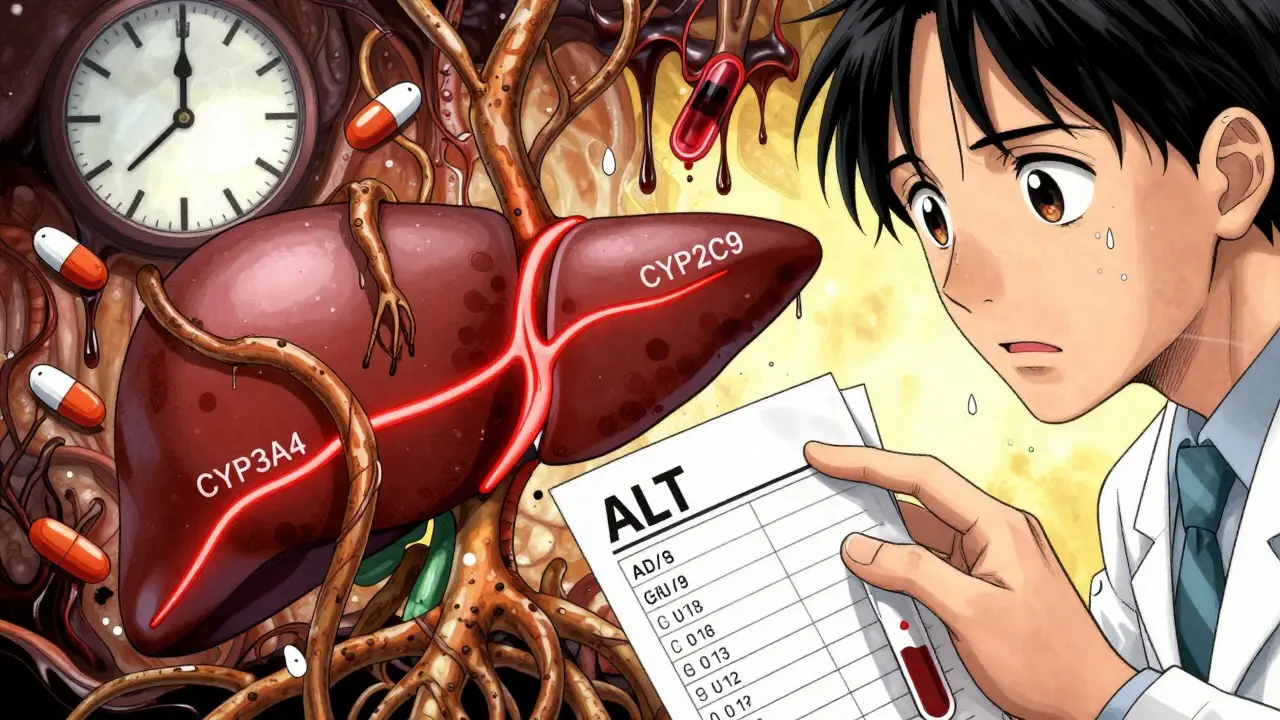
What Are the Signs of Kava-Induced Liver Damage?
Symptoms can be subtle at first:- Unexplained fatigue
- Nausea or loss of appetite
- Dark urine
- Yellowing of skin or eyes (jaundice)
- Itchy skin
- Abdominal swelling or pain
- Confusion or drowsiness (late-stage)
Are There Any Safe Alternatives to Kava for Anxiety?
Yes. And they’re backed by science:- Cognitive Behavioral Therapy (CBT): Proven to reduce anxiety as effectively as medication-with no side effects.
- Magnesium glycinate: 200-400 mg daily may help calm the nervous system.
- L-theanine: Found in green tea, 200 mg daily reduces stress without drowsiness.
- Exercise: Just 30 minutes of walking or cycling, 5 days a week, lowers cortisol and boosts mood.
- Prescription options: SSRIs like sertraline or escitalopram are safer long-term than kava when monitored.
Final Reality Check
Kava isn’t a miracle herb. It’s a liver toxin with a side effect of calming anxiety. And that trade-off? Not worth it. Especially when you’re already on medications that stress the liver. The science is clear. The cases are documented. The deaths are real. If you’re taking any prescription or over-the-counter drugs, kava is not safe. Not even a little. Stop. Get tested. Find a better way.Can kava cause liver damage even if I don’t take other medications?
Yes. While the risk is higher when combined with other drugs, there are documented cases of liver failure in people who only took kava. The liver damage is linked to kavalactones and possibly other compounds like flavokawains, which interfere with liver enzymes and deplete antioxidants. Even without other medications, long-term or high-dose kava use can lead to severe injury.
Is organic kava safer than non-organic kava?
No. In fact, organic solvent extracts (like ethanol or acetone) are the most dangerous. These methods pull out more of the compounds linked to liver toxicity. Traditional water-based kava has the lowest risk profile, but even that isn’t safe if taken daily over months while on other medications. “Organic” on the label refers to farming methods, not safety.
How long does it take for kava to damage the liver?
Damage can appear as early as 4 weeks, but most cases show up after 3-6 months of daily use. In some cases, it took over a year. The timeline varies by individual, dosage, and other medications. There’s no safe window. Once liver enzymes start rising, the damage can progress rapidly-sometimes within weeks.
Can I use kava occasionally, like once a week?
If you’re taking any medications metabolized by the liver, the answer is no. Even occasional use can interfere with drug metabolism and raise liver enzyme levels. The risk isn’t just about frequency-it’s about cumulative exposure and interaction. There’s no proven safe level for people on meds.
Why isn’t kava banned in the U.S. if it’s so dangerous?
In the U.S., dietary supplements like kava aren’t required to prove safety before being sold. The FDA can only act after harm is documented. Even then, they issue advisories, not bans. Kava remains legal because it’s classified as a supplement, not a drug. But that doesn’t mean it’s safe. Regulatory systems in Australia, Canada, and the EU have taken stronger action based on the same evidence.
Should I get my liver tested if I’ve used kava in the past?
If you used kava daily for more than a few weeks, especially while on other medications, yes. A simple blood test for ALT, AST, and bilirubin can reveal liver stress. Even if you stopped kava months ago, damage can linger. It’s better to know now than wait for symptoms.


Author
Mike Clayton
As a pharmaceutical expert, I am passionate about researching and developing new medications to improve people's lives. With my extensive knowledge in the field, I enjoy writing articles and sharing insights on various diseases and their treatments. My goal is to educate the public on the importance of understanding the medications they take and how they can contribute to their overall well-being. I am constantly striving to stay up-to-date with the latest advancements in pharmaceuticals and share that knowledge with others. Through my writing, I hope to bridge the gap between science and the general public, making complex topics more accessible and easy to understand.