
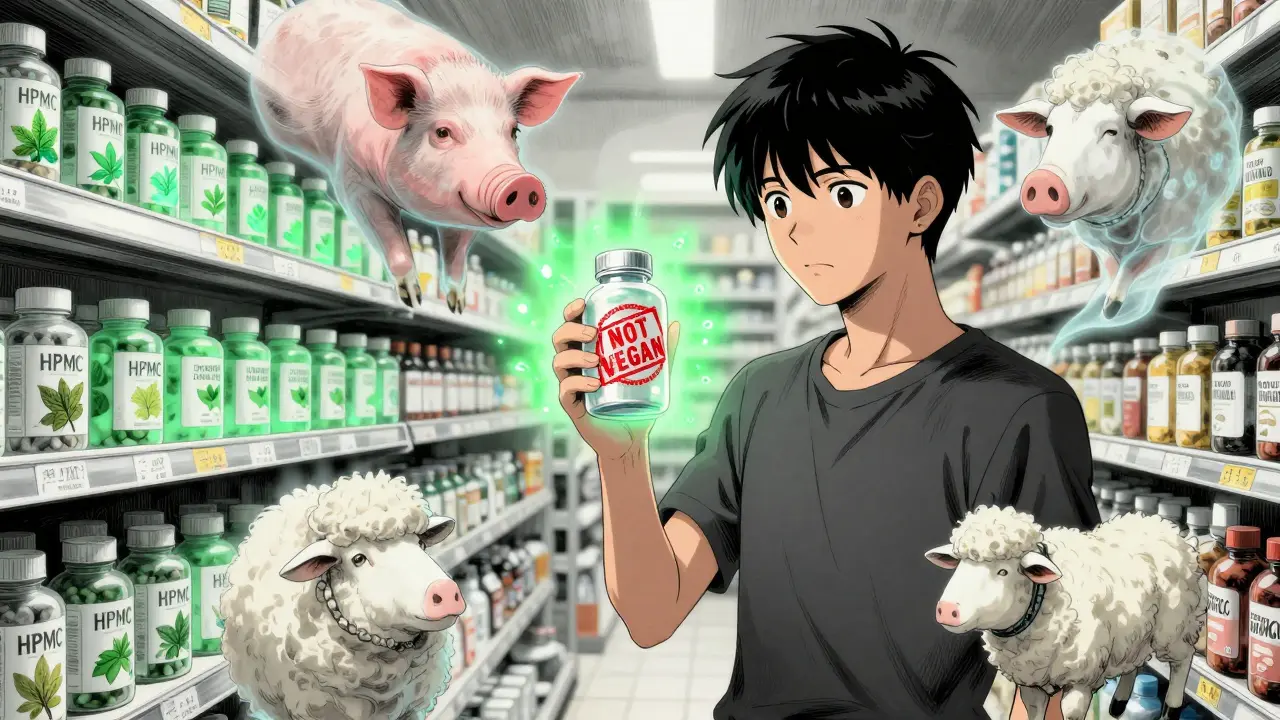
Vegan Medication Checker
Check Your Medication
Enter a medication name to see if it contains common animal-derived ingredients. Note: This tool checks for excipients (inactive ingredients), not active ingredients. Always consult your doctor.
Common Animal Ingredients to Watch For:
- Gelatin
- Lanolin
- Magnesium stearate
- Stearic acid (E570)
- Glycerin (animal source)
- Pig thyroid (Armour Thyroid)
- Horse urine (Premarin)
Important Note
Some medications have no vegan alternatives (e.g., heparin, Creon). Always consult your healthcare provider before changing medications. This tool is for informational purposes only.
Most people assume their medications are just chemicals in a pill - clean, neutral, and free from ethical baggage. But if you're vegan or vegetarian, that assumption can be dangerously wrong. Hidden animal ingredients are hiding in plain sight in countless prescription drugs and supplements, often without any warning on the label. You might be taking something that conflicts with your values without even knowing it.
What’s Really in Your Pills?
The biggest culprit? Gelatin. About 90% of capsules - the kind you swallow every day - are made from gelatin, a substance pulled from the bones, skin, and tendons of pigs, cows, and chickens. It’s used because it’s cheap, easy to mold, and dissolves easily in the stomach. But for vegans, that’s not just a dietary issue - it’s a moral one. Gelatin isn’t just a filler; it’s a direct animal product, often from animals slaughtered for meat. Then there’s magnesium stearate. You won’t find it listed as "pig fat" on the bottle, but in about 65% of cases, it comes from animal fats. It’s used as a lubricant to help pills move smoothly through manufacturing machines. The same goes for stearic acid (E570), which sounds like a harmless chemical but is frequently sourced from cow, sheep, or pig fat. These aren’t rare exceptions - they’re industry standards. Vitamin D3 is another surprise. Most supplements use lanolin, which comes from sheep’s wool. Even though it’s processed, it still starts as an animal byproduct. The plant-based alternative? Vitamin D3 derived from green algae. It’s just as effective, just as stable, and completely animal-free. Yet, most stores still stock the lanolin version because it’s cheaper and more common.Medications with Animal Tissue as the Active Ingredient
Some drugs don’t just contain animal-derived fillers - the animal part is the medicine. These are harder to swap out. - Premarin: Used for menopause, this estrogen drug is made from the urine of pregnant mares. Horses are kept in confined stalls and repeatedly impregnated so their urine can be collected. Synthetic estrogen alternatives exist, but they’re not identical. - Armour Thyroid: This popular thyroid medication is made from dried pig thyroid glands. It’s still widely prescribed, even though synthetic levothyroxine (T4) is animal-free and works for most people. But some patients feel better on Armour, making the choice difficult. - Heparin: A blood thinner used in hospitals, heparin comes from pig intestines. There’s no true vegan substitute yet, and for many patients, it’s the only option that works. - Creon and Viokace: These pancreatic enzymes are made from pig pancreas. They’re essential for people with cystic fibrosis or pancreatitis. No plant-based version exists. - Vascepa: This fish-oil-based drug treats high triglycerides. It’s derived from anchovies and sardines. While omega-3s from algae exist, they’re not approved as direct replacements for Vascepa. - Propofol: The common IV anesthetic contains egg phospholipids. For vegans with egg allergies or ethical concerns, this can be a serious problem during surgery. These aren’t obscure drugs. They’re widely prescribed. And if you’re vegan, you might be taking one right now.What You Can Do: Ask, Check, Switch
You don’t have to accept this silently. There are steps you can take to protect your values and your health. First, talk to your pharmacist. Don’t just say, “I’m vegan.” Be specific. Ask: “Is this medication free from gelatin, magnesium stearate, lanolin, glycerin, and stearic acid?” Pharmacists aren’t always trained on this, but many are willing to look it up - especially now that tools like Pill Clarity exist. Pill Clarity (formerly VeganMed) is a database that vets medications for animal ingredients. It started as a small vegan resource but expanded in 2023 to help anyone concerned about hidden ingredients - including people with allergies, religious restrictions, or ethical concerns. You can search their database by drug name and get a clear “vegan” or “not vegan” rating. For supplements, look for the “vegan” label - but don’t trust it blindly. Some brands use “plant-based” as marketing fluff. Check the ingredients list for gelatin, glycerin (could be from animal fat), and stearic acid. If you see them, call the manufacturer. Ask where they source it. Most won’t answer. But some will - and those are the ones worth supporting.
Alternatives That Actually Work
Good news: for many medications, vegan alternatives exist - even if they’re not the first thing your doctor suggests. - For Vitamin D3: Choose supplements labeled “D3 from algae.” Brands like Deva Nutrition and Garden of Life offer them. They’re just as effective as lanolin-based D3 and often more sustainable. - For thyroid medication: Levothyroxine (Synthroid, Tirosint) is synthetic and animal-free. Many patients do just fine on it. If you’re on Armour Thyroid and want to switch, talk to your doctor about testing your levels and adjusting dosage. - For capsules: Many brands now offer cellulose-based (plant-derived) capsules. Look for “vegetarian capsule” or “vegan capsule” on the label. Brands like Nature Made and Now Foods offer them for common vitamins. - For estrogen: Synthetic estradiol pills or patches (like Estrace or Climara) are animal-free. They’re not identical to Premarin, but they’re FDA-approved and widely used. - For omega-3s: Algae oil capsules deliver EPA and DHA without fish. Brands like Nordic Naturals and Ovega-3 make them. They’re not yet approved as direct replacements for Vascepa, but they’re a solid option for general heart health.When There’s No Alternative - What Then?
Some medications have no vegan version. Heparin. Creon. Propofol. These are life-saving drugs. Refusing them could be dangerous. In these cases, it’s not about perfection - it’s about intention. If you need heparin to prevent a stroke, taking it doesn’t make you less vegan. It makes you human. The goal isn’t to avoid every animal product at all costs - it’s to avoid unnecessary harm. You can still be vegan while accepting that some medical necessities don’t have ethical alternatives yet. Many vegans feel guilt about this. But you’re not failing. The system is failing you. The real issue isn’t your choices - it’s the lack of transparency and innovation in pharmaceutical manufacturing.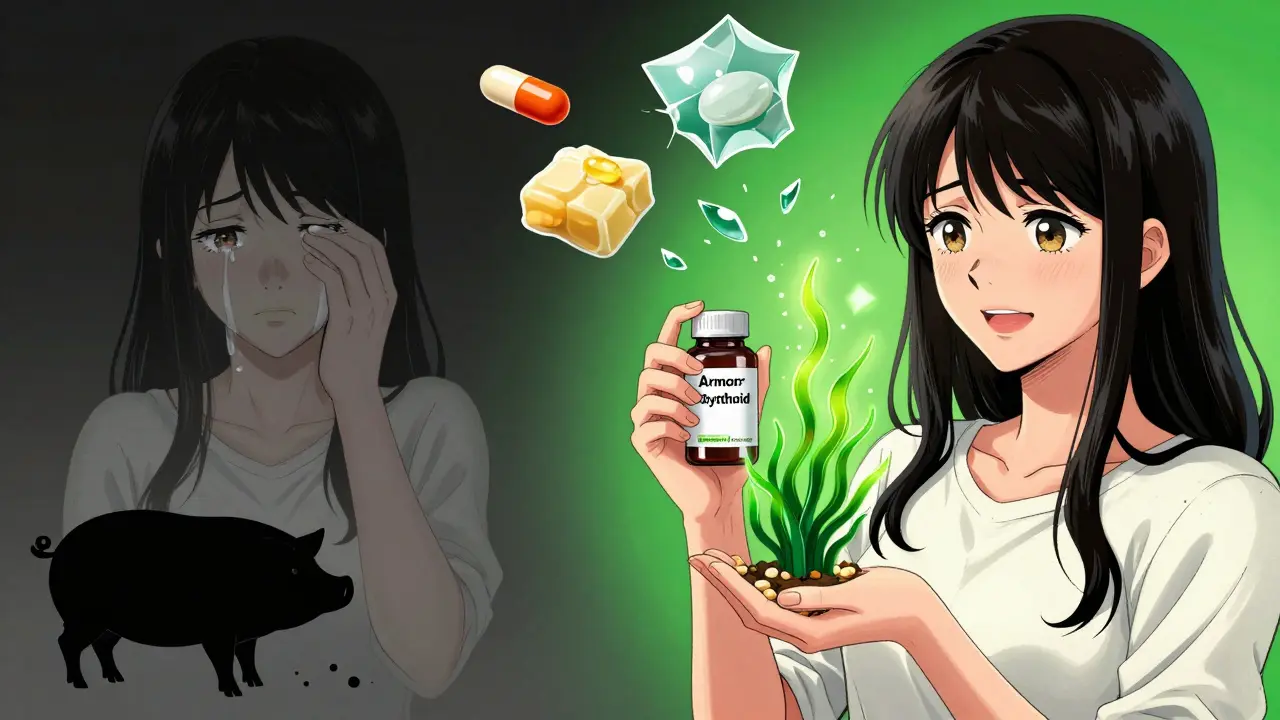
How to Stay Informed
The landscape is changing, slowly. The American Pharmacists Association is developing new guidelines for pharmacists to help vegan patients - expected to roll out in 2024. Pill Clarity now has over 10,000 verified medications in its database. More manufacturers are offering plant-based capsules. Keep these resources handy:- Pill Clarity - Searchable database of vegan-approved medications
- PETA’s Animal-Derived Ingredients List - Know the hidden names: stearic acid, glycerin, magnesium stearate, lanolin, gelatin
- Dr. Vegan’s Guide - Clear breakdown of supplements and their sources
- GoodRx - Compare generic and brand-name options; sometimes generics are vegan when brands aren’t
Why This Matters Beyond Ethics
This isn’t just about animal rights. It’s about informed consent. If you’re taking a drug with animal ingredients, you have a right to know. The FDA doesn’t require disclosure of animal-derived excipients - unlike food, where ingredients like gelatin must be labeled. That’s a gap. And it’s one that puts ethical consumers at a disadvantage. The rise of veganism isn’t just a trend. In 2022, about 3% of U.S. adults identified as vegan - and that number is growing. Yet the pharmaceutical industry has barely adapted. Most drug labels still don’t tell you if your pill contains pig fat or sheep wool. That’s not just inconvenient - it’s unethical. You deserve to take medicine without compromising your values. You deserve to know what’s in your body. And you’re not alone in asking for that.Are all capsules made from animal gelatin?
No. About 90% of capsules use gelatin, but many brands now offer plant-based capsules made from hydroxypropyl methylcellulose (HPMC). Look for labels that say "vegetarian capsule" or "vegan capsule." These are just as effective and dissolve the same way.
Can I get vegan Vitamin D3?
Yes. Most Vitamin D3 supplements use lanolin from sheep wool, but plant-based D3 from algae is widely available. Brands like Deva, Garden of Life, and Now Foods offer algae-derived D3 that’s vegan, equally effective, and more sustainable. Always check the label - it’s not always obvious.
Is levothyroxine vegan?
Yes. Levothyroxine (Synthroid, Tirosint, generic versions) is a synthetic thyroid hormone made in a lab. It contains no animal parts. The only thyroid medication that isn’t vegan is Armour Thyroid, which is made from dried pig thyroid glands.
What should I say to my doctor to get vegan meds?
Be direct: "I need medications free from animal-derived ingredients, including gelatin, magnesium stearate, lanolin, and stearic acid." Don’t just say "I’m vegan" - many doctors don’t know what that means for pills. Ask for alternatives, and bring a list of ingredients to check.
Are there any vegan alternatives to heparin or Creon?
Currently, no. Heparin (from pig intestines) and Creon (from pig pancreas) have no approved vegan substitutes. These are critical medications where the animal-derived component is the active ingredient. Refusing them can be dangerous. Talk to your doctor about risks and alternatives - but don’t stop taking them without medical advice.


Author
Mike Clayton
As a pharmaceutical expert, I am passionate about researching and developing new medications to improve people's lives. With my extensive knowledge in the field, I enjoy writing articles and sharing insights on various diseases and their treatments. My goal is to educate the public on the importance of understanding the medications they take and how they can contribute to their overall well-being. I am constantly striving to stay up-to-date with the latest advancements in pharmaceuticals and share that knowledge with others. Through my writing, I hope to bridge the gap between science and the general public, making complex topics more accessible and easy to understand.