

What is neuropathic pain?
Neuropathic pain isn’t the kind of pain you get from a cut or a sprain. It’s caused by damaged or malfunctioning nerves sending wrong signals to your brain. People describe it as burning, shooting, or like electric shocks. Some feel tingling or numbness. Even light touches-like sheets brushing against the skin-can hurt. This is called allodynia. Or the pain might be way worse than it should be, known as hyperalgesia. It’s not rare. About 7 to 10% of adults deal with it. Diabetes is the biggest cause, accounting for 3 in 10 cases. Other causes include shingles, spinal injuries, chemotherapy, and even vitamin B12 deficiency.
Why gabapentin and pregabalin are first-line treatments
These two drugs weren’t originally made for pain. They started out as anti-seizure meds. But doctors noticed patients with nerve pain reported less discomfort. That led to FDA approvals: gabapentin in 2002 for post-shingles pain, pregabalin in 2004 for diabetic nerve pain and the same. Today, about 6 in 10 people with neuropathic pain are prescribed one of them. They work the same way: they latch onto a specific part of nerve cells called the alpha-2-delta subunit. This slows down the release of pain signals. They don’t cure the nerve damage, but they help mute the noise.
Gabapentin: how it works and what to expect
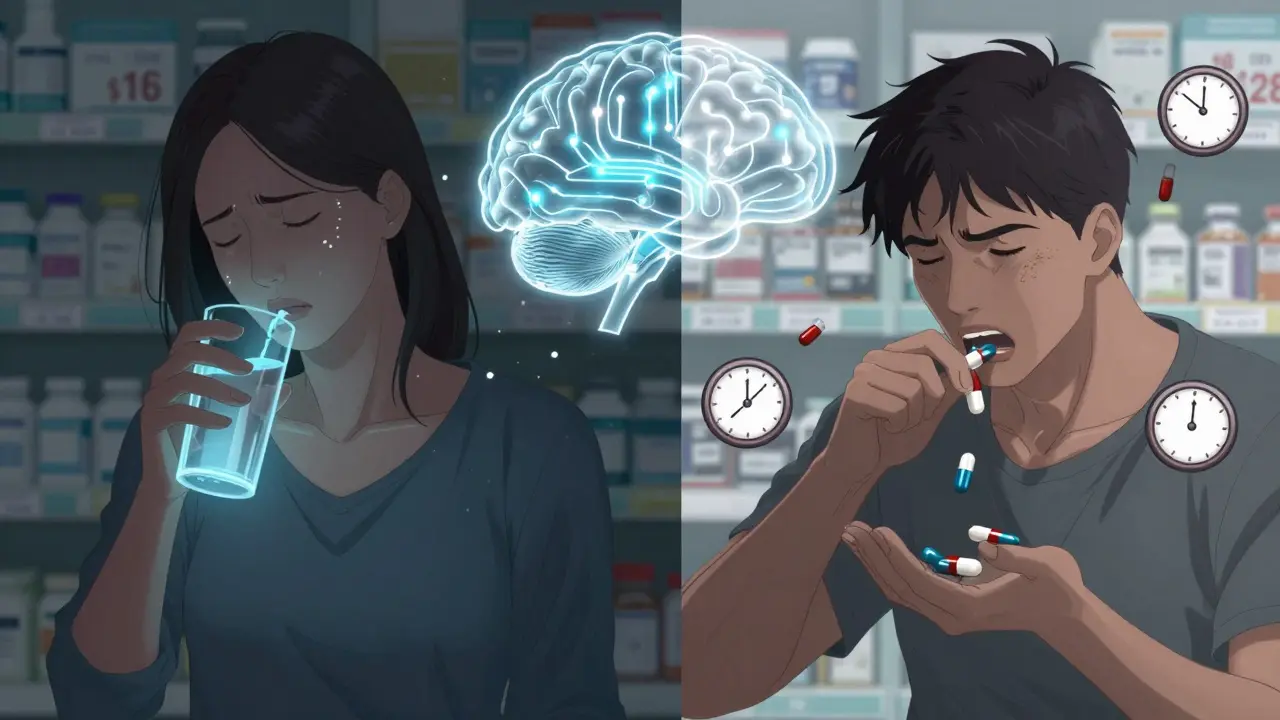
Gabapentin comes in capsules and tablets. You take it three times a day because it doesn’t last long-about 5 to 7 hours in your body. That means your dose has to be spread out: maybe 300mg at bedtime, then 300mg in the morning and afternoon. You can’t just take a big dose and expect fast relief. It takes weeks to build up. Doctors usually start low-100 to 300mg-and slowly increase every few days. The max dose is 3,600mg daily, but most people don’t need that much. Side effects? Dizziness is common-about 1 in 4 people feel it. Sleepiness, swelling in the legs, and trouble walking are also frequent. One big downside: it’s messy to dose. If you forget a pill, you might feel the pain come back. That’s why nearly 35% of people stop taking it within the first few months. But it’s cheap. Generic gabapentin costs around $16 for 90 capsules of 300mg. That’s a major reason it’s still used in clinics with tight budgets.
Pregabalin: faster, stronger, but with trade-offs
Pregabalin is like gabapentin’s more reliable cousin. It binds to the same spot but 6 times more tightly. That means it works faster and more predictably. You only need to take it twice a day. It’s absorbed fully, no matter what you eat. You can start at 75mg and reach your target dose in just a week or two. In head-to-head studies, pregabalin 300mg gives the same pain relief as gabapentin 3,600mg. That’s a huge difference in pill count. In clinical trials, about 35% of patients got at least half their pain gone with pregabalin, compared to 30% with gabapentin. But the side effects are stronger. Weight gain hits 1 in 8 users-some gain 5 to 15 pounds in the first month. Dizziness and sleepiness are more common too. And while gabapentin is not a controlled substance, pregabalin is classified as Schedule V because of misuse potential. There have been 12 overdose deaths linked to it in the U.S. last year. It’s also more expensive. Generic pregabalin runs about $28 for 60 capsules of 75mg. That’s nearly double the cost of gabapentin.
Real people, real experiences
Online forums are full of stories. One person on Reddit said pregabalin cut their pain from 8/10 to 3/10 in 48 hours-but they gained 12 pounds in six weeks. They switched to gabapentin. It took three weeks to work, but no weight gain. Another said gabapentin made them so dizzy they fell twice. Switched to pregabalin. Half the dose, same relief, no dizziness. A 2024 analysis of over 3,800 patients found pregabalin scored higher on pain relief (6.2/10) but lower on tolerability (4.8/10). Gabapentin was lower on relief (5.7/10) but higher on tolerability (5.9/10). The trade-off is clear: pregabalin works faster and stronger, but it’s harder on your body. Gabapentin is gentler but slower, and harder to stick with because of the dosing.
Who gets which drug?
It’s not one-size-fits-all. If you’re on a tight budget, or your insurance doesn’t cover pregabalin well, gabapentin is still a solid choice. Rural clinics and safety-net hospitals use it more because of cost. If you’re busy, forget pills often, or have trouble managing multiple daily doses, pregabalin’s twice-daily schedule is easier. Doctors at academic centers lean toward pregabalin because of its consistency. But if you’re diabetic, the American Diabetes Association actually recommends pregabalin as the first pick. If you’ve gained weight before on other meds, or have heart issues, gabapentin might be safer. And if you’ve had a history of substance misuse, gabapentin is the preferred option.

What about long-term use?
Both drugs are safe for long-term use, but not without risks. Neither causes liver damage or addiction like opioids. But sudden stopping can trigger seizures-especially with pregabalin. You must taper off slowly, over weeks. Both carry a black box warning for suicidal thoughts, though the risk is small: about 0.4% of users vs. 0.2% on placebo. Rarely, people get swelling in the face or throat (angioedema), which needs emergency care. The big concern isn’t toxicity-it’s that people stop taking them because of side effects. Studies show 30% of users abandon the drug within a year. That’s why doctors now emphasize patient education. If you’re on gabapentin, use a pill organizer. If you’re on pregabalin, track your weight weekly. Small habits make a big difference.
What’s next for these drugs?
Newer options are coming. Drugs like duloxetine and venlafaxine are gaining ground, especially for diabetic nerve pain. Extended-release versions are improving adherence: Lyrica CR lets you take pregabalin once a day. Gabapentin enacarbil (Horizant) is now approved for restless legs, too. But neither gabapentin nor pregabalin is going away soon. Generic gabapentin is too cheap to replace. Pregabalin, even with patent loss, still sells over $3 billion a year globally. The real shift is in how we use them. Instead of being the only tool, they’re now part of a team: combined with physical therapy, antidepressants, or nerve blocks. Experts agree: they’re not perfect, but for millions of people, they’re the difference between constant pain and a life you can manage.
When to talk to your doctor
If you’re on either drug and your pain isn’t improving after 4 to 6 weeks, talk to your doctor. Don’t just up the dose on your own. If you’re gaining weight fast, feeling unusually sleepy, or having trouble walking, tell them. If you’re struggling with the dosing schedule, ask about extended-release versions. If cost is a barrier, ask about patient assistance programs. Many drugmakers offer coupons or free samples. And if you’re thinking of stopping, don’t quit cold turkey. Work with your doctor to taper safely. Neuropathic pain is chronic, but it’s manageable. Finding the right medication is just the first step.


Author
Mike Clayton
As a pharmaceutical expert, I am passionate about researching and developing new medications to improve people's lives. With my extensive knowledge in the field, I enjoy writing articles and sharing insights on various diseases and their treatments. My goal is to educate the public on the importance of understanding the medications they take and how they can contribute to their overall well-being. I am constantly striving to stay up-to-date with the latest advancements in pharmaceuticals and share that knowledge with others. Through my writing, I hope to bridge the gap between science and the general public, making complex topics more accessible and easy to understand.