
Why Medication Labels Matter More Than You Think
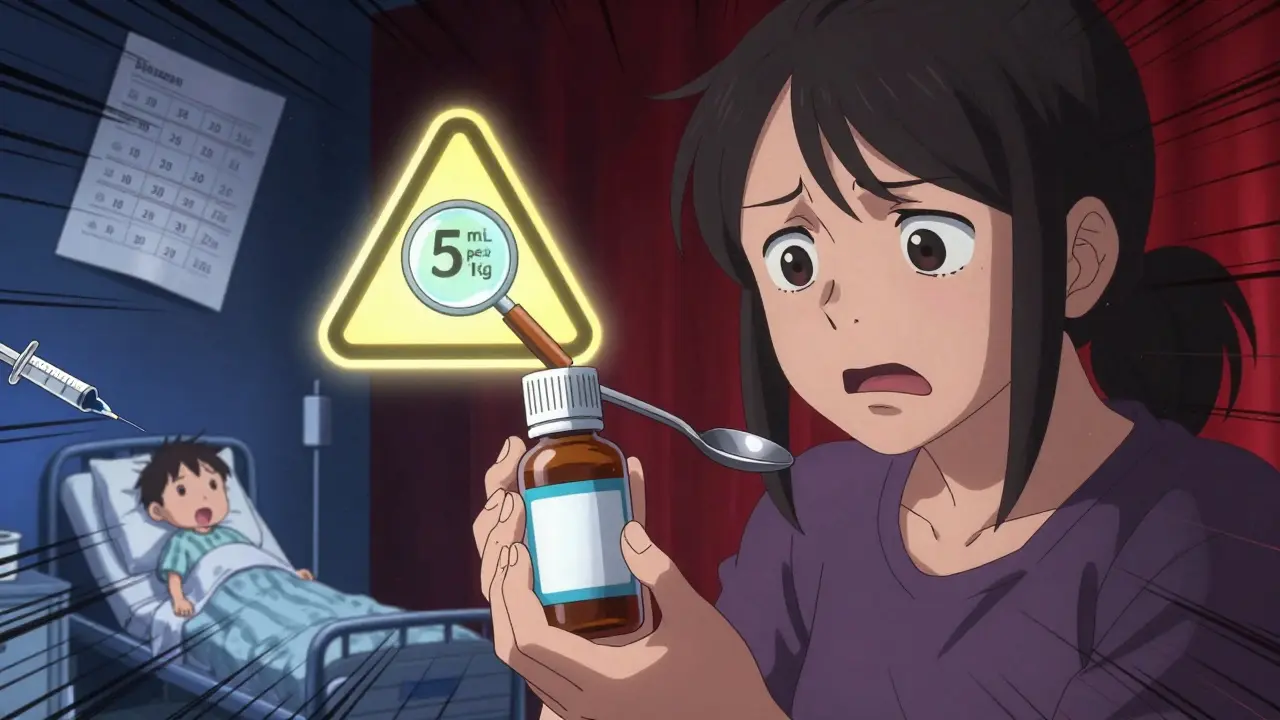
You grab a bottle of painkillers from the cabinet. You’ve taken them before, so you don’t read the label. Big mistake. Every year, over 1.5 million people in the U.S. suffer preventable harm from medication errors - and half of those happen because someone misread the label. It’s not about being careless. It’s about how confusing these labels can be. A parent gives their child the wrong dose because they used a kitchen spoon. An older adult takes two pills thinking it’s once a day, not twice. Someone mixes two cold medicines and overdoses on acetaminophen. None of these people were trying to hurt themselves. They just didn’t know how to read what was written on the bottle.
What’s Actually on the Label - Prescription vs. Over-the-Counter
Not all medication labels are the same. Prescription drugs and over-the-counter (OTC) medicines follow different rules, but both are designed to keep you safe.
For prescription meds, the label includes 16 sections under a format called the Highlights of Prescribing Information. The most important part for you is Section 2: Dosage and Administration. This tells you exactly how much to take, how often, and if your liver or kidney function changes how much you need. It also warns you about other drugs that might interact dangerously with it. For example, if you’re on blood thinners, your doctor might tell you to avoid certain painkillers because they can increase bleeding risk.
OTC labels use the Drug Facts format, which is simpler and standardized. You’ll find seven key parts: Active Ingredients, Uses, Warnings, Directions, Other Information, Inactive Ingredients, and Questions. The Directions section is your guide to how much to take and when. It might say: “Take 1 tablet every 4 to 6 hours as needed.” That doesn’t mean you can take six pills in one day - the label will usually add: “Do not exceed 6 tablets in 24 hours.”
Understanding Dosage: It’s Not Just “Take One”
Dosage isn’t always as simple as “one pill.” Many medicines, especially for kids, are dosed by weight. If your child weighs 25 pounds, the label might say: “Give 5 mL for every 10 kg.” You need to know your child’s weight in kilograms - not pounds - to get it right. A 25-pound child is about 11.3 kg, so you’d give roughly 5.7 mL. Most parents don’t know this, and that’s why kids end up in the ER.
For adults, dosage can change based on age, kidney function, or other meds you’re taking. A common mistake? Taking the same dose of a medicine you took years ago, even though your body has changed. Your liver doesn’t work the same at 70 as it did at 40. Your doctor might have adjusted your dose without telling you - so always check the label.
Reading the Fine Print: Warnings You Can’t Ignore
Most people skip the “Warnings” section. That’s the biggest error. This part tells you what could go wrong if you ignore the rules. It might say: “Do not drink alcohol while taking this medicine.” Or: “May cause drowsiness - do not drive or operate machinery.” Or: “Avoid sunlight - this medicine can make your skin burn easily.”
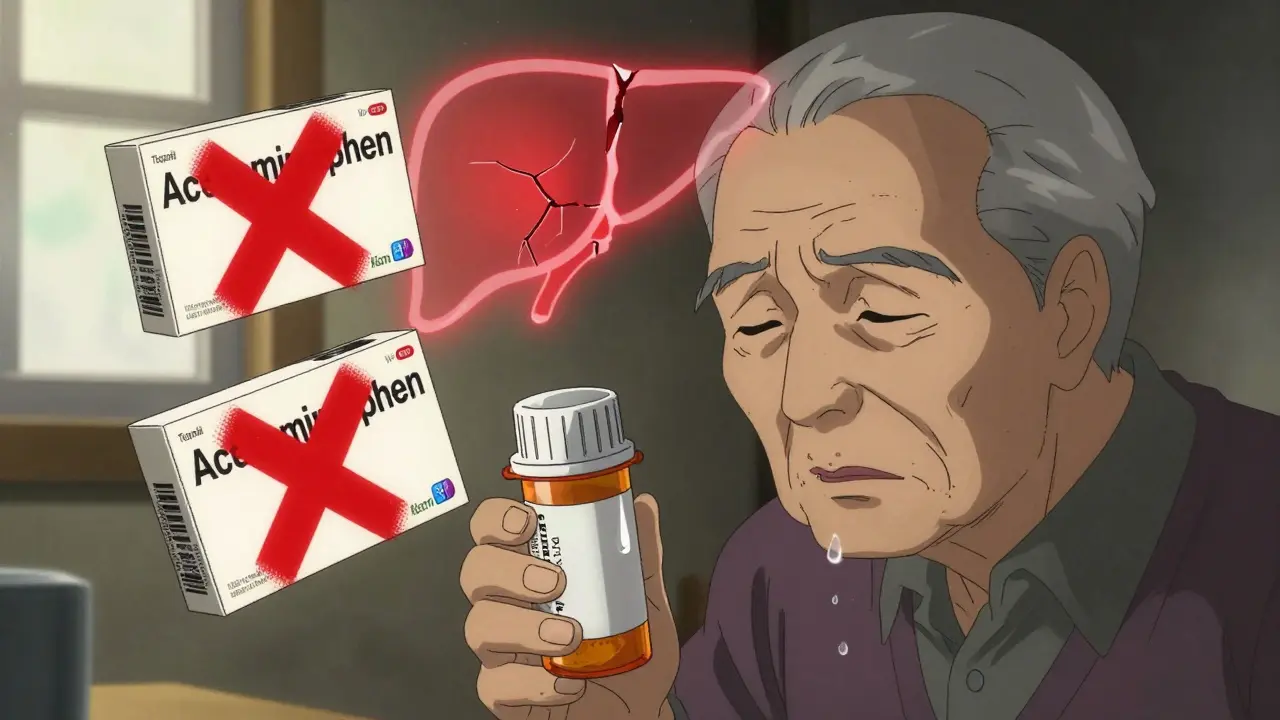
One of the most dangerous warnings is about overlapping active ingredients. Take two cold medicines, and you might be doubling up on acetaminophen. The FDA says acetaminophen overdose is the leading cause of acute liver failure in the U.S. If both medicines list “acetaminophen” as an active ingredient, you’re at risk - even if you’re taking them hours apart. Always compare the active ingredients. If they’re the same, don’t mix them.
Liquid Medicines Are the Trickiest
Getting liquid medicine right is harder than it looks. Labels often say: “350 mg per 5 mL.” That means each milliliter has 70 mg. If your doctor says you need 700 mg, you need 10 mL - not two spoonfuls. But here’s the problem: most people use kitchen spoons. A teaspoon isn’t always 5 mL. It can be anywhere from 2.5 mL to 7.3 mL. That’s a 200% difference. One study found that 68% of parents made dosing errors with liquid antibiotics because they used spoons.
Always use the measuring tool that comes with the medicine - an oral syringe or a dosing cup marked in mL. Never guess. If the tool is missing, ask the pharmacy for a new one. They’ll give it to you free.
Expiration Dates and Storage Matter
Just because a pill looks fine doesn’t mean it’s safe. Prescription bottles usually have an expiration date set by the pharmacy - often one year from when it was filled. That’s not the same as the manufacturer’s date. The manufacturer’s date might say “Exp. 2028,” but once you open it, it’s only good for a year. OTC meds usually last 2-3 years from production, but heat, moisture, and light can break them down faster.
Store meds in a cool, dry place. Don’t keep them in the bathroom - steam ruins them. Don’t leave them in a hot car. If a pill is discolored, smells odd, or crumbles, throw it out. Don’t take chances.
The Five Rights of Safe Medication Use
Nurses and pharmacists use a simple checklist called the Five Rights to avoid errors. You should too:
- Right Patient - Is the name on the bottle yours? (Especially important in households with multiple people.)
- Right Drug - Does the name match what your doctor prescribed? (Generic names can be confusing - e.g., “ibuprofen” vs. “Advil.”)
- Right Dose - Does the strength match what you were told? (A 500 mg pill is not the same as a 250 mg pill.)
- Right Route - Is it meant to be swallowed, applied to the skin, or inhaled? Don’t swallow a patch or inject a cream.
- Right Time - Is it meant to be taken with food? At bedtime? Every 8 hours? Timing affects how well it works and how safe it is.
What to Do When You’re Confused
If you don’t understand the label - don’t guess. Call your pharmacist. They’re trained to explain this stuff. Don’t feel embarrassed. One study found that 31% of patients never read labels because they were too hard to understand. That’s not your fault. The system is messy.
Ask: “Can you explain this in plain English?” or “What happens if I miss a dose?” or “Is this safe with my other meds?” Pharmacists are your best allies. Many offer free 10-minute consultations just for this.
What’s Changing Soon - And How It Helps
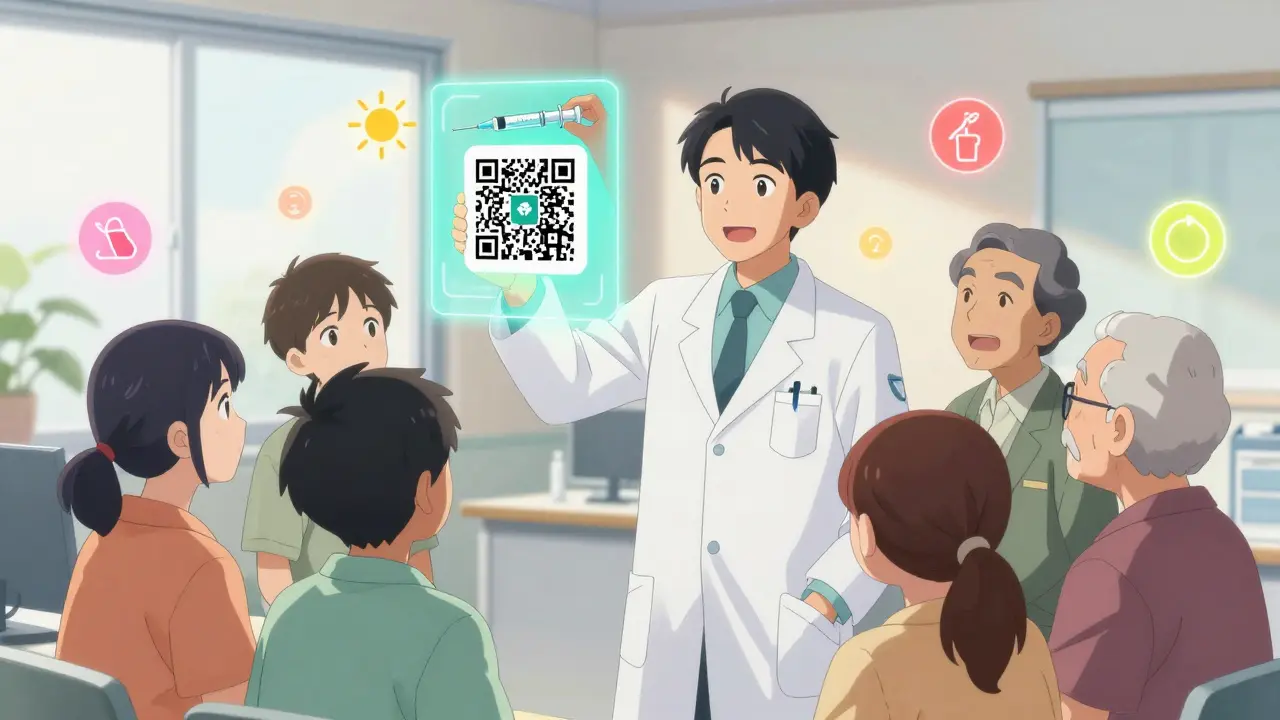
Good news: labels are getting easier to read. Starting in 2024, the FDA will require QR codes on most prescription packages. Scan it with your phone, and you’ll get a video showing how to take the medicine, a dosage calculator, and warnings in plain language. In pilot programs, this cut medication errors by 37%.
By 2027, high-risk drugs like insulin and blood thinners will have color-coded labels and universal warning icons - no more guessing what a tiny symbol means. The goal? Make it impossible to mess up.
Final Check: Before You Take Anything
Before you swallow any medicine, do this quick mental checklist:
- Is this medicine meant for me? (Check name)
- Is the dose correct? (Compare to what your doctor said)
- Am I taking it at the right time? (With food? Morning or night?)
- Do I know how much to take? (Especially for liquids - use the syringe)
- Am I mixing it with something else? (Check active ingredients)
- Is it expired? (Look at the date)
If you can answer yes to all six, you’re good to go. If any answer is unsure - stop. Call someone. A mistake today could cost you your health tomorrow.


Author
Mike Clayton
As a pharmaceutical expert, I am passionate about researching and developing new medications to improve people's lives. With my extensive knowledge in the field, I enjoy writing articles and sharing insights on various diseases and their treatments. My goal is to educate the public on the importance of understanding the medications they take and how they can contribute to their overall well-being. I am constantly striving to stay up-to-date with the latest advancements in pharmaceuticals and share that knowledge with others. Through my writing, I hope to bridge the gap between science and the general public, making complex topics more accessible and easy to understand.