
Serotonin Syndrome Risk Assessment Tool
Step 1: Select Medications
Check all medications/supplements you're currently taking
Step 2: Check Symptoms
Select any symptoms you're experiencing
Risk Assessment Results
Stop all serotonergic medications immediately.
Call emergency services now and say: "I think this is serotonin syndrome."
Cool body temperature while waiting for help.
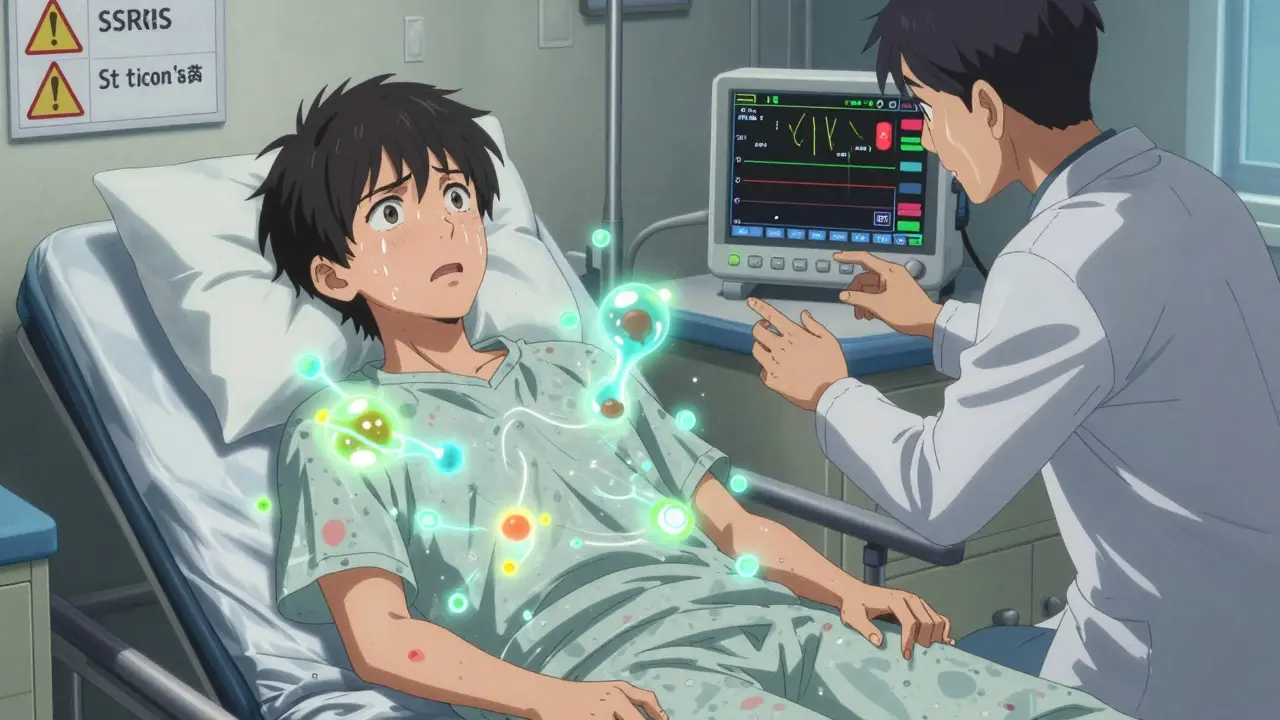
When you start a new medication or add one to your routine, you might not think twice about how it interacts with what you’re already taking. But for some people, even a small change can trigger a dangerous condition called serotonin syndrome. It doesn’t happen often, but when it does, it can turn deadly in hours. And the worst part? Many doctors miss it at first.
This isn’t just about antidepressants. It’s about the quiet, invisible buildup of serotonin in your brain and nervous system - a chemical meant to help you feel calm, focused, and happy. But when too much builds up, your body starts to shut down. Your muscles spasm. Your heart races. Your temperature soars. And if you don’t act fast, you could end up in intensive care.
What Exactly Is Serotonin Syndrome?
Serotonin syndrome isn’t an allergy. It’s not an overdose. It’s a toxic overload of serotonin - a neurotransmitter that helps regulate mood, sleep, digestion, and muscle control. When serotonin levels spike too high, your central and peripheral nervous systems go into overdrive. The result? A mix of physical and mental symptoms that can escalate quickly.
The condition was first noticed in the 1960s when people on older antidepressants (MAOIs) took tryptophan supplements. Since then, we’ve learned it’s mostly caused by drug combinations. About 80% of cases happen when someone takes two or more serotonergic medications. It’s not rare - poison control centers in the U.S. see it in about 8% of all drug reaction reports. And since 2004, cases have jumped 250% as more people take SSRIs and SNRIs for depression and anxiety.
Common Medications That Cause It
You don’t need to be on a bunch of drugs to get serotonin syndrome. Sometimes, just one new addition is enough. Here are the most common culprits:
- SSRIs - fluoxetine (Prozac), sertraline (Zoloft), citalopram (Celexa), escitalopram (Lexapro)
- SNRIs - venlafaxine (Effexor), duloxetine (Cymbalta)
- MAOIs - phenelzine (Nardil), tranylcypromine (Parnate) - these are especially dangerous when mixed with anything else
- Triptans - sumatriptan (Imitrex) for migraines
- Opioids - tramadol (Ultram), fentanyl, meperidine (Demerol)
- Illicit drugs - MDMA (ecstasy), cocaine, LSD
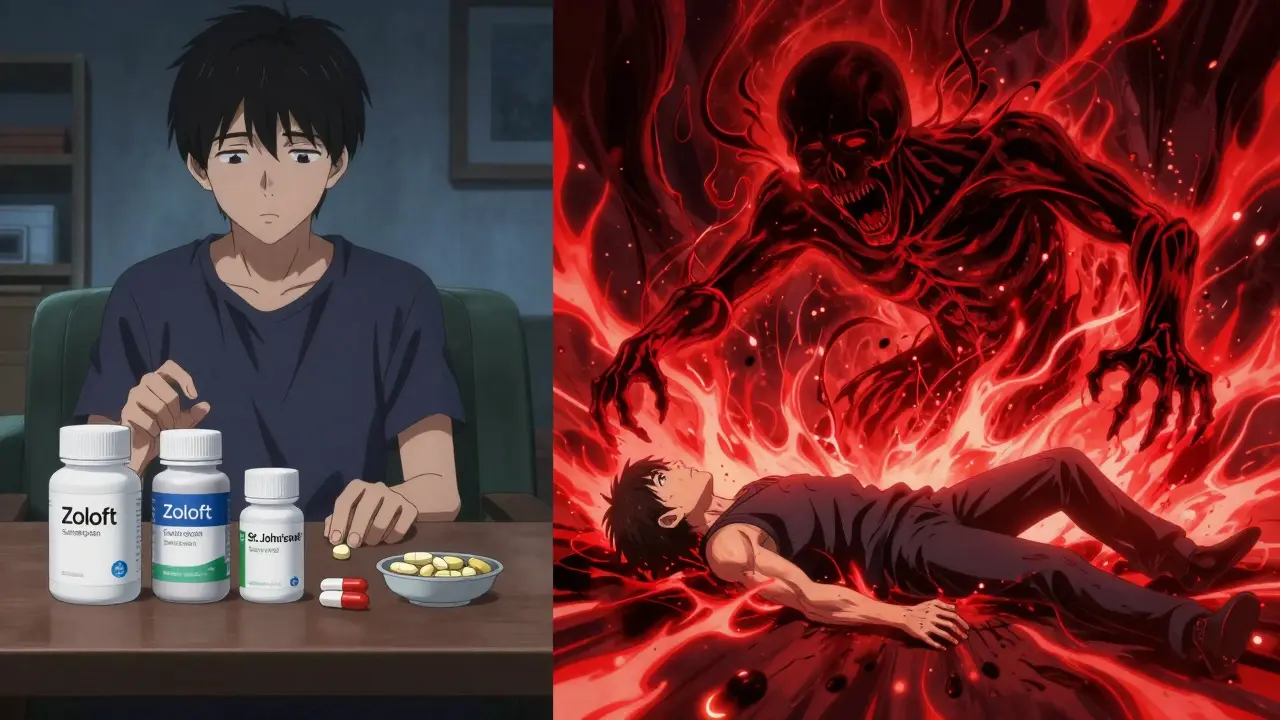
- Herbal supplements - St. John’s Wort, tryptophan, 5-HTP
Here’s the scary part: you might not realize you’re at risk. A 2023 review found that 68% of patients who ended up in the ER with serotonin syndrome had been told by their doctor that their symptoms were "just side effects" - like jitteriness or nausea - when they started a new drug. Then, when they added a painkiller or migraine med, everything blew up.
Key Symptoms to Watch For
There’s no single test for serotonin syndrome. Diagnosis relies on recognizing a pattern. The Hunter Criteria - the most reliable tool doctors use - say you need to be taking a serotonergic drug and have at least one of these combinations:
- Spontaneous muscle clonus (involuntary contractions)
- Inducible clonus (when you move your ankle and your foot jerks) + agitation or sweating
- Ocular clonus (eyes darting side to side) + agitation or sweating
- Tremor + overactive reflexes
- Muscle stiffness + fever over 38°C (100.4°F) + clonus
Most people notice three main types of symptoms:
- Neuromuscular - tremors, muscle spasms, stiff muscles, overactive reflexes. Tremor is often the first sign. Many describe it as a "shaky feeling" you can’t shake off.
- Autonomic - sweating, rapid heartbeat, high blood pressure, fever (sometimes over 41°C / 106°F), diarrhea.
- Mental changes - agitation, confusion, restlessness, hallucinations.
It’s easy to confuse with other conditions. Some doctors mistake it for a viral illness, anxiety, or even neuroleptic malignant syndrome (NMS). But NMS causes slow, rigid muscles. Serotonin syndrome causes twitching and jerking. That difference saves lives.
When It Turns Deadly
Most cases are mild and resolve within 24 to 72 hours. But severe cases? They can kill.
When body temperature hits 41.1°C (106°F), your muscles start breaking down. Toxins flood your bloodstream. Your kidneys fail. Your blood starts clotting everywhere - then stops clotting altogether. This is called disseminated intravascular coagulation (DIC). At that point, survival drops to 88% - meaning 12% don’t make it.
And timing matters. If you wait more than six hours after symptoms start to get help, your chance of dying triples. One study found that 30% of hospitalizations for serotonin syndrome end up in the ICU. Many of those patients had been sent home the day before with a diagnosis of "flu" or "anxiety."
What to Do in an Emergency
If you or someone else has symptoms and is on one or more of the medications listed above - act fast.
- Stop all serotonergic drugs immediately. This includes supplements like St. John’s Wort or 5-HTP. Don’t wait for a doctor’s order.
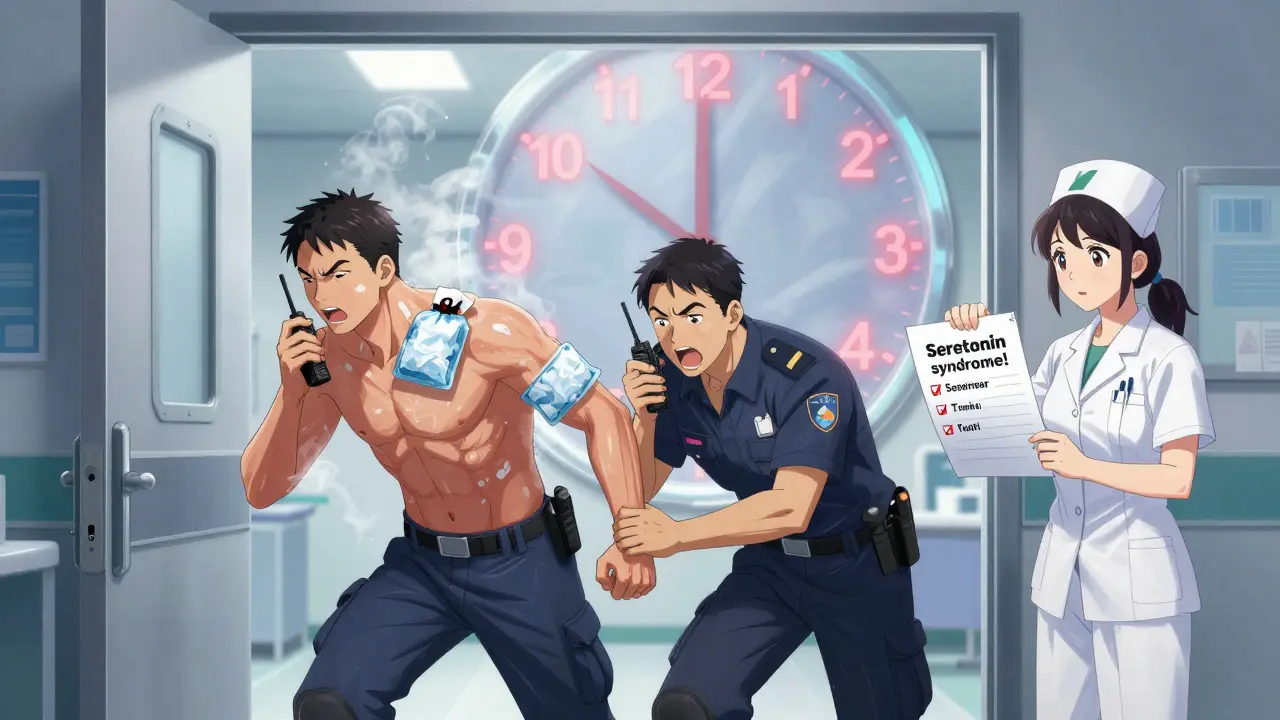
- Call emergency services. Say "I think this is serotonin syndrome." Don’t say "I have anxiety" or "I think I’m having a bad reaction." Use the exact term.
- If the person is overheating, cool them down. Move them to a cool room. Remove clothing. Apply wet cloths or ice packs to armpits, neck, and groin. Don’t wait for EMS to arrive.
- If they’re conscious and able to swallow, give cyproheptadine (Periactin) if available. This is an antihistamine that blocks serotonin. Dose: 12 mg orally, then 2 mg every 2 hours if needed. Max 32 mg in 24 hours. (This isn’t OTC in Australia - ask your pharmacist if you have a prescription on file.)
In the hospital, treatment includes IV fluids, benzodiazepines (like lorazepam) to calm agitation and stop muscle spasms, and sometimes dantrolene to stop extreme muscle breakdown. Mechanical ventilation may be needed if breathing fails.
Why Most Cases Are Missed
Doctors aren’t lazy. But serotonin syndrome is sneaky.
Many patients don’t connect their symptoms. They take Zoloft for depression. Then, for a bad migraine, they take sumatriptan. Two weeks later, they start feeling jittery, sweating, and having diarrhea. They assume it’s "just the new meds." They don’t tell their doctor about the migraine drug. The doctor doesn’t ask.
Electronic health systems warn about interactions - but they’re noisy. One study found that 43% of drug interaction alerts are false alarms. Doctors start ignoring them. Patients get lost in the noise.
And let’s not forget: serotonin syndrome is more common than you think. Experts estimate that 10-15% of people starting an SSRI have mild symptoms - but 90% of those cases go unnoticed. That’s because the signs are subtle: a little tremor, a bit of restlessness, a warm feeling. People chalk it up to stress.
How to Prevent It
Prevention is simple - but requires honesty and awareness.
- Always tell your doctor about every medication, supplement, and drug you take - even if you think it’s "not a big deal." That includes OTC painkillers, herbal remedies, and recreational substances.
- Wait 14 days after stopping an MAOI before starting an SSRI or SNRI. For fluoxetine (Prozac), wait 5 weeks - it sticks around in your system way longer than other SSRIs.
- Ask: "Is this safe with what I’m already taking?" When a new drug is prescribed, don’t just say "yes." Ask for a quick interaction check.
- Keep a written list. Include doses and when you started each one. Bring it to every appointment.
- Know your early signs. If you start shaking, sweating without reason, or feeling unusually anxious after a new med - don’t wait. Call your doctor the same day.
A 2022 study found that patients who received a simple serotonin syndrome awareness checklist were 78% more likely to recognize symptoms early. That’s huge. You don’t need to be a doctor. You just need to know what to look for.
What’s Next?
The number of serotonergic drugs keeps growing. New painkillers, migraine treatments, even some weight-loss supplements now affect serotonin. In the next few years, we’ll likely see more cases as prescriptions rise.
Researchers are testing drugs that block serotonin production at the source - like TPH2 inhibitors - which could one day be used as emergency treatments. But for now, your best defense is awareness.
If you’re on antidepressants, migraine meds, or opioids - know the signs. If you’re a caregiver for someone on these drugs - learn them too. Serotonin syndrome doesn’t care how careful you are. It only cares if you recognize the warning signs before it’s too late.
Can serotonin syndrome happen from one medication?
Yes, but it’s rare. Most cases involve two or more serotonergic drugs. However, very high doses of a single drug - like an overdose of an SSRI or tramadol - can trigger it alone. The risk is much higher when combining drugs.
How long does serotonin syndrome last?
Mild cases usually clear up in 24 to 72 hours after stopping the offending drugs. Severe cases can take longer - up to a week or more - especially if organ damage occurs. Recovery time depends on how quickly treatment starts and how severe the symptoms are.
Is serotonin syndrome the same as an allergic reaction?
No. An allergic reaction involves your immune system and usually causes rashes, swelling, or breathing trouble. Serotonin syndrome is a pharmacological toxicity - it’s about too much serotonin in your brain and nerves. The symptoms look different, and the treatment is completely different.
Can I get serotonin syndrome from St. John’s Wort?
Yes. St. John’s Wort is a herbal supplement that increases serotonin levels. It’s been linked to multiple cases of serotonin syndrome, especially when taken with antidepressants, migraine meds, or opioids. Many people don’t realize it’s a drug - but it’s powerful enough to cause life-threatening reactions.
Should I stop my antidepressant if I think I have serotonin syndrome?
Yes - stop all serotonergic drugs immediately, including antidepressants, painkillers, and supplements. But don’t just quit cold turkey without medical advice. Call emergency services. They’ll guide you on what to do next. Stopping abruptly can cause withdrawal, but the risk of untreated serotonin syndrome is far greater.


Author
Mike Clayton
As a pharmaceutical expert, I am passionate about researching and developing new medications to improve people's lives. With my extensive knowledge in the field, I enjoy writing articles and sharing insights on various diseases and their treatments. My goal is to educate the public on the importance of understanding the medications they take and how they can contribute to their overall well-being. I am constantly striving to stay up-to-date with the latest advancements in pharmaceuticals and share that knowledge with others. Through my writing, I hope to bridge the gap between science and the general public, making complex topics more accessible and easy to understand.