
Prescription Review: Understand Your Medications and Avoid Dangerous Interactions
When you take multiple medications, a prescription review, a careful check of all your drugs to find risks, overlaps, or harmful combinations. Also known as medication reconciliation, it’s not just a formality—it’s a life-saving step many people skip. Think of it like checking your car’s oil, brakes, and tires before a long trip. You wouldn’t drive without it. Yet, most people never look at their full list of prescriptions together, even when they’re taking five or more.
That’s where things get risky. A drug-disease interaction, when a medication meant to help one condition makes another worse is more common than you think. For example, someone with kidney problems taking metformin might not realize their drug could raise lactic acid levels, especially if they need a CT scan with contrast dye. Or an older adult on an SSRI might develop dangerously low sodium, leading to confusion or falls. These aren’t rare accidents—they’re predictable outcomes when prescriptions aren’t reviewed as a whole.
And it’s not just about drugs clashing with each other. Your statin side effects, like muscle pain or liver stress can be made worse by other meds or even foods. Cranberry juice, for instance, can spike your INR if you’re on warfarin—turning a routine blood thinner into a bleeding hazard. Vitamin K-rich veggies? They’re healthy, but they can undo your warfarin’s effect if you eat them inconsistently. A prescription review catches these hidden traps before they hurt you.
It’s not just about avoiding bad reactions—it’s about making sure you’re not taking something you don’t need. Many people stay on a medication long after it’s useful, or take two drugs that do the same thing. One person might be on both lisinopril and losartan for blood pressure, doubling up without knowing. Another might be on a high-dose statin when a lower dose plus ezetimibe would work better with fewer side effects. A good prescription review cuts the clutter, saves money, and reduces your risk.
You don’t need a doctor’s permission to start asking questions. Bring your full list—pills, patches, supplements, even OTC sleep aids like Unisom—to your next appointment. Ask: "Could any of these be making my other condition worse?" "Is there a simpler, safer combo?" "What happens if I stop one?" The answers could prevent hospital visits, kidney damage, hearing loss from ototoxic drugs, or even depression triggered by opioids. This isn’t theoretical. Real people have lost hearing from common antibiotics, had strokes from unmonitored warfarin levels, or ended up in debt because they didn’t know their rights under patient protection laws.
Below, you’ll find real, detailed guides on exactly these kinds of risks. From how azilsartan works in thyroid patients to why metformin and contrast dye need careful timing, these posts give you the facts you won’t get from a quick online search. No fluff. No marketing. Just what you need to understand your prescriptions—and take control before something goes wrong.
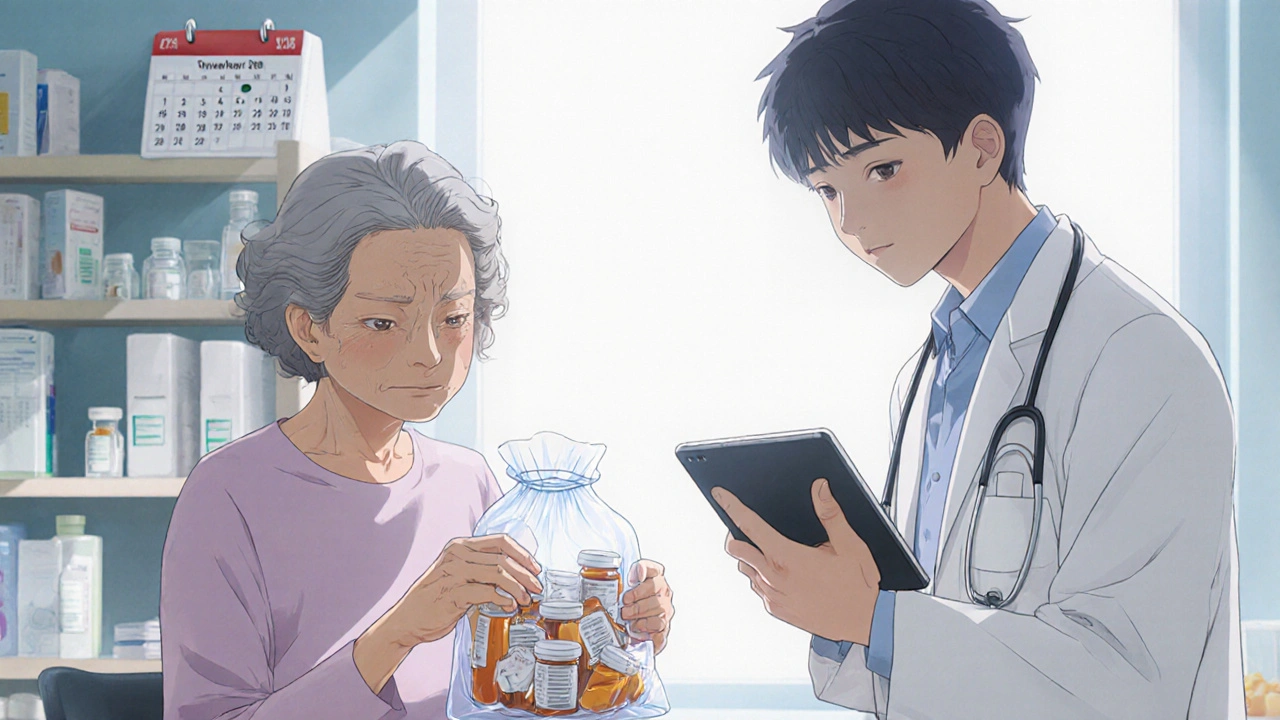
How to Bring Pill Bottles to Appointments for Accurate Medication Reconciliation
Nov 25, 2025, Posted by Mike Clayton
Bringing your actual pill bottles to medical appointments is the most reliable way to prevent dangerous medication errors. Learn what to bring, why it matters, and how to prepare for accurate reconciliation with your doctor.
MORESEARCH HERE
Categories
TAGS
- treatment
- online pharmacy
- dietary supplement
- side effects
- medication safety
- generic drugs
- medication adherence
- health
- dietary supplements
- health benefits
- online pharmacy Australia
- generic substitution
- adverse drug reactions
- thyroid disorders
- gabapentin
- treatment option
- calcipotriol
- blood pressure
- erectile dysfunction
- closer look