
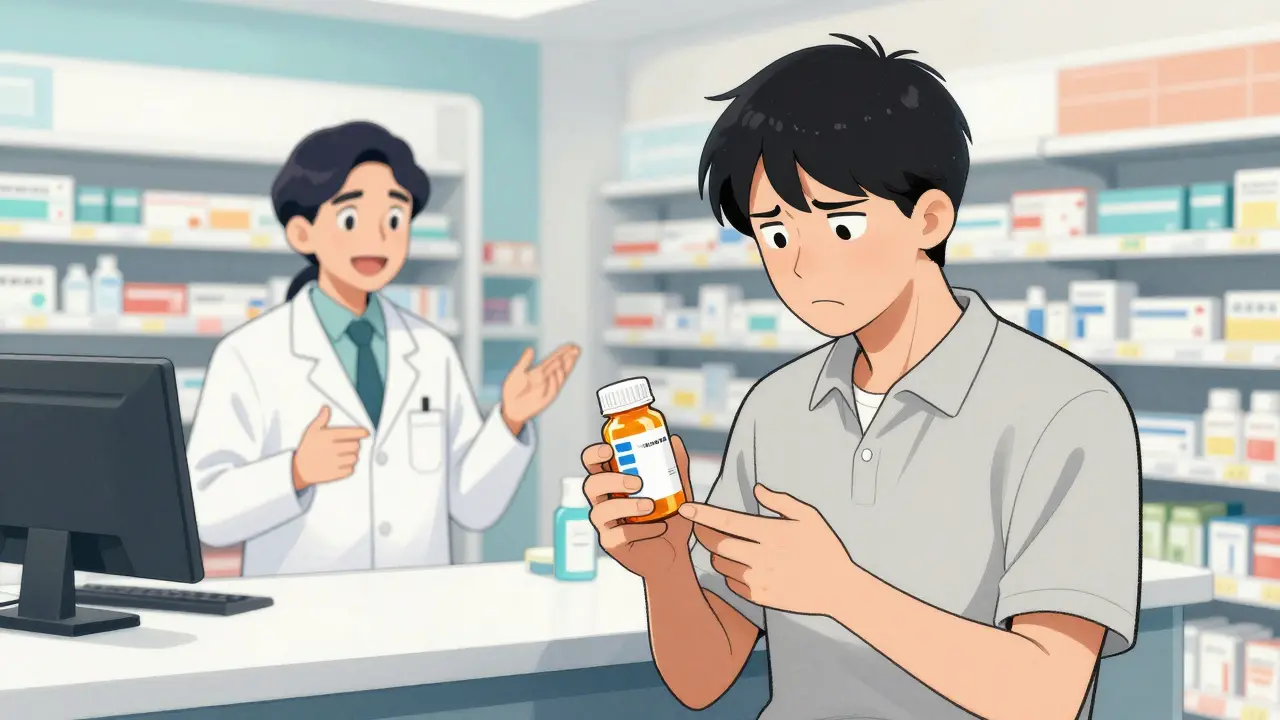
Key Takeaways
- Authorized Generics: The exact same drug as the brand name, just without the fancy label.
- Traditional Generics: Bioequivalent versions that use the same active ingredient but may have different fillers.
- Regulatory Path: Authorized generics use the brand's existing approval (NDA), while traditional generics go through a separate process (ANDA).
- Availability: Authorized generics can hit the market even before a patent expires; traditional generics usually wait until it does.
- Consistency: Authorized generics offer identical composition, which is helpful for complex medications like inhalers.
What Exactly is an Authorized Generic?
Think of an Authorized Generic is an approved brand-name drug that is marketed without the brand name on its label . It isn't a "copy" of the brand drug-it is the brand drug. The manufacturer is usually the original brand company (or someone they've given permission to), and they simply strip the brand name off the packaging and sell it at a lower price.
Because the drug is already approved under the original New Drug Application (or NDA), the FDA doesn't need to review it again. The company just notifies the agency that they are selling it as an authorized generic. This means every single ingredient, from the active chemical to the dyes and binders, is identical to the expensive brand-name version. The only thing that might change is the color or the marking on the pill itself.
Understanding Traditional Generics
On the other hand, Traditional Generics are separate products made by other companies to mimic the original. To get these approved, manufacturers use an Abbreviated New Drug Application (or ANDA). They don't have to repeat the massive clinical trials that the original brand did; instead, they just have to prove bioequivalence.
Bioequivalence basically means the drug reaches the same part of the body, at the same speed, and in the same amount as the brand name. However, while the active ingredient is the same, the inactive ingredients-like fillers, preservatives, or coatings-can be different. For most people, this doesn't matter. But for some, these small changes in the "recipe" can lead to slight differences in how the drug is absorbed or how the body reacts to it.
The Big Differences: Side-by-Side
If you're trying to decide which one you prefer, it helps to see how they stack up against each other in terms of composition and regulation.
| Feature | Authorized Generic | Traditional Generic |
|---|---|---|
| Ingredients | Identical (Active & Inactive) | Same Active, Different Inactives |
| FDA Approval Path | Original NDA (No new approval needed) | ANDA (Requires bioequivalence proof) |
| Orange Book Listing | Not listed | Listed with therapeutic equivalence |
| Market Entry | Can enter before patent expires | Usually enters after patent expiration |
| Manufacturer | Brand owner or licensee | Third-party generic company |
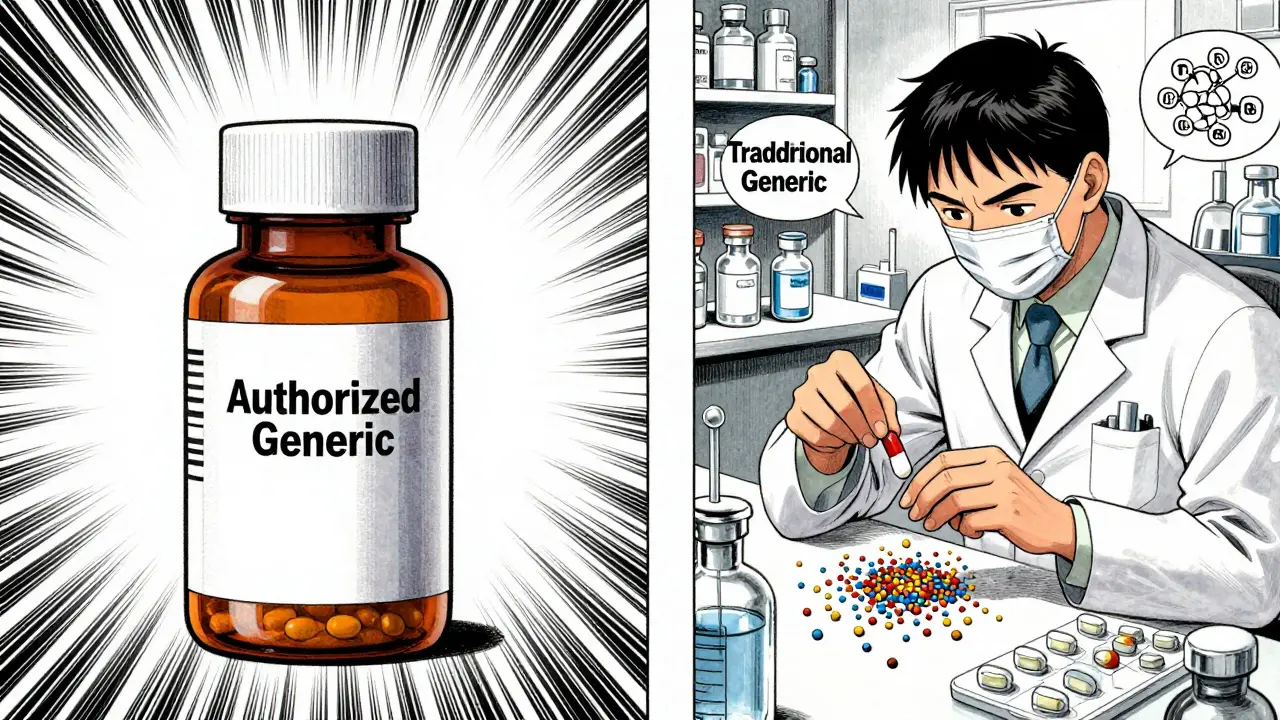
Why Does the "Recipe" Matter?
You might be wondering, "Who cares about inactive ingredients?" For most medications, like a standard blood pressure pill, it truly doesn't matter. But for narrow therapeutic index drugs, a tiny shift in how a drug is absorbed can be a big deal. This is where the distinction between authorized and traditional generics becomes critical.
Take asthma medications, for example. The delivery system in an inhaler is complex. If a traditional generic changes a filler or a propellant, it might slightly alter how the medicine reaches the lungs. For patients who are highly sensitive, this can feel like the medicine isn't working as well. This is why authorized generics are often preferred for respiratory treatments-they provide the exact same formulation consistency as the brand, reducing the risk of "product performance problems." Research from Health Affairs has highlighted that these formulation differences are a primary reason some patients experience varying efficacy when switching between different generic versions of the same drug.
The Strategic Game of Drug Pricing
There is a bit of a chess match happening behind the scenes in the pharmaceutical industry. Traditional generics usually wait for a patent to expire before they can enter the market. However, brand manufacturers have found a loophole: they can launch their own authorized generic whenever they want.
Why would a company undermine its own expensive brand drug? It's all about market segmentation. By releasing an authorized generic, the brand company can capture the price-sensitive part of the market (people who want a cheaper drug) while still keeping the high-priced brand version for those who insist on it. Often, they wait until a traditional generic is approved and then swoop in with an authorized generic to compete directly with the other generic companies, essentially fighting for the "budget" slice of the pie.

How to Tell Which One You're Getting
Here is the frustrating part: it is very hard for a patient (and even some pharmacists) to tell the difference just by looking at the pill. Since authorized generics aren't listed in the Orange Book-the FDA's primary list for therapeutic equivalence-pharmacists can't always find them using their standard reference tools. They usually have to check the FDA's separate "List of Authorized Generic Drugs," which is only updated every few months.
If you have a strong preference for the brand-name formulation but can't afford the brand price, you can ask your pharmacist if an authorized generic is available. If your doctor specifically wants you to stay on a precise formulation, they may write "DAW" (Dispense As Written) on your prescription. This tells the pharmacist not to substitute the medication for any generic, authorized or otherwise.
Are authorized generics safer than traditional generics?
Not necessarily "safer," but they are more consistent. Both types must meet the same strict FDA quality and manufacturing standards. The difference is that authorized generics are identical in every way to the brand, whereas traditional generics are "bioequivalent." For most people, there is no clinical difference in safety, but for those sensitive to inactive ingredients, the authorized version is a safer bet for maintaining consistent results.
Will my insurance cover authorized generics?
In many cases, yes. Insurance companies love lower costs. Many payers will cover authorized generics instead of the brand-name version. However, formulary placement varies. Your best bet is to check your plan's formulary or ask your pharmacist to run a test claim to see which version is cheapest for your specific plan.
Can a traditional generic be just as good as an authorized one?
Absolutely. The vast majority of traditional generics work exactly like the brand name. The FDA's ANDA process is designed to ensure that the drug's performance in the body is essentially the same. Unless you are taking a very complex medication or have a known allergy to certain inactive fillers, you likely won't notice any difference.
Why aren't authorized generics used for all drugs?
It comes down to business strategy. Brand companies only launch authorized generics when it makes financial sense-usually to fight off competition from other generic manufacturers. If there's no strong competition or if the brand is still making massive profits, they have no incentive to release a cheaper version of their own product.
Is a "branded generic" the same as an authorized generic?
No. This is a common point of confusion. A branded generic is a drug that went through the traditional ANDA process but was given a brand name other than its chemical name. An authorized generic, however, is the actual brand-name drug produced by the original company, just without the label.
Next Steps for Patients and Caregivers
If you are starting a new medication or switching to a generic, take a moment to evaluate your needs based on your health history:
- For those with high sensitivity: If you've had reactions to fillers in the past or are using a complex drug (like a narrow therapeutic index drug), ask your pharmacist if an authorized generic is available to ensure you're getting the exact brand formulation.
- For the budget-conscious: Traditional generics are often the cheapest option. If the medication is a standard tablet (like a common statin or antibiotic), a traditional generic is almost always the most cost-effective path.
- For those managing chronic conditions: If you've been on a brand drug for years and it works perfectly, but you want to save money, an authorized generic is the closest you can get to your current routine without the high price tag.

Author
Mike Clayton
As a pharmaceutical expert, I am passionate about researching and developing new medications to improve people's lives. With my extensive knowledge in the field, I enjoy writing articles and sharing insights on various diseases and their treatments. My goal is to educate the public on the importance of understanding the medications they take and how they can contribute to their overall well-being. I am constantly striving to stay up-to-date with the latest advancements in pharmaceuticals and share that knowledge with others. Through my writing, I hope to bridge the gap between science and the general public, making complex topics more accessible and easy to understand.