
Fluoroquinolone Delirium Risk Assessment Tool
Your Risk Assessment
This tool helps you assess your risk of developing delirium when taking fluoroquinolone antibiotics like levofloxacin or ciprofloxacin. Based on your inputs, you'll receive a risk level and guidance on what to watch for.
When an older adult starts taking an antibiotic like levofloxacin or ciprofloxacin for a urinary tract infection or pneumonia, most people assume it’s a safe, routine fix. But for many seniors, especially those over 65, these common antibiotics can trigger something far more dangerous than a stomach upset - sudden, severe confusion, hallucinations, and memory loss. This isn’t rare. It’s underdiagnosed. And it’s often reversible - if caught in time.
What Are Fluoroquinolones, and Why Are They So Common?
Fluoroquinolones are a class of powerful antibiotics developed in the 1960s. Today, drugs like levofloxacin, ciprofloxacin, and moxifloxacin are among the most prescribed antibiotics in the U.S. They work by attacking bacterial DNA, making them effective against stubborn infections like pneumonia, kidney infections, and sinusitis. In 2019, over 26 million fluoroquinolone prescriptions were filled in outpatient settings alone.
But here’s the problem: these drugs don’t just target bacteria. They also cross the blood-brain barrier easily. Levofloxacin reaches 50-90% of its blood concentration in spinal fluid. That’s why, in some people, they start messing with brain chemistry - not just killing germs.
How Fluoroquinolones Trigger Delirium
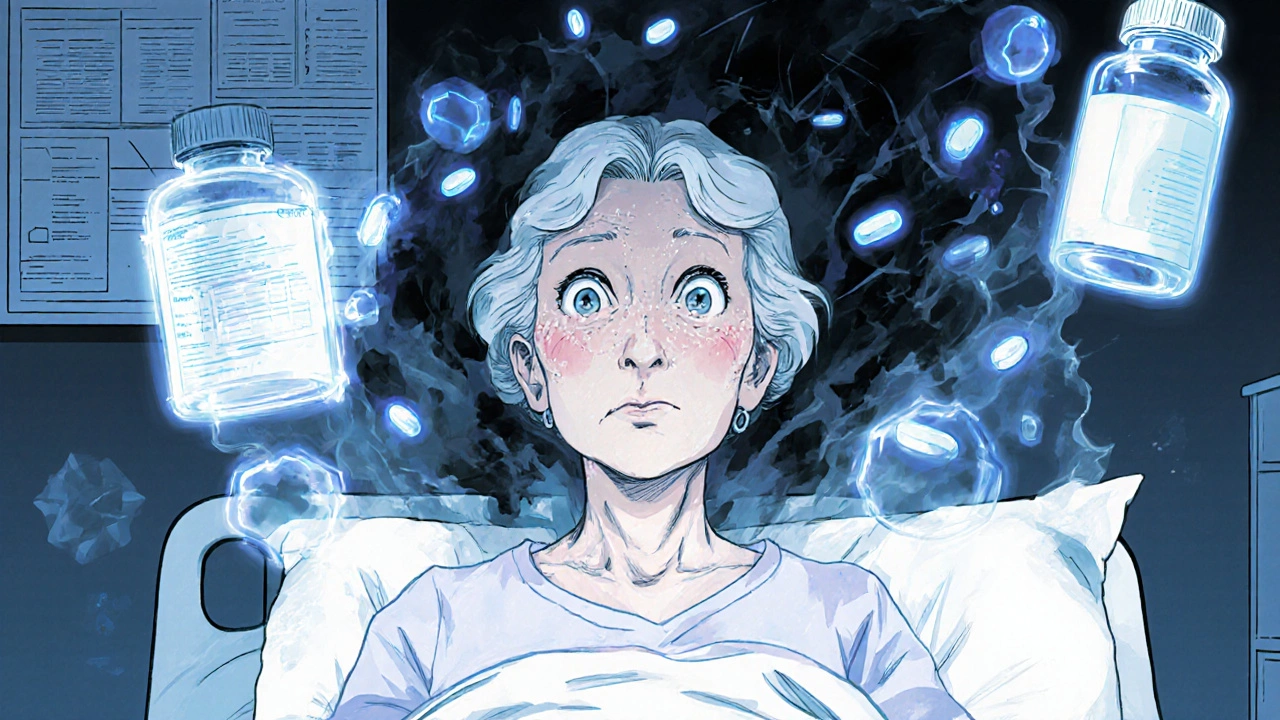
Delirium isn’t dementia. It’s sudden, fluctuating brain dysfunction - often mistaken for aging or depression. In older adults on fluoroquinolones, symptoms can appear within 24 to 72 hours of starting the drug. Common signs include:
- Confusion about time or place
- Seeing or hearing things that aren’t there (hallucinations)
- Inability to focus or follow conversations
- Agitation, irritability, or extreme drowsiness
- Sudden memory lapses or trouble recognizing family members
The cause? Fluoroquinolones block GABA-A receptors - the brain’s natural calming system. Without enough GABA activity, brain signals go into overdrive. This imbalance triggers excitotoxicity, similar to what happens in seizures or stroke. Some research also suggests these drugs overstimulate NMDA receptors, further pushing the brain into chaos.
It’s not just one mechanism. It’s a perfect storm: aging brains have less ability to filter toxins, kidneys clear drugs slower, and many seniors already have subtle cognitive decline that makes them more vulnerable.
Who’s Most at Risk?
Not everyone gets delirium from fluoroquinolones. But certain factors make it much more likely:
- Age over 65 - Nearly half of hospitalized older adults are over 65, and they make up 40% of fluoroquinolone-related delirium cases.
- Reduced kidney function - Up to 85% of levofloxacin is cleared by the kidneys. If kidneys are weak, the drug builds up in the blood and brain.
- Pre-existing cognitive issues - Even mild memory problems increase risk.
- High doses - A 750 mg daily dose of levofloxacin carries significantly higher risk than 500 mg.
- Multiple medications - Interactions with steroids, antidepressants, or diabetes drugs can worsen effects.
One study found that 0.5% of all fluoroquinolone users experience neuropsychiatric side effects. Sounds low? Think again. That’s thousands of people every year - many of them elderly, many ending up in the ER, and some never fully recovering their mental clarity.
How Doctors Miss It - And Why It’s Dangerous
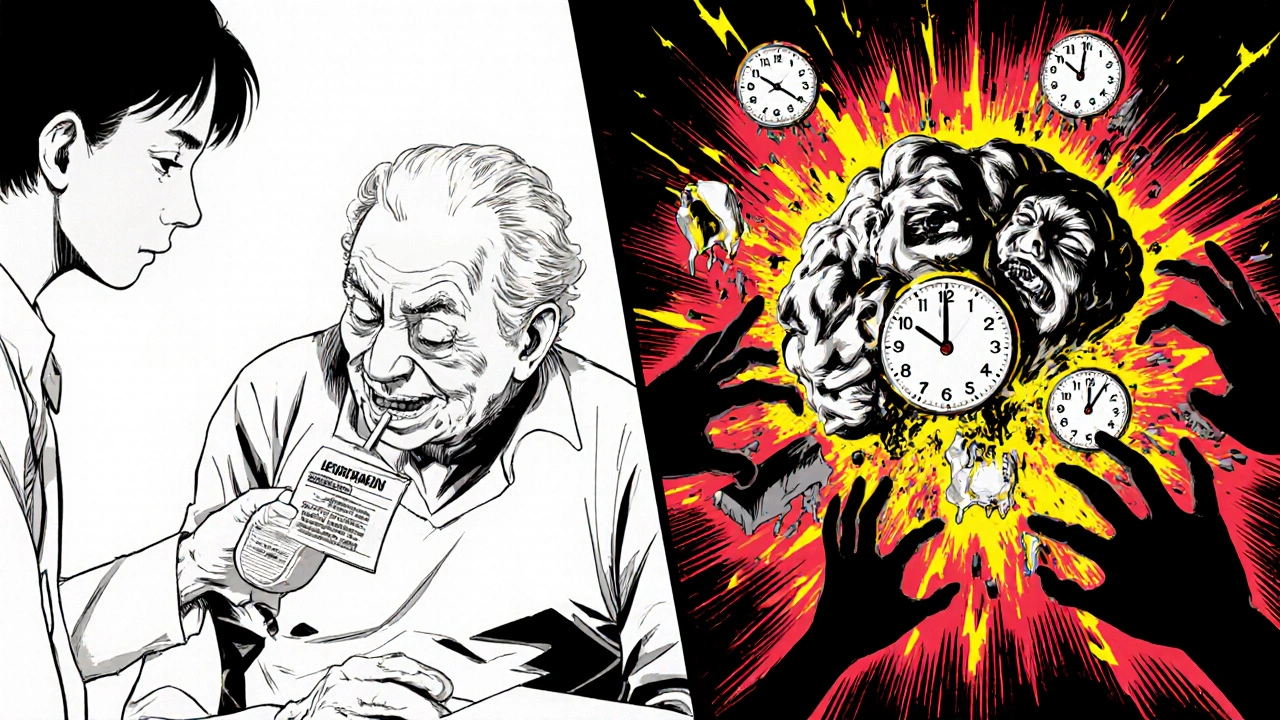
Here’s the heartbreaking part: delirium from antibiotics is rarely the first thing doctors suspect. When an 80-year-old suddenly doesn’t recognize their daughter, the assumption is often dementia, stroke, or infection worsening - not the antibiotic they just started.
One physician on Reddit shared that in 10 years of practice, he saw three cases of fluoroquinolone-induced delirium. Each time, it took 24 to 48 hours to connect the dots. By then, the patient was already in the hospital longer, more confused, and at higher risk of falls, pneumonia, or death.
Dr. Shamik Bhattacharyya, who led a major review in Neurology, found that fluoroquinolones were among the top antibiotic classes linked to delirium - accounting for nearly 18% of cases. He warned: “People who have delirium are more likely to end up in a nursing home or die than those who don’t.”
The FDA took notice. In 2018, they updated black-box warnings for all systemic fluoroquinolones to include “disturbances in attention, memory impairment, and serious disturbances in mental abilities called delirium.” That’s the strongest warning the FDA can give. It’s not a footnote. It’s a red flag.
What Happens When You Stop the Drug?
The good news? This delirium is usually reversible. In documented cases, symptoms begin to fade within 24 hours of stopping the antibiotic. Most patients return to baseline within 48 to 96 hours.
One case report in PMC6089571 described a 78-year-old woman who developed vivid hallucinations and severe confusion on day three of levofloxacin. Within 48 hours of stopping the drug, she was fully oriented again. No brain damage. No long-term effects - just a terrifying few days that could have been avoided.
But here’s the catch: if you don’t recognize the cause, you don’t stop the drug. And the longer the exposure, the longer the recovery - and the higher the risk of complications.
What Are the Alternatives?
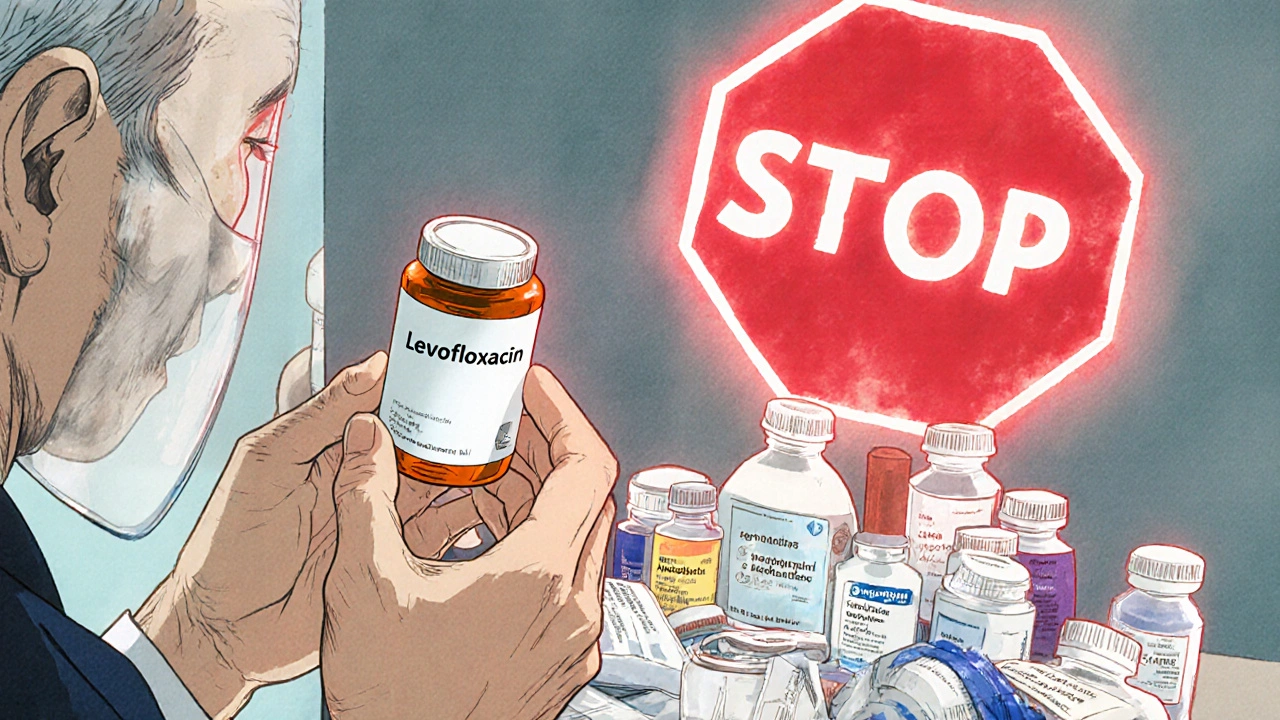
You don’t have to leave an infection untreated. There are safer options for older adults:
- Beta-lactams - Like amoxicillin, cefdinir, or ceftriaxone. These don’t cross the blood-brain barrier as easily and rarely cause delirium.
- Nitrofurantoin - First-line for uncomplicated UTIs in seniors (avoid if kidney function is severely impaired).
- Fosfomycin - Single-dose option for UTIs, with minimal CNS side effects.
- Trimethoprim-sulfamethoxazole - Effective for many infections, though check for allergies and kidney function.
Even within the fluoroquinolone class, some are riskier than others. Levofloxacin and ciprofloxacin have the most reported cases. Moxifloxacin and gemifloxacin are less commonly linked - but still dangerous.
The American Geriatrics Society’s 2023 Beers Criteria now lists fluoroquinolones as “potentially inappropriate” for older adults. That means: if there’s another option - use it.
What Should You Do?
If you or a loved one is prescribed a fluoroquinolone:
- Ask: “Is this the only option? Are there safer antibiotics for someone my age?”
- Check kidney function - a simple blood test (creatinine, eGFR) can reveal if the dose needs lowering.
- Watch for early signs: confusion, trouble focusing, unusual agitation, or hallucinations - even if they seem mild.
- If symptoms appear, stop the drug immediately and call the doctor. Don’t wait.
- Document the timeline: When did symptoms start? When was the antibiotic started? This helps doctors connect the dots.
Hospitals like UCSF have cut levofloxacin use for UTIs in older patients by 35% since 2019 - simply by implementing risk-check protocols. You can do the same at home.
The Bigger Picture
Fluoroquinolones aren’t going away. They’re still life-saving for serious infections like anthrax, plague, or resistant pneumonia. But for common infections - sinusitis, bronchitis, simple UTIs - they’re often overused.
Since the FDA’s 2018 warning, prescriptions for older adults have dropped by over 20%. That’s progress. But many doctors still default to these drugs because they’re convenient, broad-spectrum, and familiar.
The real solution? Better awareness. Slower prescribing. More testing. And a shift in mindset: antibiotics aren’t always the answer - especially when the side effects can be worse than the illness.
For older adults, the goal isn’t just to treat infection. It’s to protect the mind. And sometimes, the safest choice isn’t the strongest antibiotic - it’s the one that doesn’t touch the brain at all.
Can fluoroquinolones cause permanent brain damage in older adults?
In most cases, no. Fluoroquinolone-induced delirium is typically reversible. Symptoms like confusion, hallucinations, and memory loss usually resolve within 48 to 96 hours after stopping the drug. However, if delirium goes undetected for days, it can lead to longer hospital stays, increased risk of falls, pneumonia, or even death. While the cognitive effects themselves are usually not permanent, the complications from delayed treatment can have lasting consequences.
How quickly do symptoms of delirium appear after starting fluoroquinolones?
Symptoms typically appear within 1 to 3 days of starting the antibiotic. In some cases, confusion or agitation can begin as early as 24 hours after the first dose. The onset is often sudden and can worsen rapidly. If an older adult develops new confusion shortly after starting levofloxacin, ciprofloxacin, or another fluoroquinolone, the drug should be suspected immediately.
Are all fluoroquinolones equally risky for seniors?
No. Levofloxacin and ciprofloxacin have the highest number of documented cases of neuropsychiatric side effects. Moxifloxacin and gemifloxacin are also associated with delirium but less frequently. The risk increases with higher doses - 750 mg daily of levofloxacin carries a significantly greater risk than 500 mg. Renal impairment also amplifies risk, since these drugs are cleared through the kidneys.
What should I do if my elderly parent develops confusion after starting an antibiotic?
Stop the antibiotic immediately and contact their doctor. Do not wait to see if it gets better. Note when the symptoms started and what antibiotic they’re taking. Bring the medication bottle to the appointment. Delirium from fluoroquinolones is often misdiagnosed as dementia or infection worsening. Early recognition and discontinuation lead to full recovery in most cases.
Is there a blood test to check for fluoroquinolone toxicity?
There is no specific blood test for fluoroquinolone-induced delirium. Diagnosis is based on clinical symptoms, timing of onset after starting the drug, and ruling out other causes - like infection, electrolyte imbalances, or stroke. A normal brain CT, normal EEG, and normal blood work (electrolytes, glucose, kidney function) support the diagnosis. If symptoms improve after stopping the antibiotic, that’s the strongest evidence.
Can fluoroquinolones be used safely in older adults at all?
Yes - but only for serious infections where no safer alternative exists. The FDA recommends reserving fluoroquinolones for infections like anthrax, plague, or complicated urinary tract infections with no other options. For common conditions like uncomplicated UTIs, bronchitis, or sinusitis, safer antibiotics like amoxicillin, nitrofurantoin, or cefdinir should be used first. Always check kidney function and avoid high doses in seniors.


Author
Mike Clayton
As a pharmaceutical expert, I am passionate about researching and developing new medications to improve people's lives. With my extensive knowledge in the field, I enjoy writing articles and sharing insights on various diseases and their treatments. My goal is to educate the public on the importance of understanding the medications they take and how they can contribute to their overall well-being. I am constantly striving to stay up-to-date with the latest advancements in pharmaceuticals and share that knowledge with others. Through my writing, I hope to bridge the gap between science and the general public, making complex topics more accessible and easy to understand.