

The stakes are high. In a 2023 survey by the American Medical Association, physicians were averaging 43 prior authorizations per week. Shockingly, 68% of those requests were specifically about medication alternatives. When these processes drag on, patients don't just get frustrated-they sometimes stop their treatment entirely. One report showed a 12% jump in treatment abandonment among diabetes patients who hit a wall with step therapy requirements. This isn't just an administrative headache; it's a patient safety issue.
The Core Logic: How Prior Authorization Works
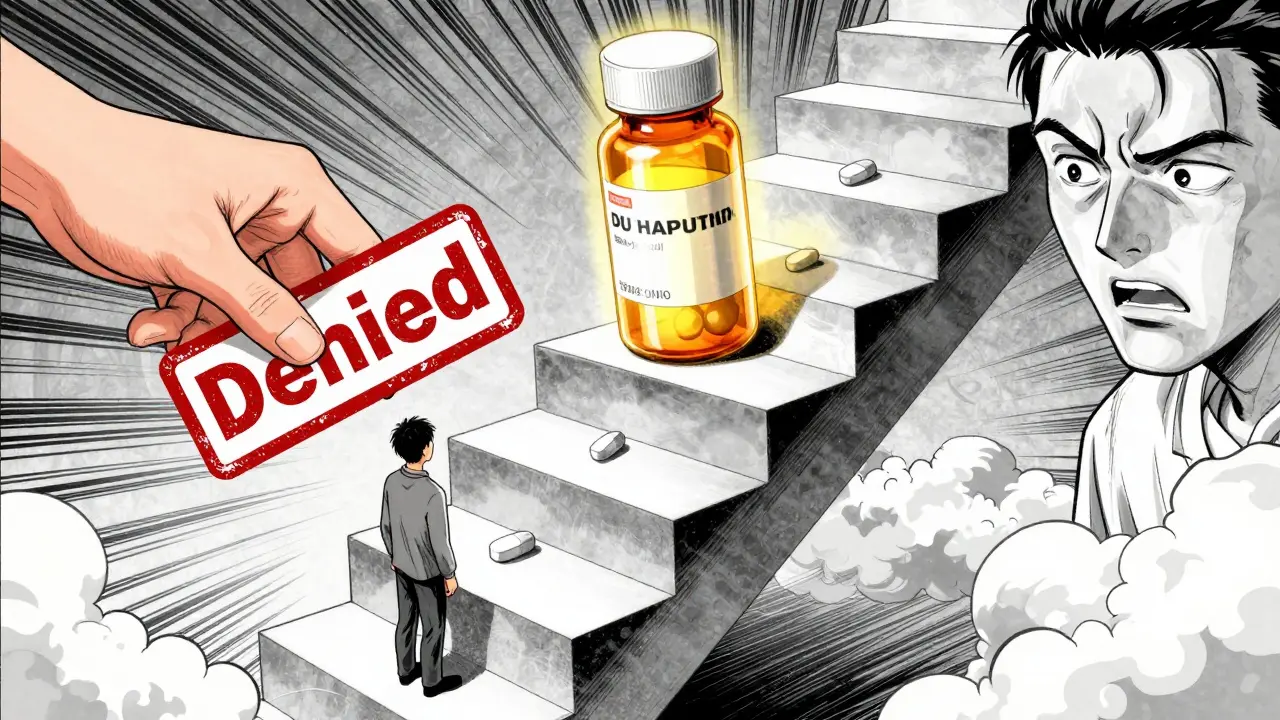
At its heart, this process is about verifying medical necessity. Insurers use a specific set of rules to decide if a brand-name drug is justified. The most common mechanism is Step Therapy is a policy requiring patients to try and fail with one or more lower-cost generic medications before the insurer approves a more expensive brand-name drug . For example, if you're prescribing a triptan for migraines, the insurance company might insist the patient try acetaminophen or ibuprofen first. If those fail, you move to the next "step."
The framework for these rules isn't random. It's rooted in regulations like the Medicare Modernization Act of 2003 and standardized by the Centers for Medicare & Medicaid Services (CMS). Today, nearly every commercial insurer and Medicaid managed care organization uses some form of this process. The goal is to ensure the most cost-effective treatment is tried first, but the burden of proof falls squarely on the provider.
The Seven-Step Workflow for Generic Alternatives
Navigating a request requires a structured approach to avoid the dreaded "denied" notification. Most authorizations follow this specific path:
- Formulary Check: Identify if the drug requires prior authorization based on the specific payer's list of covered medicines.
- Clinical Documentation: Gather patient history, a list of previous treatment failures, and medical justifications using precise ICD-10 and CPT codes.
- Submission: Send the request via electronic portals, fax, or phone.
- Payer Review: A clinical pharmacist or medical director reviews the evidence against their internal criteria.
- The Decision: The insurer renders a verdict within their specified timeline.
- Communication: You receive an approval, a denial, or a request for more data.
- Appeal: If denied, you can initiate a formal appeal to challenge the decision.
Timelines for these steps vary wildly. While Cigna typically takes 5 to 10 business days, UnitedHealthcare can take up to 14 calendar days. However, as of January 1, 2026, new MACPAC regulatory updates mandate that Medicaid managed care organizations must decide on standard requests within seven calendar days and expedited requests within just 72 hours.
Comparing Payer Requirements
Not all insurance companies play by the same rules. Depending on who the patient is insured by, you might find vastly different requirements for the same condition. For instance, when dealing with diabetes medications, UnitedHealthcare may require 30-day trials of two generic alternatives, whereas Aetna might only require 14-day trials provided you include HbA1c measurements.
| Payer Type | Avg. Brand-Name PA Rate | Standard Decision Window | Typical Step Therapy Requirement |
|---|---|---|---|
| Medicare Part D | 18.7% | Varies by Plan | Therapeutic Equivalence Check |
| Commercial Plans | 32.4% | 7-14 Days | 2 Failed Generic Alternatives |
| Medicaid (Post-2026) | High | 7 Days (Standard) / 72 Hours (Expedited) | Evidence-based Step Therapy |
Specialty medications, particularly in oncology, are even more stringent. About 94% of oncology treatments require prior authorization for brand-name options when biosimilars are available. This highlights a growing trend where the complexity of the drug increases the likelihood of a paperwork battle.
Proven Strategies to Speed Up Approvals
If you're tired of the back-and-forth, the data suggests a few high-impact changes. First, stop using vague language. Writing "patient failed treatment" is a common pitfall that leads to 63% of initial denials. Instead, be concrete. Documentation that states "inadequate response defined as less than 30% symptom reduction after 4 weeks" sees approval rates jump to 87%.
Second, embrace Electronic Prior Authorization is a digital process (ePA) that allows providers to submit medication requests directly through their EHR or a third-party portal, bypassing manual faxing ]. Using an ePA platform like CoverMyMeds can lead to same-day approvals for straightforward cases. In fact, electronic submissions yield 78% same-week approvals, compared to a dismal 34% for faxed requests.
Another hidden gem is "gold carding." Some insurers offer automatic approvals to providers who consistently have high approval rates (usually 95% or higher) for specific drug classes, such as GLP-1 agonists. Despite this, only 29% of eligible providers actually know they qualify. It's worth asking your payer representatives if your practice meets the threshold for gold carding status.

The Future of Authorization and AI
The administrative burden is reaching a breaking point, with some estimates suggesting $13.4 billion is wasted annually in provider time. To combat this, we're seeing a shift toward automation. Large health systems are now piloting Natural Language Processing (NLP) tools to auto-populate documentation fields, which can cut submission time by nearly half.
Looking toward 2026 and 2027, the CMS Interoperability and Prior Authorization Proposed Rule aims to put real-time benefit tools directly in the prescribing workflow. Imagine knowing if a drug requires authorization the moment you select it in your EHR, rather than finding out at the pharmacy counter. Furthermore, the HL7 Da Vinci Project is working on FHIR-based APIs that could eventually reduce routine generic alternative processing times to under 24 hours.
Why do insurers require generic alternatives first?
Insurers use this as a cost-containment strategy. By ensuring that a low-cost, therapeutically equivalent generic is tried first, they can reduce overall healthcare spending without necessarily compromising patient outcomes, provided the generic is an appropriate clinical match.
What is the most common reason for a prior authorization denial?
Inadequate documentation of generic failure is the primary culprit, accounting for 63% of initial denials. This usually happens when providers use vague terms like "treatment failed" instead of providing specific clinical metrics or timeframes.
How does "gold carding" benefit a healthcare practice?
Gold carding allows providers with a proven track record of appropriate prescribing (typically a 95%+ approval rate) to bypass the prior authorization process for certain drug classes, resulting in automatic approvals and significantly reduced administrative work.
What are the new 2026 Medicaid rules for authorizations?
Starting January 1, 2026, Medicaid managed care organizations must render decisions within seven calendar days for standard requests and within 72 hours for expedited requests. They are also required to provide specific reasons for any denial.
Does electronic submission really make a difference?
Yes. Data shows that electronic prior authorization (ePA) yields a 78% same-week approval rate, which is more than double the 34% success rate seen with traditional fax submissions.
Next Steps for Your Practice
If you're struggling with the current system, start by auditing your documentation. Shift from qualitative descriptions ("didn't work") to quantitative data ("less than 30% symptom reduction"). If you haven't already, switch from faxing to an ePA portal to cut down on lost requests and waiting periods.
For larger practices, consider designating a specific staff member to handle authorizations or investing in an automated tracking system. This specialization can cut total processing time by over 50% and ensure that no patient falls through the cracks while waiting for a brand-name medication approval.
Author
Mike Clayton
As a pharmaceutical expert, I am passionate about researching and developing new medications to improve people's lives. With my extensive knowledge in the field, I enjoy writing articles and sharing insights on various diseases and their treatments. My goal is to educate the public on the importance of understanding the medications they take and how they can contribute to their overall well-being. I am constantly striving to stay up-to-date with the latest advancements in pharmaceuticals and share that knowledge with others. Through my writing, I hope to bridge the gap between science and the general public, making complex topics more accessible and easy to understand.