
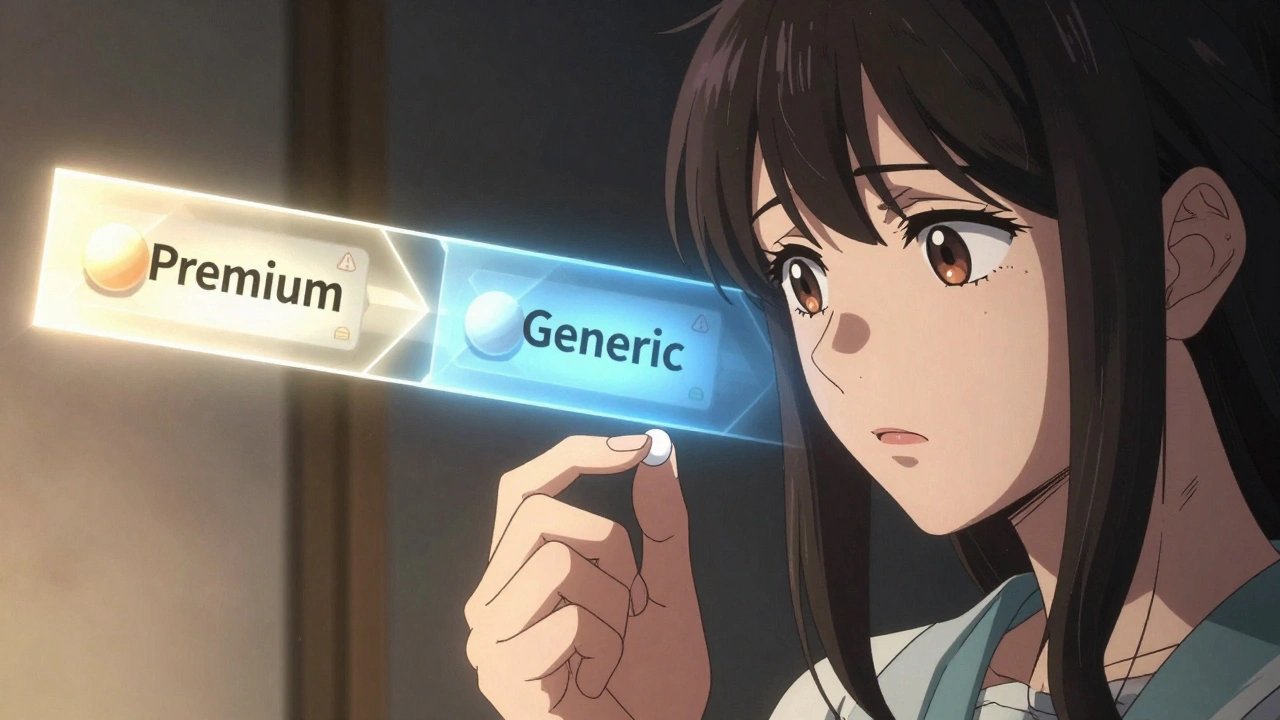
You pop a pill. It’s the same medicine, same dose, same active ingredient. But the label says generic. Suddenly, you feel less confident. Maybe you even feel worse. That’s not just in your head-it’s the labeling effect in action.
Here’s the hard truth: a generic drug isn’t weaker. It’s not cheaper because it’s less effective. It’s cheaper because the company didn’t spend millions on ads or fancy packaging. But your brain doesn’t care about that. It sees the word "generic" and starts making assumptions. And those assumptions can change how your body responds.
What the Label Does to Your Brain
In 2019, researchers ran a simple but powerful experiment. They gave 72 people identical placebo pills-no active ingredients at all. Half the pills were labeled as a well-known brand-name drug. The other half were labeled "generic." Over seven days, 54% of people who thought they were taking the generic version stopped taking the pills before the study ended. Only 33% of those who thought they were on the brand-name version quit.
And it wasn’t just about quitting. People who believed they were taking the generic version reported higher pain levels, even though the pills were sugar tablets. They were also more likely to reach for other pills they had lying around-any excuse to stop what they thought was "ineffective" treatment.
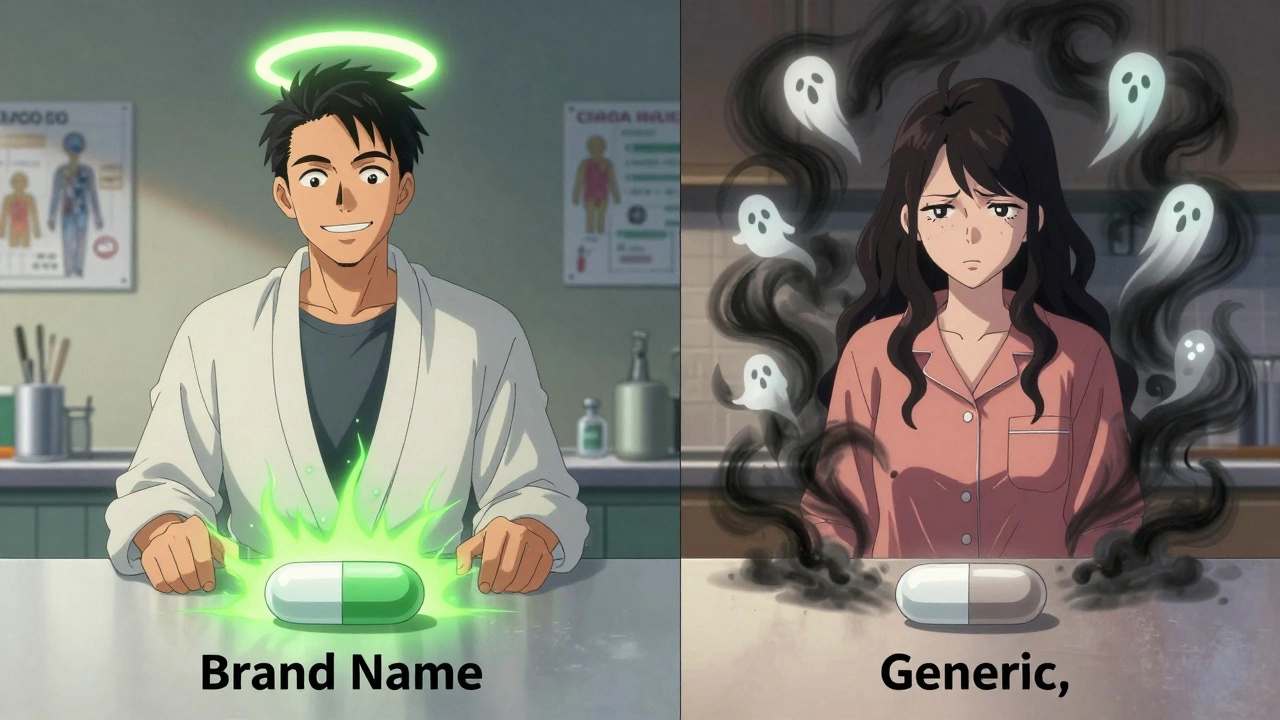
This isn’t about being gullible. It’s about how deeply we trust branding. We’ve been conditioned to believe that expensive = better. That big names = more reliable. When you see "generic," your brain doesn’t see "same medicine." It sees "cut-rate," "inferior," "last resort." And that mental shift triggers real biological responses.
The Placebo Effect, Backwards
Most people know about the placebo effect: if you believe a pill will help, it often does-even if it’s just starch. But the labeling effect flips this. It’s the nocebo effect: believing something won’t work makes it less effective.
A 2016 study tested this with real ibuprofen. Volunteers got either 400 mg of actual painkiller or a placebo. The pills were labeled either as a brand-name drug or "generic." The results? When people thought they were taking the brand-name placebo, their pain dropped by about the same amount as when they took real ibuprofen labeled as generic. But when they thought they were taking the generic placebo? Pain relief vanished.
In other words: the brand-name label made a sugar pill work like real medicine. The generic label made real medicine feel like a sugar pill.
Side effects followed the same pattern. People who thought they were taking the generic version were nearly twice as likely to report nausea, dizziness, or headaches-even when the pill was completely inert. Their minds created symptoms because they expected them.
Who Gets Hit the Hardest?
This isn’t just about painkillers. It affects everything from blood pressure meds to antidepressants. But some people are more vulnerable.
Those with lower health literacy-people who don’t understand how drugs are approved or why generics exist-are far more likely to quit their meds. In one study, 67% of patients with low health literacy stopped taking their generic blood pressure pill, compared to just 41% of those with higher literacy.
Chronic conditions are especially risky. If you’re on a daily pill for diabetes, heart disease, or depression, missing even a few doses can send your numbers spiraling. And if you believe the generic version doesn’t work, you’re more likely to skip it-or switch back to the brand-name version, even if it costs three times as much.
And here’s the cruel twist: the people who need generics the most-those on tight budgets, the elderly, people without good insurance-are also the ones most likely to be swayed by the label. They’re already stressed about cost. Now they’re told, "This is the cheap one." It’s no wonder they lose faith.
It’s Not Just in Your Head-The Labels Are Messy Too
But here’s the kicker: the problem isn’t just psychological. The physical labels themselves are often inconsistent.
A 2020 analysis of 31 drugs found that every single generic version had differences in its label compared to the brand-name original. Some were small-different font size, spacing. Others were dangerous: missing warnings, unclear dosing instructions, or omitting key side effects.
One in eight generic labels had errors that could lead to serious harm or death. Nearly half had issues that could seriously impact patient safety. And the problem gets worse over time. Older drugs? Their labels drift further apart because manufacturers don’t keep updating them to match the original.
That’s not a flaw in the generic system. It’s a flaw in how we manage it. The FDA requires generics to match the active ingredient. But it doesn’t force identical packaging, warnings, or formatting. So patients get confused. Pharmacists get confused. Doctors get confused.
What’s Being Done About It?
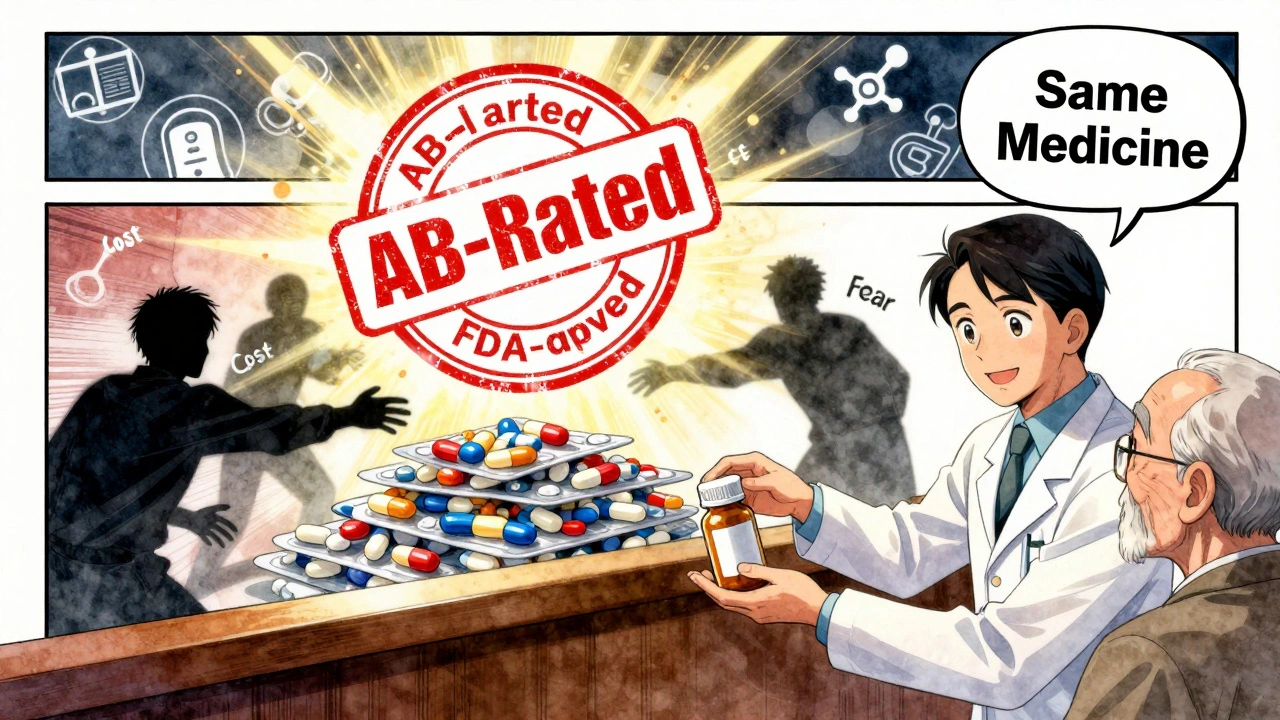
Health agencies know this is a problem. The FDA launched "It’s the Same Medicine" in 2020-a campaign to explain that generics are held to the same strict standards. In pilot programs, it cut patient concerns by 28%.
Some manufacturers are trying smarter labeling. A 2023 study tested adding the phrase "therapeutically equivalent to [Brand Name]" right on the generic bottle. Result? Discontinuation rates dropped from 52% to 37%. Just a few extra words made a measurable difference.
The Generic Pharmaceutical Association just launched a $50 million education push in early 2024 called "Generic You Can Count On." Hospitals are adopting "generic-first" policies-but only if they pair them with clear patient education.
And there’s movement on the regulatory side. The FDA’s 2023 draft guidance suggests standardizing how generic labels look and what they say. The goal? Reduce confusion. Build trust.
What You Can Do
If you’re on a generic drug and you’re feeling unsure:
- Ask your pharmacist: "Is this the same as the brand-name version?" They’ll show you the FDA’s bioequivalence data.
- Check the label. Look for "therapeutically equivalent" or "AB-rated." Those are official FDA terms meaning it’s interchangeable.
- Don’t assume cost = quality. A $5 generic isn’t broken because it’s cheap. It’s a win for your wallet and your health.
- If you feel worse after switching, talk to your doctor. It might be the labeling effect-but it might also be an ingredient change. Either way, speak up.
And if you’re a prescriber or caregiver: don’t just hand someone a generic pill and say, "It’s the same." Say, "This is exactly the same medicine, approved by the FDA, and it saves you $100 a month. You’re not getting less-you’re getting the same thing, smarter."
The Bigger Picture
Generics save the U.S. healthcare system $373 billion every year. That’s money that could pay for cancer treatments, mental health care, or insulin for people who can’t afford it.
But if patients stop taking their meds because they think the generic doesn’t work, all that savings evaporates. Emergency rooms fill up. Hospitalizations rise. Costs go back up.
The labeling effect isn’t about marketing. It’s about survival. It’s about whether someone with high blood pressure takes their pill every day-or skips it because they believe the blue pill labeled "generic" won’t help.
The science is clear: the pill doesn’t change. Your belief does. And that belief can make the difference between staying healthy and ending up in the hospital.
It’s time we stopped treating the label like a verdict-and started treating it like a tool. A tool to build trust. To save lives. To make sure the cheapest option isn’t the one people avoid.


Author
Mike Clayton
As a pharmaceutical expert, I am passionate about researching and developing new medications to improve people's lives. With my extensive knowledge in the field, I enjoy writing articles and sharing insights on various diseases and their treatments. My goal is to educate the public on the importance of understanding the medications they take and how they can contribute to their overall well-being. I am constantly striving to stay up-to-date with the latest advancements in pharmaceuticals and share that knowledge with others. Through my writing, I hope to bridge the gap between science and the general public, making complex topics more accessible and easy to understand.