
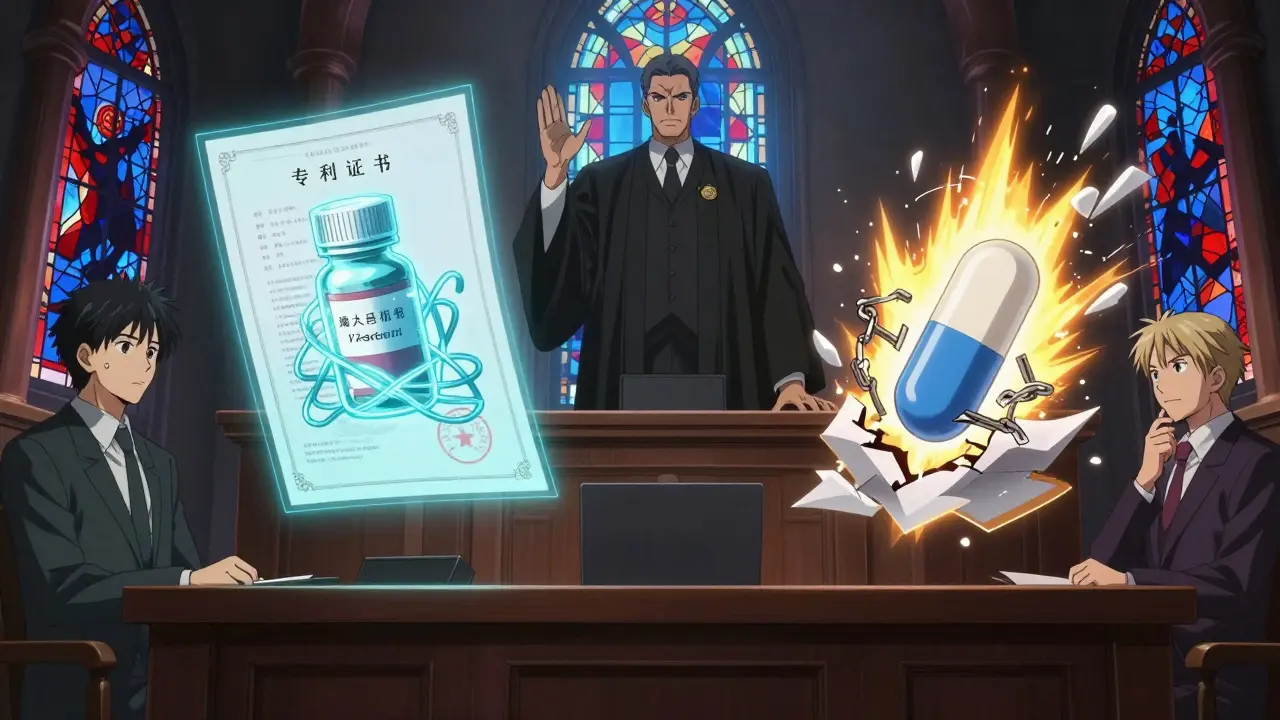
When a brand-name drug’s patent expires, you’d expect generic versions to flood the market - cheaper, just as effective, and available to millions. But in reality, that doesn’t always happen. Behind the scenes, a complex legal battle is playing out, often delaying generic access for years. This isn’t about bad science or poor manufacturing. It’s about patent litigation - a system designed to balance innovation and competition, but one that’s increasingly being exploited.
How the System Was Supposed to Work
The foundation of this whole process is the Hatch-Waxman Act of 1984. It created a legal shortcut for generic drug makers. Instead of repeating every expensive clinical trial the original drug company did, generics can file an Abbreviated New Drug Application (ANDA). But there’s a catch: if they believe a brand-name drug’s patent is invalid or not being infringed, they must file what’s called a Paragraph IV certification. That’s essentially a legal challenge. And once that’s filed, the brand company has 45 days to sue. If they do, the FDA can’t approve the generic for 30 months - even if the patent is weak or clearly doesn’t apply. That 30-month clock is the key lever in this whole system. It’s meant to give both sides time to resolve disputes in court. But in practice, it’s become a delay tactic.The Orange Book: A Tool for Delay?
The FDA’s Orange Book lists every patent tied to a brand-name drug. It’s supposed to include only patents that cover the actual active ingredient, how it’s formulated, how it’s used, or how it’s made. But that’s not always what happens. Take the case of ProAir® HFA, an inhaler for asthma. Teva tried to launch a generic version. The brand company listed six patents - but four of them didn’t cover the drug itself. They covered the dose counter on the inhaler. Judge Chesler ruled in 2025 that these patents shouldn’t have been listed because they didn’t claim "the drug for which the application was approved." That’s a big deal. It means hundreds of other patents listed in the Orange Book might be invalid too. According to Skadden’s analysis, this ruling could affect 15-20% of all Orange Book listings. That’s not a glitch. It’s a pattern. The Association for Accessible Medicines found that brand companies often list patents for delivery devices, packaging, or even software used in the device - things that have nothing to do with whether the drug works. These aren’t protecting innovation. They’re protecting profits.Serial Litigation: The Game of Whack-a-Mole
Here’s how it works in practice. A brand company lets its main patent expire. Then, months later, they file a new lawsuit using a different patent - maybe one they filed years ago but never used. Then another. And another. Each time, they trigger another 30-month stay. The generic company can’t get approval. Patients can’t get the drug. And the brand company keeps raking in revenue. The IQVIA Institute tracked ten cases where this happened. One drug saw generic entry delayed by over 10 years after its original patent expired. That’s not competition. That’s a legal blockade. Meanwhile, the FTC has been fighting back. In 2024 alone, they challenged over 300 improper Orange Book listings. In May 2025, they sent warning letters to 200 more patents across 17 different drugs. Companies like Teva and Amgen were named. The message is clear: if you’re gaming the system, we’re watching.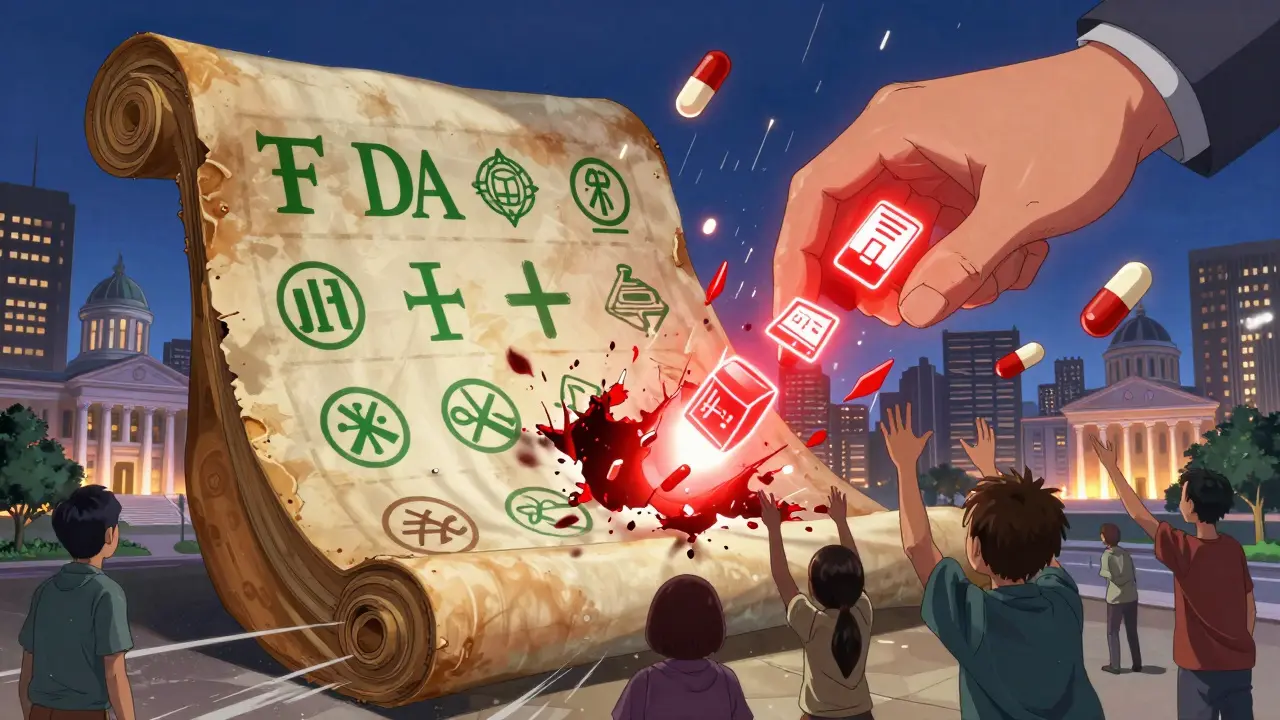
Settlements: Pay-for-Delay or Faster Access?
You’ve probably heard the term "pay-for-delay." The idea is simple: the brand company pays the generic maker to stay out of the market. It sounds like a cartel. But the reality is more complicated. The IQVIA Institute found that when settlements happen, generics enter the market five years earlier on average than if the case went to trial. Why? Because litigation is slow, expensive, and risky. A generic company might spend $20 million on legal fees and still lose. A settlement gives them a guaranteed path in - and often a share of the brand’s profits during the transition. The FTC sees this as anti-competitive. They’ve sued over 300 of these deals. But industry experts like John T. O’Donnell argue that if you shut down settlements, you don’t get more generics - you get fewer ANDAs. Why risk everything in court if you can’t negotiate? The data shows that settlements aren’t just about money. They’re about risk management. For generics, a settlement means certainty. For brands, it means avoiding a total loss. For patients? It often means earlier access.Where the Lawsuits Are Happening
Not all courts are created equal. The Eastern District of Texas has become the go-to venue for patent litigation. In 2024, 38% of all pharmaceutical patent cases were filed there - more than double the next busiest district. Why? Because its judges are experienced, procedures are predictable, and juries are seen as plaintiff-friendly. Before 2017, the Eastern District was the top venue. Then TC Heartland changed the rules - companies had to sue where they were incorporated or had a major presence. But in recent years, it’s come back. Why? Because it’s still the most efficient place to resolve complex patent disputes. Brand companies know this. So do the law firms. Fish & Richardson, Quinn Emanuel, and Jones Day all saw 35-40% revenue growth in patent litigation in 2024. Meanwhile, the District of Delaware and the Western District of Texas are also busy, but nowhere near the same volume. This isn’t just about geography. It’s about strategy. Where you file matters.
The Numbers Don’t Lie
The financial cost is staggering. The FTC estimates improper patent listings delay generic entry for about 1,000 drugs each year. That costs the U.S. healthcare system $13.9 billion annually. Look at specific drugs:- Eliquis (apixaban) - 67 patents protecting a single drug.
- Ozempic, Wegovy, Rybelsus (semaglutide) - 152 patents across three versions of the same molecule.
- Oncology drugs - average of 237 patents per product.
What’s Changing Now?
The FDA is stepping in. They’re proposing new rules that will require brand companies to certify under penalty of perjury that every patent they list in the Orange Book actually meets legal requirements. That’s a game-changer. Right now, there’s no real penalty for listing a patent that doesn’t belong. In 2026, that changes. Generic companies are also turning to the Patent Trial and Appeal Board (PTAB) for inter partes reviews (IPRs). These are administrative challenges - faster and cheaper than court. IPR filings against pharma patents jumped 47% from 2023 to 2024. But there’s a hitch. The Supreme Court’s April 2025 decision in Smith & Nephew v. Arthrex made it harder for generic companies to bring IPRs unless they’re already selling a similar product. That’s a barrier. It means you can’t challenge a patent unless you’re already in the market - which defeats the purpose.The Bottom Line
The system wasn’t built to be broken. But it’s being bent. Patent litigation was meant to protect innovation, not block competition. The Orange Book was meant to inform, not confuse. Settlements were meant to resolve, not delay. Right now, we’re seeing a clash between two goals: protecting the incentive to innovate, and ensuring patients get affordable medicine. The data shows that when the system works as intended - with clear rules, honest listings, and timely settlements - patients win. When it’s manipulated - with serial lawsuits, improper patents, and endless stays - patients lose. The next few years will decide which path we take. Will regulators enforce the rules? Will courts strike down abusive listings? Will Congress act to close loopholes? Or will the status quo continue, with billions in extra costs and millions of patients waiting? One thing is certain: the battle over generic drugs isn’t just about science. It’s about law. And law, like medicine, should be about healing - not hindering.What is the Hatch-Waxman Act and how does it affect generic drugs?
The Hatch-Waxman Act of 1984 created a legal pathway for generic drug manufacturers to bring cheaper versions of brand-name drugs to market. It allows generics to rely on the original company’s safety and efficacy data, saving time and money. But it also gives brand companies the right to sue if a generic challenges their patent. If litigation starts, the FDA can’t approve the generic for up to 30 months - even if the patent is weak. This balance was meant to encourage innovation while promoting competition.
Why are patents listed in the Orange Book being challenged?
Many patents listed in the Orange Book don’t actually cover the drug itself - they cover delivery devices, packaging, or software. The law says only patents for the active ingredient, formulation, use, or manufacturing method qualify. Courts like in the Teva vs. Amneal case have ruled that listing unrelated patents is improper. These improper listings are being used to extend market exclusivity beyond the original patent’s expiration date.
What are "pay-for-delay" settlements, and are they really anti-competitive?
Pay-for-delay settlements occur when a brand drug company pays a generic manufacturer to delay market entry. The FTC calls these anti-competitive because they keep prices high. But studies from IQVIA show that, on average, these settlements lead to generics entering the market five years earlier than if the case went to trial. The issue isn’t the settlement itself - it’s whether the payment is a legitimate business deal or a bribe to stay out of the market.
Why is the Eastern District of Texas the top venue for patent lawsuits?
The Eastern District of Texas has become the most popular court for patent litigation because its judges are experienced in complex patent cases, procedures are predictable, and juries tend to favor patent holders. After a 2017 Supreme Court ruling limited where companies could file lawsuits, the district saw a drop. But by 2024, it had rebounded as the top venue, handling 38% of all pharmaceutical patent cases - more than double any other district.
How do inter partes reviews (IPRs) affect generic drug litigation?
IPRs are administrative challenges to patents held at the Patent Trial and Appeal Board. They’re faster and cheaper than court litigation. Generic companies have used them more often - filings jumped 47% from 2023 to 2024. But the Supreme Court’s 2025 ruling in Smith & Nephew v. Arthrex made it harder to file IPRs unless you’re already selling a similar product. That limits their usefulness for companies trying to enter the market early.
What’s the impact of having too many patents on one drug?
Drugs like Eliquis have 67 patents. Semaglutide products have 152 combined. These "patent thickets" make it nearly impossible for generics to navigate. Even if one patent expires, another might still block entry. This delays competition for years. Studies show that oncology drugs, on average, face 237 patents per product - creating a legal wall that keeps prices high long after the original patent ends.
How much money is lost because of delayed generic entry?
The FTC estimates that improper patent listings delay generic access for about 1,000 drugs each year, costing the U.S. healthcare system $13.9 billion annually. That’s money patients, insurers, and government programs pay out unnecessarily. For example, the average time for a generic to enter the market after patent expiration has increased from 14 months in 2005 to 28 months in 2024 - and for cancer drugs, it’s over five years.
What new rules is the FDA proposing?
The FDA is proposing new regulations that will require brand drug companies to certify under penalty of perjury that every patent they list in the Orange Book meets legal requirements. This means if a company lists a patent that doesn’t cover the actual drug, they could face criminal penalties. The rule is expected to take effect in Q2 2026 and could remove hundreds of improperly listed patents that have been used to delay competition.


Author
Mike Clayton
As a pharmaceutical expert, I am passionate about researching and developing new medications to improve people's lives. With my extensive knowledge in the field, I enjoy writing articles and sharing insights on various diseases and their treatments. My goal is to educate the public on the importance of understanding the medications they take and how they can contribute to their overall well-being. I am constantly striving to stay up-to-date with the latest advancements in pharmaceuticals and share that knowledge with others. Through my writing, I hope to bridge the gap between science and the general public, making complex topics more accessible and easy to understand.