
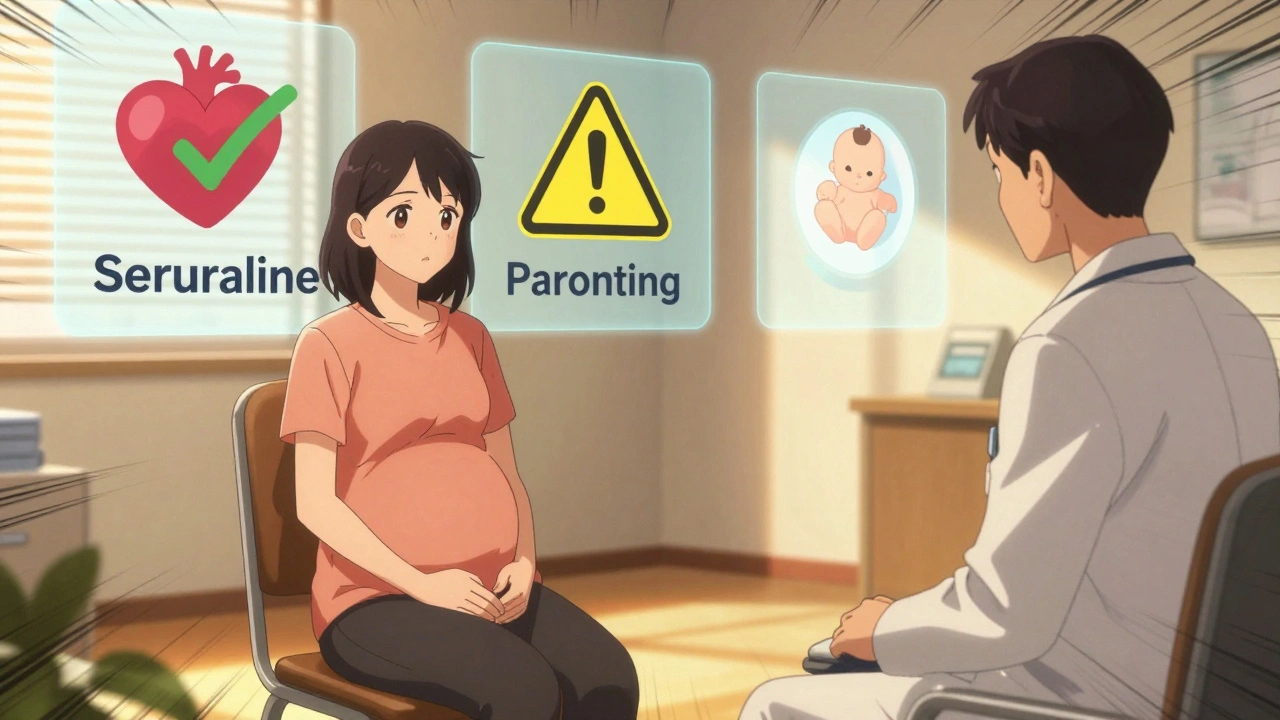
When you’re pregnant and managing a mental health condition, the question isn’t just whether to take medication-it’s how to decide, with full knowledge and without fear. Too many people are told to stop their meds the moment they find out they’re pregnant. But stopping isn’t always safer. In fact, untreated depression, anxiety, or bipolar disorder can be just as risky-for you and your baby.
There’s No Perfect Choice, But There’s a Better Way
No psychiatric medication is 100% risk-free during pregnancy. But neither is going without treatment. The key isn’t finding a magic bullet-it’s understanding your personal risks and options. The 2023 guidelines from the American College of Obstetricians and Gynecologists (ACOG) make this clear: the goal isn’t to avoid all meds, but to make sure the benefits outweigh the risks. For example, if you’ve had severe depression before and stopped your SSRI during pregnancy, your chance of relapse is about 80%. That means you’re far more likely to struggle with intense sadness, panic, or even thoughts of self-harm. Those risks don’t vanish because you’re pregnant. They just change shape.What Medications Are Actually Safe?
Not all antidepressants are the same. SSRIs-like sertraline (Zoloft), citalopram (Celexa), escitalopram (Lexapro), and fluoxetine (Prozac)-are the most studied and generally recommended as first-line options. Studies show no strong link between these and major birth defects, except for one: paroxetine (Paxil). If taken in the first trimester, paroxetine raises the chance of heart defects from about 8 in 1,000 births to 10 in 1,000. That’s a small increase, but it’s enough for most doctors to avoid it during early pregnancy. For bipolar disorder, lamotrigine is often the top pick. It hasn’t been tied to major birth problems, unlike valproic acid (Depakote), which can increase the risk of neural tube defects by 10 to 20 times. That’s why it’s strongly discouraged for anyone who could become pregnant. Bupropion (Wellbutrin) carries a small risk of miscarriage or heart issues, so it’s not usually the first choice. Tricyclics like nortriptyline are still an option if SSRIs don’t work-but they’re used less often because they’re older and less studied in pregnancy. Antipsychotics are trickier. Typical ones like haloperidol and chlorpromazine have been around longer and show no major red flags. Atypical ones like risperidone or olanzapine? We just don’t have enough long-term data on kids exposed to them in the womb. So unless you’re having psychosis or severe mania, most providers will avoid them unless absolutely necessary.Why Shared Decision-Making Isn’t Just a Buzzword
Shared decision-making means you and your provider sit down-not to be told what to do, but to figure out what’s right for you. It’s not about pushing meds or pushing away meds. It’s about facts, feelings, and future. Here’s how it works in practice:- You talk about your history: How many episodes have you had? How bad were they? Did you need hospitalization before?
- You get numbers, not vague warnings: Instead of saying “paroxetine might cause problems,” your doctor says, “Out of 1,000 babies born to moms on paroxetine, 10 might have a heart defect. Without it, that number is 8.”
- You discuss what matters to you: Is avoiding medication your top priority? Or is staying stable so you can care for your baby more important?
- You plan ahead: What happens if your symptoms come back? Who do you call? What’s your backup plan?
What Happens When People Stop Meds Without Talking to a Doctor?
A lot of women stop their meds because they’re scared. A 2023 survey from the National Pregnancy Registry found that 68% of participants felt they weren’t given enough information before getting pregnant. And 42% quit their meds on their own-mostly because they worried about birth defects. The result? Reddit threads from r/PostpartumDepression show the same story over and over: women who stopped meds without support ended up in the ER, hospitalized, or unable to bond with their babies. One mom wrote: “I thought I was doing the right thing by going off Zoloft. I didn’t realize how fast I’d crash. I didn’t recognize myself.” Stopping cold turkey isn’t just risky-it’s often unnecessary. Most meds can be safely continued, adjusted, or switched with proper planning.What About Breastfeeding?
If you plan to breastfeed, the good news is most psychiatric meds pass into milk in tiny amounts. Sertraline is often the top choice here too-it’s found in very low levels in breast milk and has been used safely in thousands of nursing mothers. Fluoxetine? It sticks around longer, so it’s not usually preferred if you’re breastfeeding. Lithium requires close monitoring because levels can build up in the baby. But with regular blood tests and careful dosing, many moms still breastfeed successfully. The rule? Don’t assume you can’t breastfeed while on meds. Talk to your provider. Most of the time, you can.
What’s New in 2025?
The science is moving fast. The National Pregnancy Registry now tracks over 15,700 participants and is adding 12 new medications in 2024-including newer antipsychotics like brexpiprazole, which we still know very little about. And the future? Personalized risk tools. A pilot study from Massachusetts General Hospital used machine learning to predict how individual women would respond to meds based on their age, history, and genetics. It was 82% accurate. By 2026, doctors may be able to tell you: “Based on women like you, your chance of relapse without meds is 75%. With sertraline, it drops to 30%. The risk of a heart defect? Still less than 1%.” That’s not science fiction. It’s coming.What Should You Do Right Now?
If you’re thinking about getting pregnant-or already are-here’s what to do:- Don’t stop your meds without talking to your provider. Even if you’re scared.
- Ask for a referral to a perinatal psychiatrist. Most OB-GYNs now work closely with them. In fact, 87% of ACOG members consult them regularly-up from just 42% in 2015.
- Request the ACOG Mental Health Medication Decision Aid. It’s a free tool with up-to-date risk numbers for 24 common meds.
- Write down your priorities: What’s the worst thing that could happen if you stay on meds? What’s the worst thing if you stop?
- Bring someone with you to your appointment. A partner, parent, or friend. This is too important to do alone.
It’s Not About Being Perfect. It’s About Being Supported.
You don’t have to be the “perfect” pregnant person. You don’t have to go off meds to prove you’re a good mom. You don’t have to choose between your mental health and your baby’s safety. The truth is, you can have both-if you have the right support. The goal isn’t zero risk. The goal is informed choice. And that starts with a conversation-not a fear-driven decision.Are antidepressants safe during pregnancy?
Some are. SSRIs like sertraline, citalopram, and escitalopram are considered first-line options because they’ve been studied the most and show the lowest risk of birth defects. Paroxetine is the exception-it’s linked to a small increase in heart defects and is usually avoided. The risk of stopping medication often outweighs the risk of taking it, especially if you’ve had severe depression before.
Can I breastfeed while taking mental health meds?
Yes, in most cases. Sertraline is the most recommended because it passes into breast milk in very low amounts. Fluoxetine and lithium require more monitoring, but many women breastfeed successfully while taking them. Always talk to your doctor before making changes-most meds are safe in small doses.
What’s the biggest risk of not treating mental illness during pregnancy?
Untreated depression and anxiety increase the risk of preterm birth by 30-50%, low birth weight, and postpartum complications-including suicide. Relapse rates after stopping meds can hit 80%. The biggest danger isn’t the medication-it’s the illness going unmanaged.
Should I switch medications before getting pregnant?
If you’re on paroxetine or valproic acid, switching before conception is strongly advised. For others, stability matters more than switching. If you’ve been stable on your current med for 3+ months, staying on it may be safer than switching. Talk to your provider about your history and goals.
How do I find a perinatal psychiatrist?
Ask your OB-GYN for a referral. Many hospitals now have perinatal mental health clinics. You can also contact Postpartum Support International or check the National Pregnancy Registry’s website for provider lists. Most insurance plans cover these consultations.
Is it too late to start shared decision-making if I’m already pregnant?
Never too late. Even if you’re 20 weeks along, you can still make informed choices. Many women start this process mid-pregnancy. The goal is to adjust your plan for safety and stability-not to blame yourself for not starting earlier.


Author
Mike Clayton
As a pharmaceutical expert, I am passionate about researching and developing new medications to improve people's lives. With my extensive knowledge in the field, I enjoy writing articles and sharing insights on various diseases and their treatments. My goal is to educate the public on the importance of understanding the medications they take and how they can contribute to their overall well-being. I am constantly striving to stay up-to-date with the latest advancements in pharmaceuticals and share that knowledge with others. Through my writing, I hope to bridge the gap between science and the general public, making complex topics more accessible and easy to understand.