
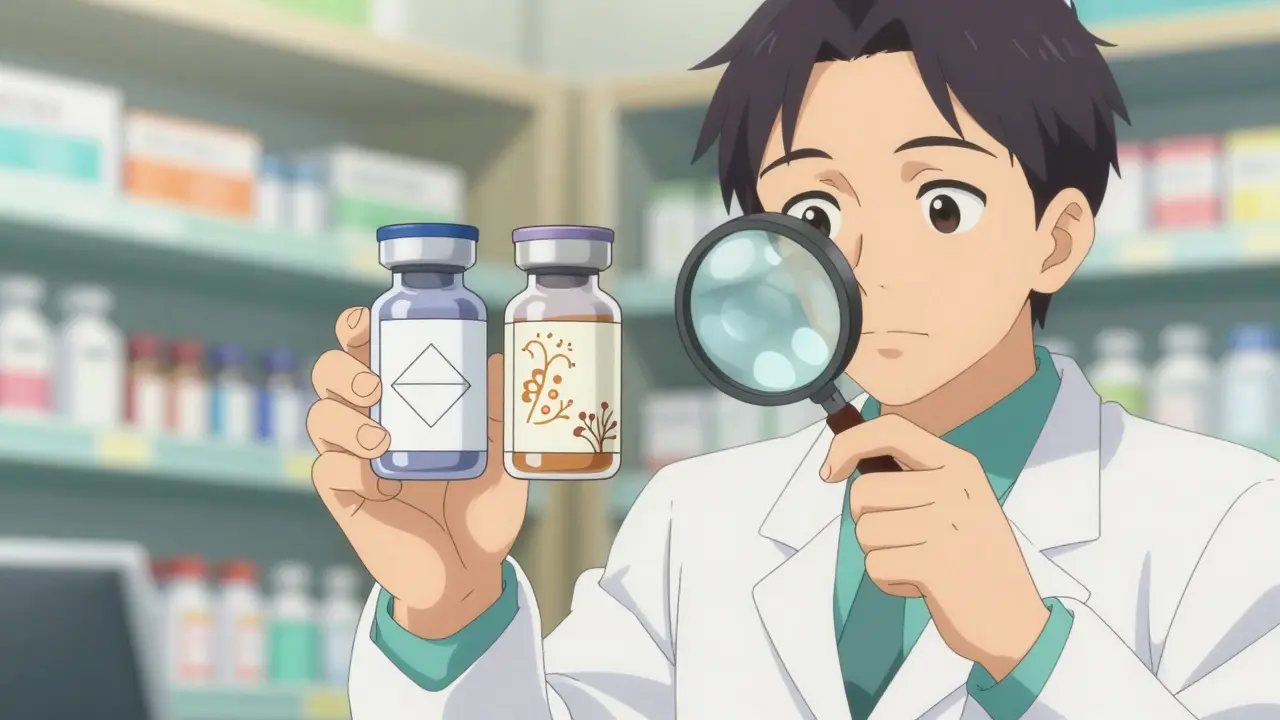
Biologics make up just 2% of prescriptions but nearly half of all prescription drug costs in the U.S. That’s where biosimilars are highly similar biologic products to FDA-approved reference drugs, with no clinically meaningful differences in safety or effectiveness come in. Unlike generic drugs, which are exact chemical copies of small-molecule medications, biosimilars come from living cells and can’t be identical. This difference changes everything for pharmacists-from how they counsel patients to how they handle substitutions. Let’s break it down plainly.
How biosimilars differ from generics
Think of generics like a photocopy of a simple document. They’re chemically identical to the original drug. Biosimilars? They’re more like a hand-drawn replica of a painting-very close, but not exact. Manufacturing happens in living cells, so tiny variations can occur. The FDA requires biosimilars to have no clinically meaningful differences from the reference product, but they’re not identical. This matters because generic drugs are chemically identical to their reference small-molecule drugs and can be substituted automatically in most states, while biosimilars need special rules.
For example, when a pharmacist dispenses a generic version of metformin, they can swap it without checking with the doctor. But for biosimilars, substitution rules vary by state. Only interchangeable biosimilars are FDA-designated for automatic substitution by pharmacists without prescriber intervention, and as of late 2023, only a handful have this status. Most biosimilars still require the prescriber to specify "dispense as written" if they want to avoid substitution.
Why pharmacists are key to patient counseling
Patients often worry when they hear "biosimilar." They might think it’s a cheaper, lower-quality version. Pharmacists need to explain this clearly. Research shows pharmacists report higher rates of recommending biosimilars (87.3%) compared to physicians (62.1%), and 79.1% of pharmacists have received specialized education on them. That expertise matters. When patients ask, "Is this safe?" the right answer isn’t just "yes" but "the FDA requires biosimilars to prove the same clinical effect with no meaningful differences."
Real-world examples help. One pharmacist on Reddit shared: "When I explain that the FDA requires biosimilars to have the same clinical effect with no meaningful differences, most patients become comfortable with the switch." Simple language works best. Avoid jargon like "extrapolation" or "pharmacovigilance." Instead, say: "This medicine works the same as the original for your condition, and the FDA checks it thoroughly."
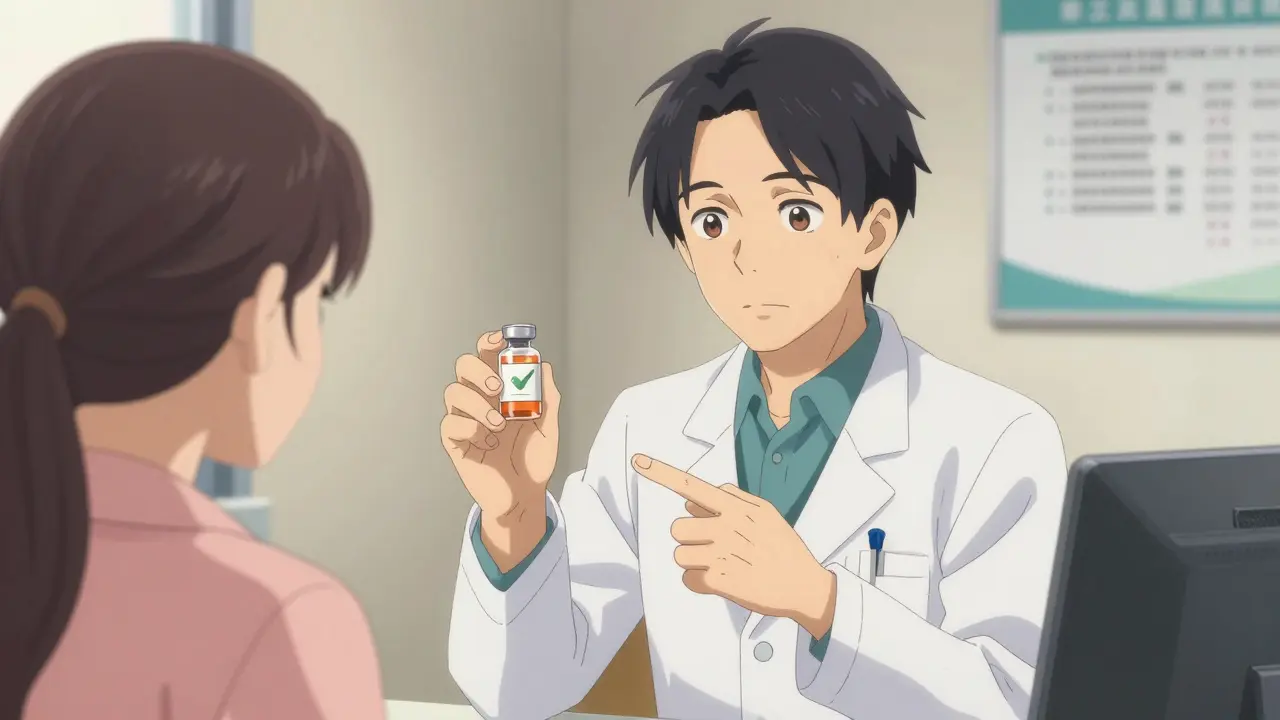
Appearance changes can scare patients. If a biosimilar looks different-different color, size, or shape-research shows patients are 21% more likely to stop taking it. Pharmacists should proactively address this: "The medicine looks different, but it’s the same treatment. Let’s check your prescription to be sure."
Substitution laws and what pharmacists need to know
State laws control whether pharmacists can swap biosimilars. As of October 2023, 48 states have biosimilar substitution laws, but they’re messy. Some require the prescriber to allow substitution upfront. Others let pharmacists decide automatically if the biosimilar is FDA-interchangeable. A few states still don’t allow substitution at all. Pharmacists must know their state’s rules cold.
Here’s a quick comparison of how biosimilar substitution differs from generics:
| Feature | Generics | Biosimilars |
|---|---|---|
| Manufacturing Process | Chemical synthesis (exact copy) | Living cells (complex, not identical) |
| FDA Approval Pathway | Abbreviated New Drug Application (ANDA) | Biologics License Application (BLA) with extra data |
| Automatic Substitution | Allowed in all states (97% of cases) | Only for FDA-interchangeable products; state laws vary |
| Prescriber Control | Rarely restricted | Often "do not substitute" required |
The Biologics Price Competition and Innovation Act (BPCIA) of 2009 created the framework for biosimilars. It’s why they exist, but it also made substitution more complicated than generics. Pharmacists need to track which products are interchangeable and stay updated on state law changes. For instance, in California, pharmacists can substitute interchangeable biosimilars unless the prescriber writes "dispense as written." In Texas, they must notify the prescriber within 24 hours after substituting.
Real-world success stories
The US Oncology Network saw dramatic results when they shifted substitution decisions to pharmacists. Before May 2021, doctors had to manually approve each biosimilar switch for pegfilgrastim (Neulasta). After implementing a pharmacy-driven process, adoption jumped quickly. David Waterhouse, MD, MPH, shared at a 2021 conference: "Bioconversion has happened rapidly for Neulasta when pharmacists handled the substitution." Why? Doctors stopped getting interrupted for approvals. One clinic reported daily interruptions dropped to zero after staff signed acknowledgment forms about automatic substitutions.
They also trained everyone-doctors, nurses, pharmacists, even billing staff-through an e-learning system. Patients got clear explanations about biosimilars during their visits. Documentation tracked each switch in the electronic health record. This approach didn’t just save time-it cut costs. Biologics account for half of prescription drug spending despite being 2% of prescriptions. Every biosimilar switch saves money without sacrificing quality.
Challenges and how to solve them
Not all stories are smooth. Some prescribers resist biosimilar substitution. One doctor on Student Doctor Network wrote: "The physician got angry when I substituted the biosimilar and now insists on 'dispense as written' for all biologics." This happens when communication breaks down. Pharmacists can prevent this by:
- Sharing evidence-based facts: "The FDA approved this biosimilar with the same safety profile as the original."
- Documenting every substitution clearly in the patient’s record.
- Using traceability: Batch numbers must be recorded so adverse events can be tracked.
Another issue is reimbursement confusion. A study in US Pharmacist found 79.1% of pharmacists requested education on billing and reimbursement. If a pharmacy gets paid less for a biosimilar, they might hesitate to switch. Pharmacists should work with pharmacy benefit managers (PBMs) to clarify payment rules. For example, some PBMs now incentivize biosimilar use with better reimbursement rates.
Pharmacovigilance is critical. If a patient has a reaction, pharmacists must report it and track which specific product and batch was used. The International Federation of Pharmaceutical Manufacturers & Associations (IFPMA) stresses that "traceability measures are essential for pharmacovigilance." This means writing the batch number on the prescription label and in the patient’s file. Without it, tracking problems becomes impossible.
Why pharmacists are the future of biosimilar adoption
Biologics are expensive, and biosimilars are the best way to lower costs safely. But adoption needs pharmacists-not just as dispensers, but as educators and advocates. Research in the Journal of Managed Care & Specialty Pharmacy shows pharmacists are more likely to recommend biosimilars than doctors. They’re also more likely to stay updated on training. In 2022, 79.1% of pharmacists had CEUs on biosimilars versus 43.5% of physicians.
For patients, pharmacists bridge the gap between complex science and simple care. When someone asks, "Why switch?" the answer should be: "This medicine works just as well, costs less, and the FDA confirms it’s safe." When a patient hesitates because of appearance changes, the pharmacist explains: "The medicine looks different, but it’s the same treatment for your condition." This builds trust.
Pharmacists also handle the paperwork. They track substitutions, notify prescribers when required, and ensure accurate billing. Without them, the system would stall. The US Oncology Network proved this-when pharmacists took over substitution decisions, adoption soared. That’s why the PMC study concluded: "The need for a pharmacy specialty dedicated to biotherapeutics is becoming increasingly apparent."
Can pharmacists automatically substitute biosimilars like generics?
Only if the biosimilar is FDA-designated as "interchangeable" and your state’s laws allow it. Most biosimilars aren’t interchangeable yet. Even for those that are, prescribers can write "dispense as written" to block substitution. Always check the label and your state’s rules.
How do biosimilars differ from generics?
Generics are chemically identical copies of small-molecule drugs. Biosimilars are highly similar to biologic drugs (which come from living cells) but can’t be identical due to complex manufacturing. The FDA requires biosimilars to have no clinically meaningful differences in safety or effectiveness, but they’re not exact copies like generics.
Why are biosimilars important for healthcare costs?
Biologics make up just 2% of prescriptions but nearly half of all prescription drug spending. Biosimilars can lower these costs significantly. For example, when pharmacists handle substitutions properly, clinics see faster adoption and reduced expenses without compromising patient care.
What should pharmacists tell patients about biosimilars?
Keep it simple: "This medicine works the same as the original for your condition. The FDA requires it to have no meaningful differences in safety or effectiveness. It’s a cost-saving option that’s been thoroughly tested." Address appearance changes directly: "The pill looks different, but it’s the same treatment. Let’s confirm it’s the right one for you."
How can pharmacists handle prescriber resistance to biosimilar substitution?
Communicate clearly and professionally. Share FDA guidelines and evidence of safety. Document every substitution with batch numbers and notify the prescriber per state law. If resistance continues, work with pharmacy leadership to create standardized protocols for communication. Many doctors simply need education-they don’t realize biosimilars are as safe as the original.


Author
Mike Clayton
As a pharmaceutical expert, I am passionate about researching and developing new medications to improve people's lives. With my extensive knowledge in the field, I enjoy writing articles and sharing insights on various diseases and their treatments. My goal is to educate the public on the importance of understanding the medications they take and how they can contribute to their overall well-being. I am constantly striving to stay up-to-date with the latest advancements in pharmaceuticals and share that knowledge with others. Through my writing, I hope to bridge the gap between science and the general public, making complex topics more accessible and easy to understand.