

If you’ve ever woken up drenched in sweat, heart pounding, with the feeling that the trauma is happening all over again - you’re not alone. About 71% to 90% of military veterans with PTSD and over half of civilian trauma survivors experience recurring nightmares. These aren’t just bad dreams. They’re a core symptom of PTSD, and they sabotage recovery by keeping the nervous system stuck in high alert. Sleep becomes a battleground, not a refuge.
For years, doctors reached for sleep aids or sedatives. But those rarely helped - and often made things worse. The real shift came when researchers started treating nightmares not as a side effect of PTSD, but as its own problem that needs its own solution. Two paths have emerged: one through a blood pressure pill repurposed for the brain, and another through structured, non-drug sleep therapy. Neither is perfect. But together, they’re changing how PTSD is treated.
How Prazosin Tackles Nightmares - And Why It’s Controversial
Prazosin was never meant to treat PTSD. Developed in 1976 by Pfizer as a treatment for high blood pressure, it blocks alpha-1 receptors that tighten blood vessels. But in 2003, Dr. Murray Raskind at the VA noticed something strange: veterans on prazosin for hypertension were sleeping better. Their nightmares faded. He ran a small trial. It worked. Fast forward to today, and prazosin is prescribed off-label to tens of thousands of PTSD patients.
The theory? Trauma rewires the brain’s stress response. At night, when the body should calm down, it still pumps out adrenaline like it’s under attack. Prazosin blocks those signals. Studies show it reduces nightmare frequency by about 50% in responders. Dosing usually starts at 1 mg at bedtime, increasing weekly up to 15 mg. Most patients feel a difference within two weeks.
But here’s the problem: not everyone responds. And some trials have failed. A 2018 Department of Defense study found no significant benefit over placebo. Critics say the trials used too-low doses or included patients who didn’t even have frequent nightmares. In 2021, the FDA rejected prazosin’s application for formal approval, citing inconsistent results. Still, VA clinics continue prescribing it. Why? Because for many, it’s the only thing that works.
Side effects are real - dizziness (29%), low blood pressure (15%), and nasal congestion (18%) are common. Some users report rebound nightmares when they stop. One veteran in a VA forum wrote: “I felt like I was finally sleeping - then I ran out of pills. The nightmares came back worse than ever.”
CBT-I: The Sleep Therapy That Rewires Your Brain
If prazosin is a band-aid, CBT-I (Cognitive Behavioral Therapy for Insomnia) is a rebuild. Unlike sleep aids, CBT-I doesn’t just mask symptoms - it changes how you think about and respond to sleep. Developed in the 1980s, it became a first-line treatment for insomnia in 2016 by the American Academy of Sleep Medicine. And now, it’s being used for PTSD nightmares too.
A standard CBT-I program runs 6 to 8 weeks. Each session is 60 minutes. It includes:
- Sleep restriction: You only spend in bed the number of hours you actually sleep. If you’re only sleeping 4 hours, you’re limited to 4 hours in bed - even if you’re tired. This builds sleep pressure.
- Stimulus control: Bed is only for sleep and sex. No scrolling, no watching TV, no lying there worrying. If you’re awake for more than 20 minutes, you get up and do something quiet until you feel sleepy again.
- Cognitive restructuring: You challenge beliefs like “I need 8 hours of sleep or I’m ruined tomorrow” or “If I don’t sleep, I’ll lose control.”
- Sleep hygiene: Basics - no caffeine after noon, cool dark room, consistent bedtime.
- Relaxation techniques: Breathing, muscle relaxation, mindfulness.
It sounds harsh. And it is - at first. Many patients say the first two weeks feel worse. But by week four, sleep efficiency jumps. One VA patient said: “I thought I’d never sleep again. Then I stopped fighting it. My body remembered how.”
Studies show CBT-I reduces insomnia severity by 1.35 standard deviations - a large effect. It also cuts PTSD symptoms by 62%. Why? Because sleep and trauma are linked. When you sleep better, your amygdala (the brain’s fear center) calms down. Emotional regulation improves. Trauma memories become less volatile.
Imagery Rehearsal Therapy: Rewriting Your Nightmares
What if you could rewrite your nightmare while awake?
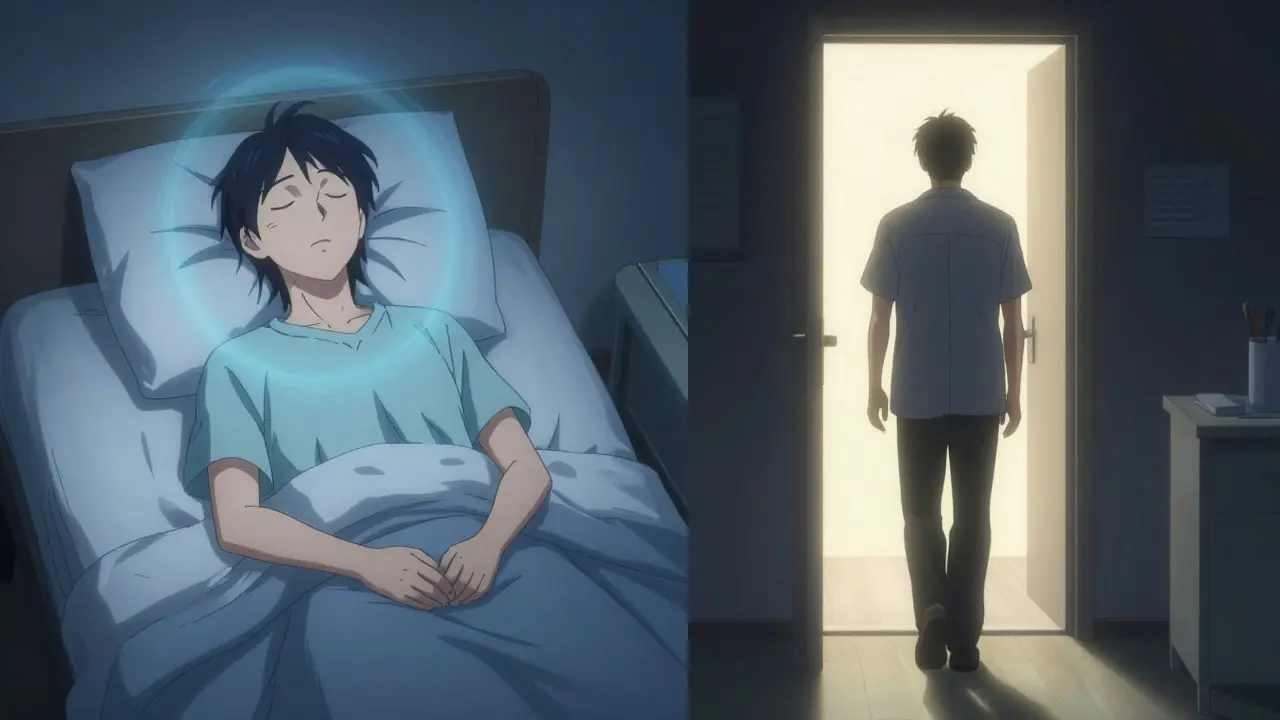
That’s the idea behind Imagery Rehearsal Therapy (IRT). It’s simple: you write down your nightmare. Then, you change the ending - make it neutral, positive, or even silly. “I’m being chased by a bear” becomes “I’m hiking with my dog, and the bear waves hello.” You rehearse the new version for 10 minutes every day.
It sounds weird. But 67% to 90% of PTSD patients report a major drop in nightmare frequency after 3 to 5 sessions. A 2020 National Center for PTSD survey found 85% of users felt less distress after using IRT. Unlike prazosin, it doesn’t rely on medication. Unlike CBT-I, it doesn’t require sleep restriction.
It works because nightmares are memories stuck in a loop. IRT breaks the pattern. You take back control. One Marine veteran said: “I used to wake up screaming from a fire. Now I dream I’m on a beach with my kids. I didn’t think I’d ever feel safe again. I do now.”
Which Approach Works Best? The Data Doesn’t Lie
Let’s compare what the research says:
| Approach | Effect on Nightmares | Effect on PTSD Symptoms | Time to See Results | Long-Term Benefits |
|---|---|---|---|---|
| Prazosin | Modest reduction (50%) | Minimal impact | 1-3 weeks | Loss of effect if stopped |
| CBT-I | Significant reduction (60-70%) | Moderate improvement (62%) | 4-8 weeks | Often sustained after treatment ends |
| Imagery Rehearsal Therapy | High reduction (67-90%) | Moderate improvement | 2-4 weeks | Long-lasting with practice |
| Combined CBT-I + Prolonged Exposure | Best outcomes | Strongest improvement | 8-12 weeks | Most durable results |
CBT-I doesn’t just help you sleep - it helps you heal. A 2022 VA study found that combining CBT-I with Prolonged Exposure therapy increased total sleep time by 78 minutes - nearly 1.5 hours - compared to just 22 minutes with standard care. Sleep efficiency jumped 15.3% versus 3.1%. That’s not just better sleep. That’s recovery.
Prazosin wins on speed and accessibility. You don’t need a therapist. You don’t need to talk about trauma. But it doesn’t fix the root cause. It just turns down the volume.

What’s New? Digital Tools and the Future
Technology is stepping in. The FDA approved the NightWare app in 2020 - the first digital therapeutic for PTSD nightmares. It uses an Apple Watch to detect signs of a nightmare (rapid heart rate, movement) and delivers subtle vibrations to gently interrupt REM sleep - without waking you. In a 2022 study, 58% of users saw fewer nightmares.
VA hospitals now run the “Sleep SMART” program, offering CBT-I in 143 facilities. Completion rates? 74% - higher than community clinics. But access is still uneven. Rural veterans are 47% less likely to get CBT-I than urban ones. And while prazosin is cheap and widely available, new drugs aren’t being developed. The patent expired in 2000. No profit, no incentive.
That’s changing. The Department of Defense just allocated $28 million in 2024 to study combining CBT-I with virtual reality exposure therapy. Early results show promise. The goal? Make sleep treatment as standard as therapy.
Real Talk: What Works for You?
There’s no one-size-fits-all. Here’s how to think about it:
- If you need fast relief and can’t access therapy - prazosin might help. Start low (1 mg), increase slowly, and monitor blood pressure.
- If you’re ready to rebuild your sleep - CBT-I is the gold standard. It’s hard at first, but the payoff is lasting.
- If nightmares are your main issue and you want to avoid meds - IRT is powerful. You can do it alone with a notebook.
- If you’re still stuck after one approach - combine them. CBT-I + IRT + prazosin (under supervision) is the most effective combo.
And don’t forget: trauma-focused therapy (like CPT or EMDR) is still the foundation. Sleep treatments help, but they’re not replacements. They’re teammates.
Can prazosin cure PTSD nightmares permanently?
No. Prazosin reduces nightmare frequency while you’re taking it, but symptoms often return after stopping. It’s a management tool, not a cure. Long-term use requires ongoing medical supervision due to side effects like low blood pressure.
Is CBT-I effective for people with shift work or irregular schedules?
Yes, but it’s harder. CBT-I relies on consistency. Shift workers can still benefit by adapting sleep restriction to their schedule - for example, using the same bedtime relative to their work shift. Clinicians now offer modified protocols for first responders, nurses, and military personnel on rotating duty.
Can I use prazosin and CBT-I together?
Yes, and many clinicians recommend it. Prazosin can reduce nightmare intensity enough to make CBT-I easier to start. Once sleep improves, some patients taper off prazosin under medical guidance. The combination often leads to better outcomes than either alone.
Why hasn’t the FDA approved prazosin for PTSD nightmares?
Because clinical trials showed inconsistent results. Some showed strong benefit; others didn’t. The FDA requires reliable, repeatable evidence across diverse populations. The 2018 DoD trial and 2021 FDA rejection highlight that prazosin’s effectiveness depends on factors like dosage, patient selection, and duration - not just the drug itself.
Where can I find a CBT-I therapist for PTSD?
Veterans can access CBT-I through VA facilities via the Sleep SMART program. Civilians should look for therapists certified by the Society of Behavioral Sleep Medicine. Online platforms like CBT-I Coach (VA-approved) offer guided self-help. Insurance often covers CBT-I if it’s delivered by a licensed provider.
PTSD nightmares don’t have to be a life sentence. Whether you choose a pill, a therapy, or both - the goal is the same: reclaim your sleep. And with it, your peace.


Author
Mike Clayton
As a pharmaceutical expert, I am passionate about researching and developing new medications to improve people's lives. With my extensive knowledge in the field, I enjoy writing articles and sharing insights on various diseases and their treatments. My goal is to educate the public on the importance of understanding the medications they take and how they can contribute to their overall well-being. I am constantly striving to stay up-to-date with the latest advancements in pharmaceuticals and share that knowledge with others. Through my writing, I hope to bridge the gap between science and the general public, making complex topics more accessible and easy to understand.